
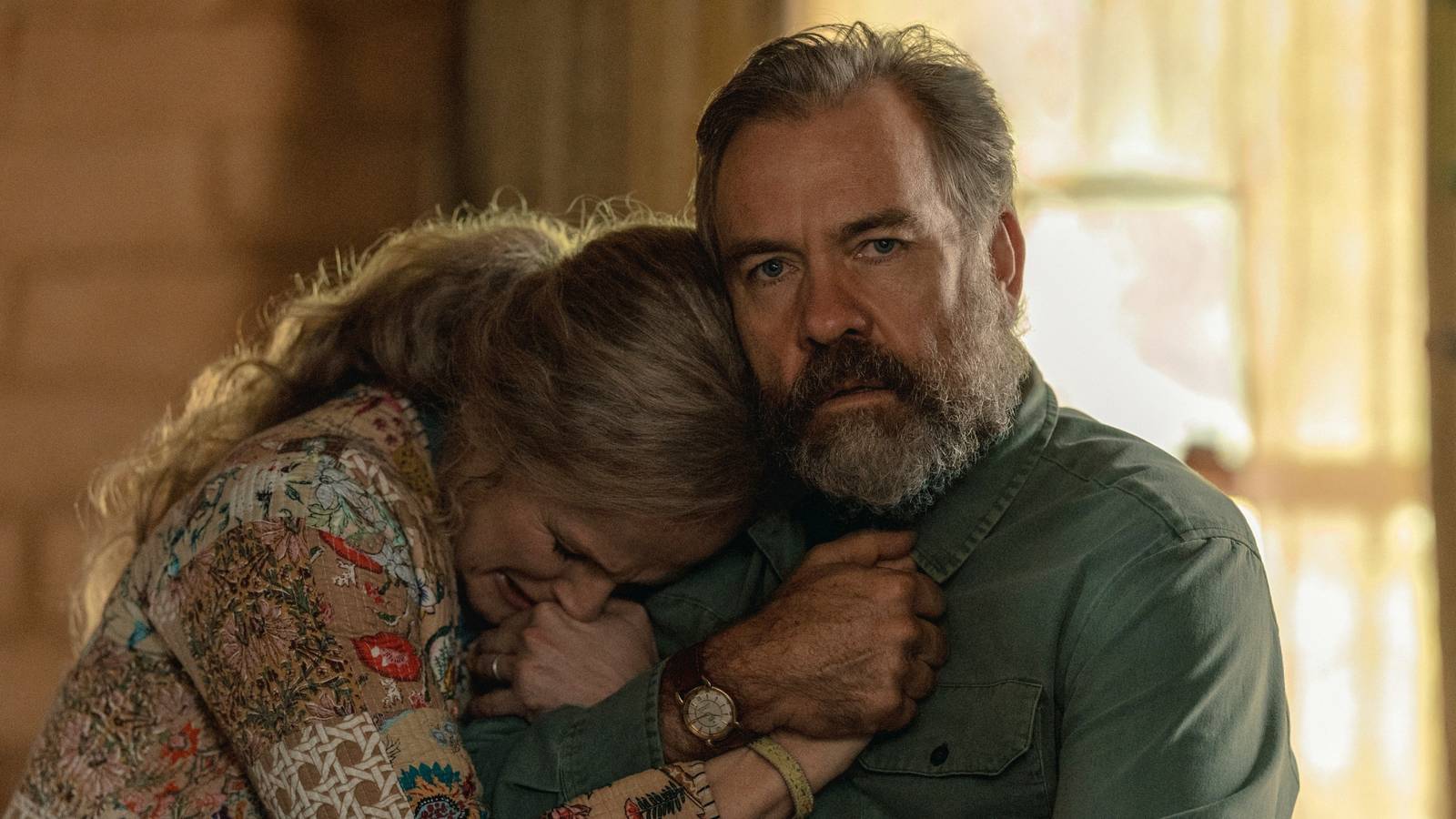
Editor's note: The following contains major spoilers for Last Seen. Summary In the Apple TV series 'Last Seen,' grief and fanaticism push Henry to abduct a child and entrench his family in a life of lies. Isolation fractures Jenna and Sarah's world, forcing the sheltered girl to find her own identity. Male privilege, obsession and control lead Henry to sacrifice himself, so that Sarah can choose her future. When police detective Ian Ridley’s (Patrick Brammall) three-year-old daughter Maggie disappeared without a trace over a decade ago, his world fell apart. Refusing to believe she’s gone forever, he keeps working as a police dispatcher until one night when a young girl makes a distress call wondering if she could be the missing Mags. Meanwhile, Henry Reid (Brendan Cowell), the deeply religious brother of Ian’s sobriety sponsor, has been living in his isolated farmhouse with his wife Jenna (Maxine Peake) and their happy teenage daughter Sarah (Chloe Jean Lourdes). Only Sarah, who’s been kept isolated from the outside world that she’s been taught is terrifying and unsafe, doesn’t know she was actually taken from her real parents. When everything ultimately comes to a head between Ian and Henry, it’s up to the sheltered young woman to figure out what her future should be. After screening the six-episode season of the Apple TV series Last Seen, Collider got the opportunity to chat with Cowell and Peake about the family relationship with their characters and why Henry felt justified in his actions. During the interview, they discussed the effects of grief and pain, the reality of the situation starting to seep in, the male privilege and arrogance that played a role, the experience of working with Lourdes and how she kept them on their toes, and the tragic finale decision that Henry makes for Sarah. Brendan Cowell Explains That Once Henry Has Crossed a Line in ‘Last Seen,’ He Can Never Go Back "You've just got to keep doubling down to protect the secret, and lies become normality." Image via Apple TV COLLIDER: We hear stories like this when something happens to a newborn or a very young child and the mother becomes so distraught that she takes the replacement child. I found it interesting that in this case, it was Henry and not Jenna that stole Ian’s child. How did you feel about that fact? How did that shape your characters and their relationship? BRENDAN COWELL: Once you pass the threshold, you can never go back. After that, you’ve just got to keep doubling down to protect the secret, and lies become normality. The conflict is interesting because he rights himself as quite a moral man who was indoctrinated as a child. And yet, what he’s doing, you wouldn’t find much reference to in the Bible. What we tried to do was create something very normal. And then, when I do meet the girl when I’m at work, I see a girl that’s been abandoned. I think this will fix my wife’s grief and take away her pain that is paining me. She doesn’t seem to want to get better and that’s annoying me because I want to control everything. And then, I think not only will I be able to satiate her grief, but I will be able to give this abandoned girl the most beautiful life and that becomes my sole existence. I’ll die for that. It was very singular, what I had to play. I just tried not to judge that and leave it up to the audience to see how they felt about it. Maxine, with Jenna, it seems like she can’t really emotionally compartmentalize in the same way. What was it like to figure out how she was dealing with all of this? MAXINE PEAKE: Because they’ve isolated, they’ve built a fortress, and they’ve built their own reality and their own world. When the outside world is so at bay, Jenna starts dipping her toe and going out into the wider society and community, and then the cracks start to show because the reality starts to seep in. The brain is such a mercurial and magical and complex thing. When our mental health is under attack, realities can be blurred. For me, it was an interesting thing. There wasn’t a scene, but when Henry brings young Mags back, what was that? It doesn’t take long for Jenna to start living in an alternate reality to save herself and save Henry. COWELL: He would have convinced her that the parents were sinners. PEAKE: Absolutely. COWELL: He would have really sold it. PEAKE: With Jenna, there’s always been the antennae going with something not quite being right. But she’s pushed it down and is desperate to escape. This is the climax of that. Do you think she was even aware, initially, when she started going into town and was finding herself closer and closer to the real mother? PEAKE: Sometimes it is a slight animal instinct. You just go. There’s a sense that somebody is in the vicinity. She starts to feel her own grief building up and the power of that, and she starts to then be able to see the parallel of that other mother. She’s been in a kingdom that doesn’t include anybody else’s feelings, and now it’s starting to seep in. The walls are cracking and the water seeping in. Brendan Cowell and Maxine Peake See an Element of White Male Privilege to the Events of ‘Last Seen’ "You've got two white males yelling at each other about what's right." Brendan, grief over the loss of a child has to be so tremendous and traumatic that you can sympathize with why Henry might have done something like this. But you also get a sense that Henry does feel entitled to keep this child that is not his. Why do you think he feels like he’s more deserving it? Is it just as simple as he believes he’s better suited? COWELL: Finder’s keepers. No. I really think that, at that moment, the combination of the grief and his upbringing and his belief in God and his need to pull this off because he’s told his father, “I’m going to go to this land with this woman and I’m going to have a child and we’re going to do this,” he just has to make it work or his father will never accept him. I feel like there is no other result possible than this becoming forever. Even at the end, when [Jenna] is bleeding out and he’s got the kid back, he’s like, “If we get there then we can start again.” And she’s looking at him going, “You are insane.” People can get obsessed. He doesn’t have anything else in his life. This is his life. It’s not like he’s a passionate police station cleaner. His wife and his child, especially the child, are everything. He will win this. I think what’s great about the series is that you’ve got two white males yelling at each other about what’s right, and in the end, the girl says, “I might make a decision, actually, about who I am.” And by the end of the story, she’s an adult. PEAKE: There’s an element of male privilege that runs through these two men. What is this? Is this love? Is this obsession? Is this arrogance? Is it a power play? COWELL: I’ve convinced myself, on evidence. I’ve heard stories about this man’s drinking, and I’ve seen him abandon the girl at the station. I’ve woven this tale about this evil man. If it was an alien or a penguin, people would maybe say, “Geez, you’re a nice boy, Henry. You saved that penguin. You saved that alien. You saved that little injured bird with the broken wing.” For me, that’s what I’m doing. But the thing is, it’s a human being, and human beings aren’t the same. How he sees it is that he’s doing an act of divine generosity, so he’ll keep doing it because it’s what was intended. The way they shot it, with the light coming in and her looking up at me, it looks like a beautiful, innocent scene that maybe would convince Henry to keep going. It’s so hard to believe that the actress playing the daughter, Chloe Jean Lourdes, had never been on screen before because she’s just tremendous in this. What was it like to figure out and form the family dynamic with the three of you? PEAKE: Chloe turned up so prepared it was unbelievable. You couldn’t believe that this young woman hadn’t been in front of a camera before. She’s an absolute natural. You get young actors who are just brilliant on screen, but she gets the whole logistics of acting and the whole mechanics behind it as well. She had a professionalism on set, and a generosity and bravery. She had an amazing mom who was there all the time as a chaperon. She was upbeat, full of energy, and full of joy. She’s extraordinary. It was easy for us. COWELL: It’s like if your first theater role was Hamlet. She had to be very tough, very skilled, and very open. We filmed for nearly five months, and scene after scene, we were just getting hammered, but she was so tough with such a beautiful spirit. She kept us seasoned professionals on our toes. I remember us looking at each other and going, “Oh, shit! We can’t phone it in on this one.” We couldn’t do our old tricks in front of her. There no getting away with it. You had to actually turn up and be present. Brendan, there’s a moment in the finale when Sarah chooses Henry over her own father. How do you think he felt about that decision and her desire to drive away with him? COWELL: I don’t know if that’s what happens. I don’t think she chooses her father over him, at all. I don’t think she’s hoping he dies. I don’t think it’s an ultimatum. She’s choosing not to have him murdered. I think she’s protecting her father, and that’s really interesting. If I was a third-year psychologist, you could probably write a thesis about why she does that. It would involve Stockholm Syndrome and a bit of conditioning. The caged bird sings and wants to get back in the cage. And also, fathering and parenting is a verb-like word, in that it’s an action. I brought her up and I am her safe place. She’s a very smart girl and she’s turning into an adult at that time, but her whole physiology and her base instinct would be to be drawn to her guardian who has protected her, and I have protected her, her whole life. It’s almost a non-intellectual decision. Beautifully, in the script it said, “Just no more violence. Stop, everybody, with the killing.” It’s a great message for the whole world, really. That’s what Sarah/Mags is saying there. No matter who thinks who is right and who is right, maybe less with the killing. I love that. Brendan Cowell Believes Henry Made His ‘Last Seen’ Finale Decision for Sarah "I thought, 'It's better for her if I go now.'" Image via Apple TV How did you feel about Henry choosing to essentially end his own life and to have himself taken from Sarah after everything he’d done to keep her? COWELL: I don’t really feel like it was a suicide. I feel like there’s nowhere else to go. It’s not like he’s saying, “I’ll get out in 30 years, and we can get a farm, and it will be great.” She’ll be 45. To give you an insight into what I thought, I thought, “It’s better for her if I go now.” That’s how I played it. This is making me emotional, thinking about that scene. That’s why I added the line, “You’re great. You’re going to be great.” Henry didn’t say anything. He just said, “Get under the windshield.” But I added, “You’re great. You’re going to be great.” For me, that’s Henry saying, “I’ve got to go now, but don’t read into that.” He’s getting out of her way because he can’t win now with helicopters and a S.W.A.T. team. He’s thinking, “All I’ve ever wanted is the best for her.” He finally got out of his own ego to see that the best thing for her is for him to go away. I feel like that’s what he does. I don’t think it’s as righteous as that. It’s not a Jesus act. He’s not dying for our sins or anything. He’s like, “It’s best if I just leave her alone now.” Last Seen is available to stream on Apple TV. Release Date September 9, 2026 Network Apple TV Directors Christian Schwochow Cast Patrick Brammall Ian Ridley Brendan Cowell Henry Reid Creator(s) Kris Mrksa Seasons 1
Apple TV’s ‘Last Seen’ Star Explains How That Tragic Finale Choice Changes Everything
Full Article
Original Source
Read the full article at Collider →KhanList aggregates and links to publicly available news content. We do not host full articles from third-party sources. Always verify important information with original sources.