
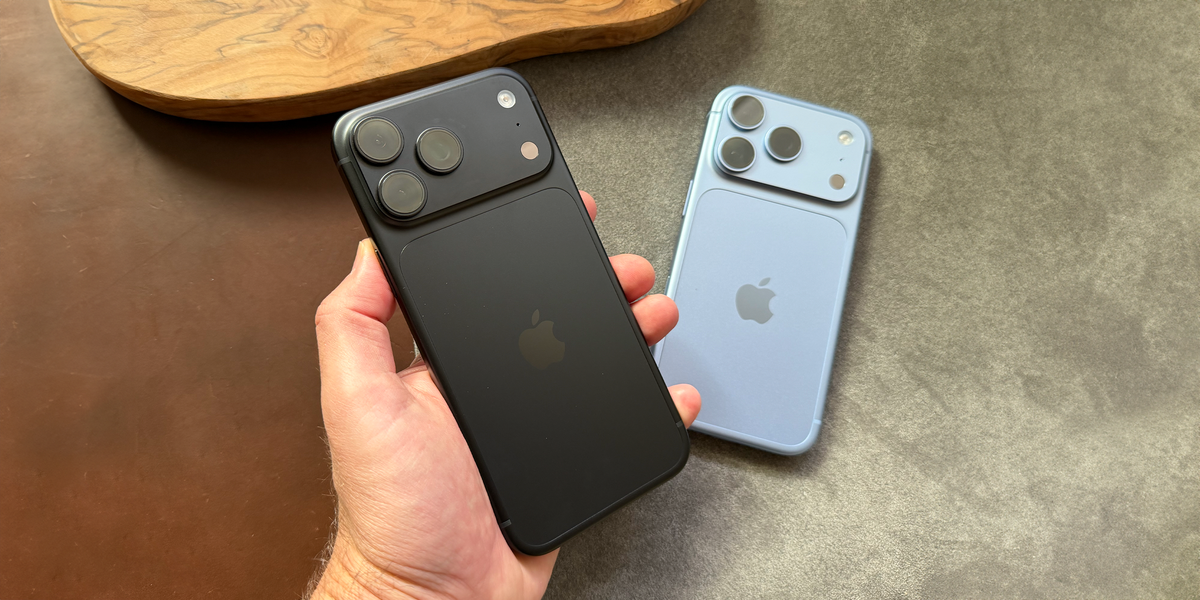
6 min readThe iPhone 18 Pro and 18 Pro Max were the appetizer at this year’s fall Apple event, playing second fiddle to Apple’s foldable iPhone Duo, but make no mistake—these new flagship phones bring a surprising amount to the table if you’re looking to upgrade.Despite the fact that they look nearly identical to their predecessors, to the point where you can literally use last year’s cases on this year’s phones, there are some astounding technical upgrades, including a cutting-edge new processor, a bigger, better battery, and a revamped “Dynamic Island” to show you more detailed info at a glance. But the highlight is the new camera, which adds a shutter for variable aperture, opening the door for hobbyist photographers to take a more active role in setting up shots. (Don’t worry, though: If you’d rather let the phone handle that heavy lifting, you still can.)The “Pro” iPhones have set and reset the gold standard for elite phones since their debut in 2019. And now, even with a slight price hike—both phones start at $100 higher than last year’s models: $1,199 for the 18 Pro and $1,299 for the 18 Pro Max—they have done it again. After a week with both phones, their performance exceeded my sky-high expectations. They mark a major leap forward, not just for the iPhone, but for the entire phone game.ProsThe variable-aperture camera is groundbreakingOutstanding performance and battery lifeRefined design with striking new colorsConsUpgrading the storage is costlyKey SpecsChipApple A20 Pro Display6.3 in. or 6.9 in. Super Retina XDR OLED display with 460 pixels per inch, ProMotion Camera48MP main with variable aperture, 48MP ultra-wide, 48MP telephoto, 18MP front-facing camera Connectivity5G, WiFi 7, Bluetooth 6, USB-C OtherIP68 water- and dustproofThe Camera Gets a Truly Professional OverhaulAlmost every new iPhone has some kind of camera upgrade—it’s half the reason to buy such an expensive phone—but the 18 Pro’s new camera feels like an especially audacious leap. For the first time on an iPhone, the 18 Pro's primary rear camera features a shutter system, allowing for variable lens aperture, akin to what you’d find on a dedicated camera. A set of overlapping blades precisely adjusts how much light reaches the camera sensor, allowing you to control the depth of field and exposure in your photos.The phone offers four aperture levels—f/1.48, f/1.8, f/2.8, and f/4.0. That’s far fewer options than what you’d get with a variable lens on a mirrorless camera, but still gives you way more options than relying on digital editing techniques alone.A quick explainer for folks who are new to advanced camera settings: Lower aperture values let more light reach the sensor, improving low-light performance. They also create a shallower depth of field, producing that blurred “bokeh” effect behind the subject in a photo. (Before multi-lens camera stacks, that was actually a pretty advanced camera trick, y’know.) Higher aperture settings are essential for capturing the most detail, especially in bright light.Stefan VazharovVariable aperture allows you to manually adjust the exposure and depth of field of your photos, like you would with a mirrorless camera.Stefan VazharovThere’s also an auto mode, though, so you can use it without digging deep into the settings.To my delight, the adjustable aperture is available on all focal lengths that the iPhone 18 Pro’s main camera offers (1x, 1.2x, 1.5x, and 2x), and that’s nothing short of incredible for a phone. Experienced camera enthusiasts can choose manually, while everyone else can use auto mode and leave the guesswork to the device’s camera-processing tech.For folks who like to play with camera settings, this is a tremendous upgrade. Professional photographers often need at least a few large, expensive lenses to have access to the same set of focal lengths and apertures as these phones. It’s like swapping a station wagon for a fully loaded luxury SUV. It’s not merely that photographers get more options, but that those options open doors to take your photography to new heights.Camera SamplesThat incredible new main camera is joined by high-resolution ultra-wide and telephoto snappers, which let me capture beautiful photos in any scenario. The new photography styles, meanwhile, let me add an extra creative touch by fine-tuning the grain and texture of objects. When it comes to camera app tools and customization options, everyone—from a camera newbie to a pro videographer—will find what they need.Likewise, my Dolby Vision-enhanced 4K video clips were predictably excellent. The primary camera's variable aperture added an extra layer of versatility to the already abundant toolset. In this regard, the device further expands the iPhone Pro line’s longstanding track record as the best camera on a phone, bar none.Industry-Conquering Power Across the BoardWhile the new shutter will draw your attention to the camera, the 18 Pro and Pro Max have also gotten serious technical upgrades under the hood. Apple’s new A20 Pro mobile processor is much more powerful and efficient than its predecessors. The difference is in the chip’s 2-nanometer architecture, which allowed Apple to pack even more transistors—the microscopic building blocks of the processor—with greater efficiency. The result is a Goldilocks balance of unrelenting power and industry-conquering energy efficiency.Stefan VazharovThe iPhone 18 Pro looks like last year’s phone, but it’s a lot more powerful.During testing, I couldn’t find a way to tax the iPhone 18 Pro and Pro Max to the point where an app slowed down. The phones’ mighty chip, paired with fast, abundant memory, delivered instant app interactions, seamless multitasking, and smooth gameplay. The biggest performance improvements, as you might expect, were for gaming. Even console-grade titles like Control: Ultimate Edition and Red Dead Redemption. The 18 Pro and Pro Max’s upgraded cooling system, beyond the iPhone 17 Pro’s already-impressive setup, also enabled long gaming sessions by delivering unrelenting performance.Stefan VazharovControl is a game that pushes consoles and gaming PC hard. The iPhone 18 Pro handled it like a champ.The battery life of both iPhone 18 Pro phones was also very impressive. I had no trouble getting through a full day of heavy use from the standard Pro and the Max. With the big-screen model, I consistently ended each day with around 40 percent battery, meaning 48 hours on a single charge isn’t a pipe dream.Thankfully, the iPhone 18 Pro's wired charging speed has also improved, finally matching top-tier Android phones like the Samsung Galaxy S26 Ultra. It took about a quarter of an hour to charge the device to 50 percent with a 60-watt charger. Given how affordable these power adapters are, you can safely consider charging anxiety a thing of the past.Other Noteworthy UpgradesThe iPhone 18 Pro and 18 Pro Max have a noticeably smaller (by 25 percent, to be precise) Dynamic Island embedded in their bright, vibrant Super Retina XDR organic light-emitting diode (OLED) displays. The upgrade lets you discreetly keep tabs on up to three live activities, which should please multitaskers. Personally, I found monitoring the status of an Uber Eats order without losing updates of a live Premier League game particularly refreshing.You aren’t going to buy a new phone for this, but I also really like how the glass panel on the back of every iPhone 18 Pro matches its metal frame perfectly, creating a sleeker, more uniform look than before. The new burgundy and glacier colors are more striking this way, while the silver and black (my pick in the range) look more low-key.Who Should Buy the iPhone 18 Pro (or Pro Max)?I have more than 15 years of experience scrutinizing phones and couldn’t find anything to criticize about the iPhone 18 Pro and Pro Max, other than the pricing, especially for the models with upgraded storage. (Though, in fairness, that has as much to do with the current component crunch as it does with Apple itself.) Though some might want a bit more visual differentiation, the technology in this phone is genuinely … well, it’s bonkers. Between the variable-aperture camera and the Apple A20 Pro chip, it’s a bigger, more impressive leap than I’ve seen in a phone all year.Despite that high praise, I would probably caution last year’s upgraders to hold off. As much as I love the tech in these phones, I don’t believe that you need to reinvest if you have a perfectly good iPhone 17 Pro or Pro Max in your pocket. Those are still great phones, and you should put them to good use. If you’re upgrading, though, regardless of whether you have a standard or Pro iPhone, I think anyone and everyone upgrading this year will get a lot out of it. (Unless you’re holding out for the Duo. I’ll have more to say about that soon.)My Favorite iPhone 18 Pro Cases Right NowStefan is an award-winning consumer technology editor with over a decade of experience in reviewing gadgets, particularly smartphones, tablets, smartwatches, desktop and laptop computers across multiple form factors and platforms, as well as accessories for them. He also covers televisions and audio equipment, including headphones, earbuds, wireless speakers, and soundbars. Since joining Hearst in 2015, Stefan has contributed to BestProducts, Popular Mechanics, and numerous other publications. Prior to his current role, he served as the US Editor for GSMArena.com.
Apple iPhone 18 Pro Review: Familiar Looks Hide Major Upgrades
Full Article
Original Source
Read the full article at Popularmechanics →KhanList aggregates and links to publicly available news content. We do not host full articles from third-party sources. Always verify important information with original sources.