
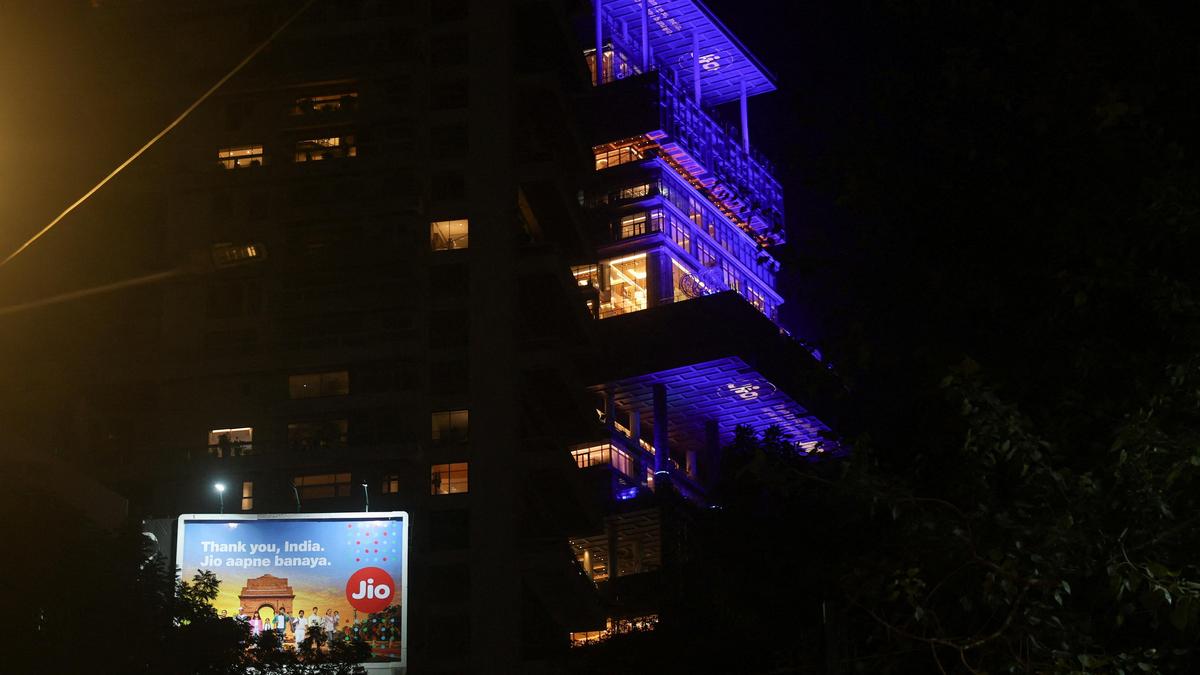
A file image of Antilia, the house of Indian businessman Mukesh Ambani. | Photo Credit: mumbaiawdReuters The Bombay High Court on Thursday (November 5, 2026) cancelled the bail that a trial court had granted to Sachin Waze in the Antilia explosives case. It held that the material placed by the National Investigation Agency (NIA) meets the threshold of Section 43D(5) of the Unlawful Activities (Prevention) Act (UAPA), which bars bail when the accusations appear true on a reading of the record.The Bench also found that the lower court ignored the principles that govern bail.A Bench of Justice Girish Kulkarni and Justice Neela Gokhale delivered the ruling in a judgment. It said that an industrialist or any other citizen should not face even a remote threat of terror, and that bail for Mr. Waze would go against public interest.Ingredients of a terrorist actThe Bench examined the allegations that Mr. Waze used the car belonging to Mansukh Hiran, obtained number plates that were forged, procured gelatin sticks, loaded the car with them and parked it near the Ambani residence in Mumbai. It held that these acts, on a first reading, link directly to Section 15 of the UAPA.The court said the record points to an act that threatens the unity, integrity and security of the country, including the security of its economy, and that is likely to strike terror among people. It noted that the target was the family of an industrialist whose group contributes to the country’s economy, as the NIA had argued.The plot as the Bench read itAccording to the Bench, the material indicates that Mr. Waze reported the car as taken, replaced its plates, left it outside the Ambani residence with explosives and placed a threat note inside. After the car was found, a message appeared on a Telegram channel in the name of a terror group and claimed responsibility. The group then issued a statement that disowned the act.The Bench said the use of the group’s name shows an intent to create fear among people and to spread the belief that a bomb threat existed. It recorded the NIA’s case that Mr. Waze would then step in as the “super cop”, offer protection to industrialists and extract money from them. The Bench said the scheme resembles a film plot, but the consequences amount to serious offences.Waze’s standing in the forceThe NIA told the court that Mr. Waze was under suspension for 16 years, from March 2004 to June 2020, and wished to rebuild his image as a “super cop” after his return. The Bench noted that he held the rank of Assistant Police Inspector, yet owned luxury cars and obtained investigations for himself, including cases registered at police stations outside his jurisdiction.On a first reading of the record, the court said he drew on the help of police personnel below him in rank and stood well outside the position of an ordinary government servant. It referred to his links with senior officials and to the extortion racket he is alleged to have run, in which he threatened hoteliers and bar owners with raids that had no basis. The court said this shows his ability to influence witnesses.The Bench held that his release would risk the trial through tampering with evidence and witnesses, and that a police officer, who is meant to protect citizens’ rights, has no room to commit such acts. It said Mr. Waze cannot be treated as an honest public servant.Criticism of the lower courtThe Bench expressed concern over the manner in which the trial court handled the bail plea. It described the observations in the order as strange and as a departure from the principles of judicial reasoning, and said they showed no reliance on the criteria for bail.It rejected the trial court’s view that framing of charges needs a lower degree of satisfaction than bail, and called it a legal perversity, since the trial court had itself found substance in the accusations.The Bench also rejected the trial court’s reading of the High Court’s earlier order, which allowed Mr. Waze to file a new bail plea. The trial court took the order to mean that the High Court saw merit in his case. The Bench said the earlier order only directed that the plea be decided on merits and in accordance with law, and did not permit the trial court to set aside the material before it.The Bench then quashed the order of the trial court. Published - November 07, 2026 02:30 am IST
Antilia case: Bombay HC sets aside Waze's bail, holds that terror threat against citizen cannot be tolerated
Full Article
Original Source
Read the full article at Thehindu →KhanList aggregates and links to publicly available news content. We do not host full articles from third-party sources. Always verify important information with original sources.