
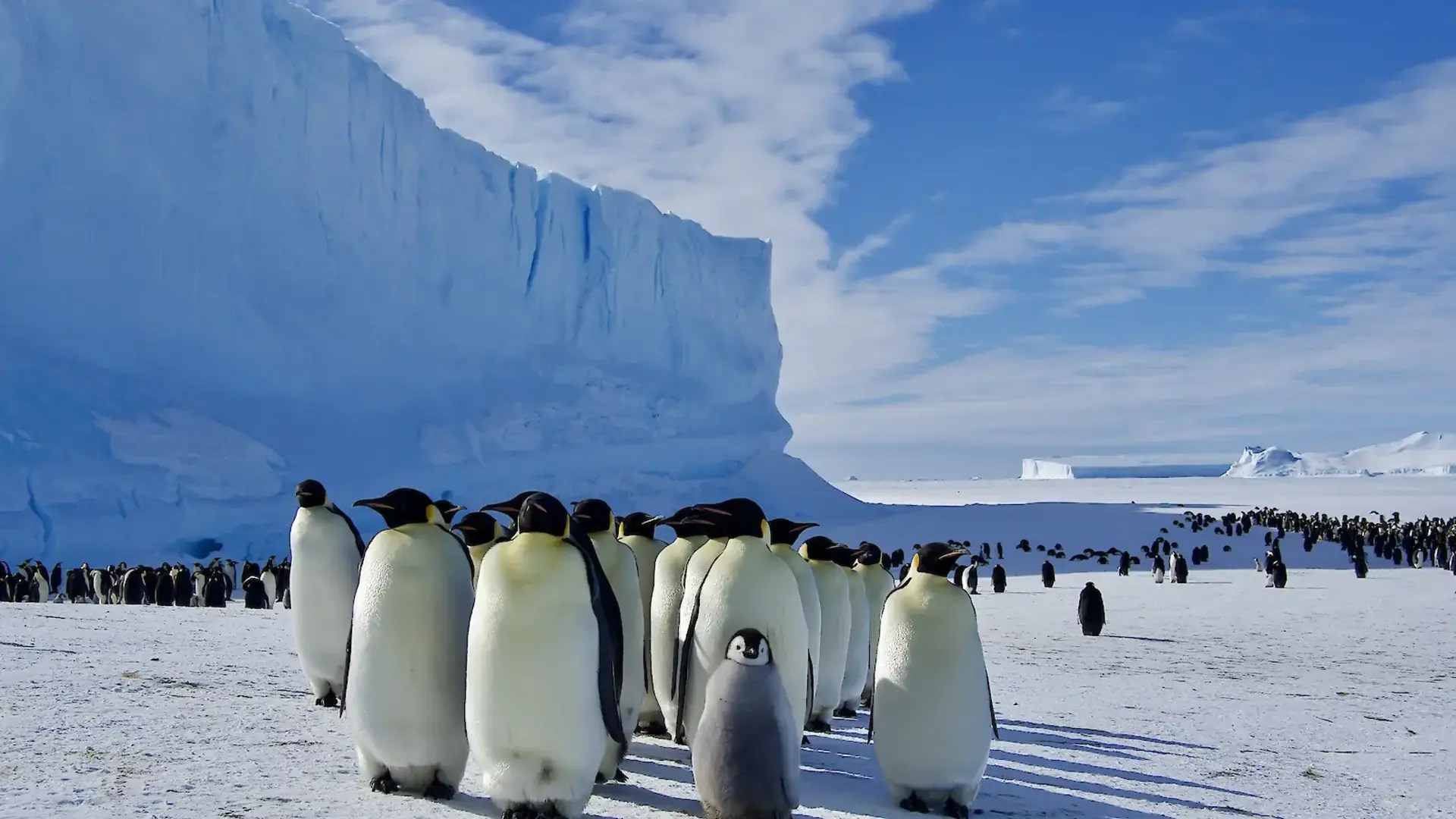
Antarctica has lost approximately 500,000 square miles of sea ice in October 2026, reaching an all-time record low, according to a report published Friday, November 27. The Australian Antarctic Division (AAD) reported that the Antarctic sea ice reached its annual winter maximum of 6.84 million square miles on September 11, marking the third-lowest maximum since satellite records began in 1979. Over the following four weeks, Antarctica fell to record daily lows in October, surpassing the exceptionally low levels recorded in October 2023, when poor sea ice conditions led to the deaths of thousands of emperor penguin chicks. “Unfortunately, Antarctic sea ice is now also declining at a time of year when the ocean should be freezing, and the ice cover should be advancing,” said Rob Massom, an AAD sea ice scientist, in the report. “And the four lowest annual winter-maximum sea ice extents observed since 1979 have all occurred in the last four years.” An unprecedented decline According to the AAD, Antarctic sea ice loss accelerated in 2015. In 2023, coverage abruptly dropped to record-low levels during autumn and winter. While low sea ice coverage previously tended to occur in specific regions, it is now being observed throughout Antarctica during both summer and winter. Satellite observations indicate that ice is forming later and retreating earlier, shortening the annual sea ice season by up to three to four months in many areas. “The patterns of recent Antarctic sea ice loss are unprecedented in the satellite time series dating back to 1979, and substantially exceed natural variability in Antarctic sea ice coverage over past centuries,” said AAD climate scientist Krystyna Saunders. Why Antarctic sea ice matters At its winter peak, Antarctic sea ice covers approximately 3.6 percent of Earth’s surface and 5.1 percent of the global ocean surface, according to the AAD. Its reflective surface helps moderate global temperatures. Its sheer existence regulates exchanges of heat, moisture, greenhouse gases, and wind energy between the ocean and atmosphere. Sea ice also protects Antarctic ice shelves from ocean waves. Its decline increases the risk of icebergs breaking away and reduces the stability of ice shelves that restrain the Antarctic Ice Sheet, the report explained. Furthermore, British Antarctic Survey scientists found that record-low sea ice coverage in late 2023 caused catastrophic breeding failure in about 20 percent of Antarctica’s emperor penguin colonies. Antarctic krill also depend on sea ice for shelter and food during their larval stage. “If you have reduced winter sea ice or ice overall, then there’s a lack of this critical early season food source – and this has a flow-on effect across food webs,” said AAD sea ice ecologist Klaus Meiners. Investigating the causes The AAD broadly linked the decline since 2015 to rising heat in the upper ocean, along with changing wind and atmospheric temperature patterns. In 2028, the Australian Antarctic Program plans to launch a research voyage to investigate how waves, storms, ocean heat and atmospheric processes influence sea ice formation and melting. Researchers will also examine the consequences for marine ecosystems and the Southern Ocean’s capacity to absorb carbon dioxide. “Antarctic sea ice is in trouble,” Massom concluded. Get the latest in engineering, tech, space & science - delivered daily to your inbox.Originally from LA, Maria Mocerino has been published in Business Insider, The Irish Examiner, The Rogue Mag, Chacruna Institute for Psychedelic Plant Medicines, and now Interesting Engineering.
Antarctica loses 500,000 square miles of sea ice in just four weeks, hitting a record low
Full Article
Original Source
Read the full article at Interestingengineering →KhanList aggregates and links to publicly available news content. We do not host full articles from third-party sources. Always verify important information with original sources.