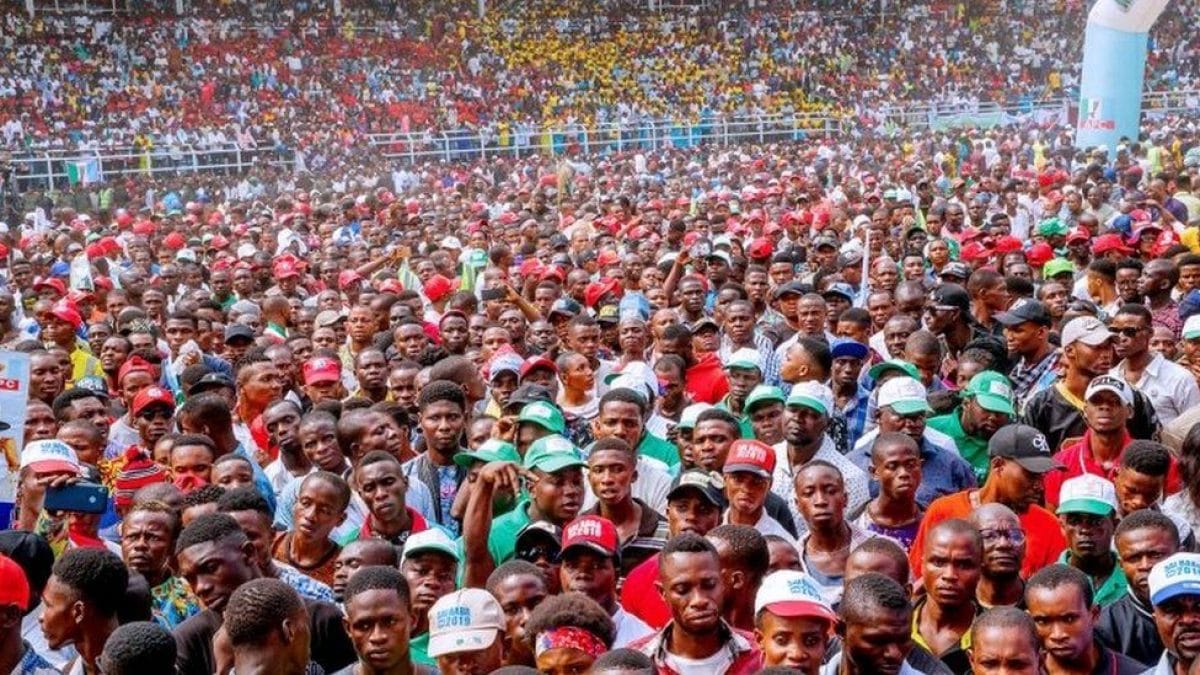
By Mobolaji Sanusi “Democracy is the only system that persists in asking the powers that be whether they are the powers that ought to be.”— Sydney J. Harris (1917-1986). After the recent off-season governorship election in Ekiti State, in which Governor Biodun Oyebanji of the All Progressives Congress (APC) was re-elected, the attention of the entire nation has shifted to the governorship election taking place in Osun State this Saturday. The incumbent governor of Osun, Ademola Adeleke of the Accord Party, is seeking re-election. Nigerians will stay glued to their news gadgets, hoping to see the true wishes of Osun voters reflected in the outcome. Beyond Osun’s election, the bigger picture is the lifting of the ban on electioneering campaigns by the Independent National Electoral Commission (INEC) for the 2027 general elections. From this month of August, a frenzied political atmosphere is expected to unfold. The reason is not far-fetched. The upcoming 2027 general elections are another democratic transition in which the incumbent President, Bola Tinubu, GCFR, a respected political strategist, is seeking re-election, while his one-time political ally turned rival and veteran presidential candidate, Alhaji Atiku Abubakar, alongside the opposition bloc, including Peter Obi, will be trying to wrest power from him. Clearly, an interesting period lies ahead, as dislodging an incumbent of Tinubu’s mould will be a Herculean task. On August 19, 2026, the first phase of the campaign window, according to INEC, will open for presidential and National Assembly contestants, while the second phase, for governorship and State Houses of Assembly elections, will open on September 9. In the coming weeks, acts that previously constituted breaches of the Electoral Act’s restrictions on political campaigns and mobilisation will no longer be illegal. As of today, virtually all members of the leading political parties have engaged in one form of illegal campaign or another, in clear violation of Section 94(1) of the Electoral Act 2022. The subsection under reference prohibits the commencement of campaigns earlier than 150 days before polling day, but curiously with no punishment spelt out for infractions. However, under Section 94(2), the Act provides a maximum penalty of N500,000 upon conviction of any political party or person acting on its behalf who engages in campaigns 24 hours before polling day. It is no wonder that politicians wantonly exploit the lacuna created by the absence of any stated punishment for early campaigns. From August 19, the public will witness lawful political rallies, accompanied by grandiose promises and often comical endorsements. Getting the desires of the people fulfilled has become arduous because most politicians are insincere and political parties in the country are not formed along ideological lines. To the average party leader in contemporary politics, that important political document called a manifesto signifies nothing. In reality, most of them have not read a single line of their party’s manifesto. Politicians join parties only as a matter of expediency, not because of what the party offers the people and the country. This is unlike what obtained during the era of the late Chief Obafemi Awolowo, the revered elder statesman, whose Action Group (AG) and later Unity Party of Nigeria (UPN) had well-enunciated cardinal programmes in their manifestos, compelling states won by the party to implement them to the letter thereby earning the party public acclaim. This standardised programme of action, which included free and compulsory education at all levels, free healthcare, affordable housing and sustainable employment, made the UPN the party of preference. All these can still be replicated in contemporary Nigeria but for leadership’s lack of political will and misplacement of priorities. At the time, these UPN programmes created a unique brand for the party in the states it controlled, making it difficult for the opposition National Party of Nigeria (NPN) to wrest power from it in Lagos, Oyo, Ogun, Ondo and Bendel. The mismanagement of the country by the NPN-led Federal Government and the attempt to forcefully wrest power from Awolowo’s UPN in its areas of comparative advantage largely contributed to the military putsch of 1983. Unfortunately, no modern political party has come close to Awolowo’s standardised cardinal programme for UPN, whether at the state or federal level. Elected governors from all existing political parties unilaterally decide what policies suit their whims and caprices and easily decamp from one party to another, not because of any ideological advantage for their people, but simply in pursuit of personal greed and survival. Some of them do not even bother to consider the ideology of the party they have joined or decamped to. In recent times, we have seen how politicians in search of presidential, governorship and legislative tickets shamelessly go forum-shopping without any consideration for what the party stands for. What matters to them is merely the availability of the platform. What a shame! This creates a real ideological problem regarding what the people should expect from politicians as INEC lifts the ban on electioneering between August and early September. The campaign grounds will be replete with laughable falsehoods and promises of white elephant projects that have no direct benefit to the people but are capable of funnelling looted funds into the pockets of their initiators. On several occasions, President Tinubu has lamented that despite the astronomical increase in monthly federal allocations to states and local government councils, nothing remarkable is happening at those levels. This is traceable to the fact that most existing political parties, including the ruling party to which politicians are gravitating, do not have a clearly enunciated, standardised and uniform cardinal programme in their manifestos to be adhered to and faithfully implemented by elected officials at all levels. Under such a scenario, shaky public trust in the electoral system becomes inevitable. When party manifestos are bulky, unreadable and dumped somewhere immediately after elections, holding politicians accountable becomes difficult. Unlike in the Awolowo era, when progress on promises could be easily monitored and assessed at regular intervals, doing so in contemporary times is like embarking on a wild goose chase. The people in modern times cannot question politicians during electioneering campaigns about policy ideas that were never clearly enunciated in the first place. In most cases, the thousands of people at political rallies are induced with money and such huge rented crowds are far less than the figures of votes scored by candidates on voting day. In political parlance, such effort of deceitful clout chasing by politicians is called ‘mobilisation.’ This is why, during electioneering, politicians are generally not truthful, with nobody to query them. They deploy highfalutin words, often used to disguise rather than illuminate their true intentions. Over time, politicians have used words to confuse voters so that, in the discharge of their civic duties, they unknowingly vote against their own interests. Nigerians will see more of this in the unfurling electioneering season. No wonder that Calvin Thomas, a famous American syndicated columnist/author, once declared: “One of the reasons people hate politics is that truth is rarely a politician’s objective. Election and power are.” Despite these shortcomings, Nigerians clearly know what they want. They want insecurity banished from the land. They want stable and affordable electricity to drive industrial and infrastructural growth. They desire a more humane economy where the cost of living is bearable, and crave a socio-political and economic environment where macroeconomic growth is not used as an excuse to justify debilitating microeconomic conditions. More importantly, Nigerians want a continuation of the remarkable road infrastructure drive being pursued by the current Federal Government. They equally demand an opposition that is focused on realistic and humane alternatives rather than merely just pursuing opportunistic goals. Nigerians need to know the opposition’s alternative solutions to current governance problems, not the ongoing cacophony of murmuring. Any opposition alliance built on inordinate ambition, personal egos and uncompromising power-sharing pursuits will be difficult to sustain, and its strength will remain merely theoretical rather than empirical. Realistically, no sensible Nigerian can argue against the fact that there is hardship in the land. Because of this, we have witnessed intense criticism of the ruling party by opposition parties. Good as this may be for ensuring plurality of voices, it is sad that none of them has offered credible or satisfactory alternatives. Therein lies the problem of opposition hypocrisy. This newly opened electioneering window offers an opportunity for politicians, especially those in the opposition bloc, to come up with credible alternatives, while the ruling party should justify why the people should vote again for its continuation in power. It is also worthy of note for the opposition to realise that the wards and polling units at the local government level across the federation are where critical electoral work should be done, not in the digital space that has been turned into a haven for political blackmail and abuse. The tussle for power between the ruling party and the boastful opposition coalition is just unraveling. And certainly, the weeks ahead will be interesting on the electioneering turfs across the federation. -Sanusi, former MD/CEO of Lagos State Signage & Advertisement Agency, is currently managing partner at AMS RELIABLE SOLICITORS. (WhatsApp Only-07011117777
Another Electioneering Season Beckons On August 19
Full Article
Original Source
Read the full article at Thisdaylive →KhanList aggregates and links to publicly available news content. We do not host full articles from third-party sources. Always verify important information with original sources.