
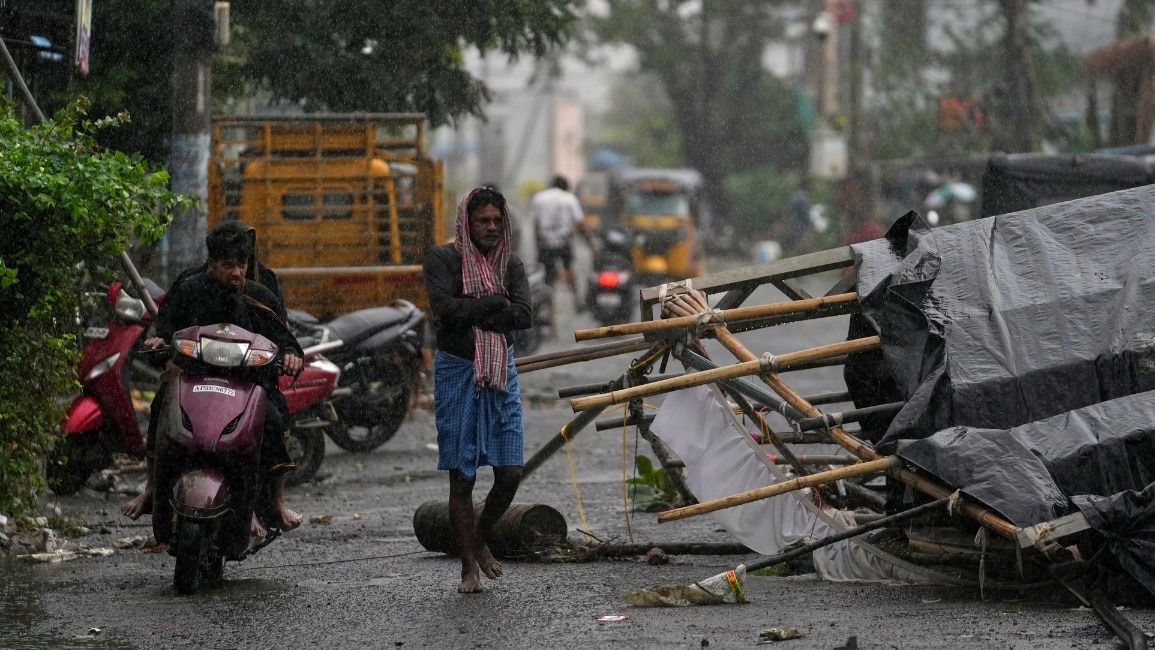
A Bay of Bengal depression may intensify into Cyclone Murasu and approach the Andhra Pradesh coast. The warning raises fresh concerns in areas still recovering from Cyclone Arnab.Murasu is expected to be less intense than Cyclone Arnab. (Credits: PTI)Hyderabad,Nov 1, 2026 07:34 ISTAndhra Pradesh may face another cyclonic storm within days of Cyclone Arnab, as a depression over the Bay of Bengal is expected to intensify into Cyclone Murasu, the India Meteorological Department (IMD) said on Saturday.The system is likely to move towards the Andhra Pradesh coast and may make landfall on the morning of Tuesday, November 3.If the depression develops into a cyclonic storm as forecast, it will be named Murasu, a name contributed by India. The system would become the second cyclonic storm to form over the Bay of Bengal this year, following Cyclone Arnab, which affected the East Coast last week.The IMD has forecast strong winds and heavy to extremely heavy rainfall in parts of Andhra Pradesh, Rayalaseema and Odisha over the coming days. Coastal districts have been advised to remain alert as the weather system moves closer to land.According to IMD Director General Mrutyunjay Mohapatra, the system could bring sustained wind speeds of 80 to 90 kmph, with gusts reaching 100 kmph. It is expected to be less intense than Cyclone Arnab, which had affected the region with winds of around 130 kmph.CYCLONE MURASU: RAINFALL AND WIND WARNINGSThe IMD has forecast very heavy rainfall in Andhra Pradesh and Rayalaseema on November 2 and 3, with isolated extremely heavy rainfall in some areas. South Odisha is also likely to receive heavy rainfall on November 3 and 4.The developing system is expected to influence weather conditions across coastal Andhra Pradesh, Yanam and neighbouring regions of southern India.The IMD has also warned of deteriorating sea conditions across the Bay of Bengal. Fishermen have been advised not to venture into the sea until at least Wednesday afternoon. Those already at sea have been asked to return to the coast.Mohapatra said large parts of the west-central, south-east and central Bay of Bengal could experience extremely dangerous sea conditions.He cautioned that the conditions could prove disastrous for fishing boats and smaller vessels and advised them to stay away from the affected areas.CYCLONE ARNAB'S IMPACT STILL FRESHThe fresh weather warning comes days after Cyclone Arnab crossed the Andhra Pradesh and Yanam coasts on October 28. The storm, which recorded sustained wind speeds of around 130 kmph, was classified as a very severe cyclonic storm by the IMD.The cyclone brought heavy rainfall and strong winds, damaging houses, uprooting trees and disrupting electricity supplies in several areas.At least three people died, while more than 1.8 lakh people were evacuated across Andhra Pradesh and Odisha, according to figures cited in the report.The latest depression has raised concerns about the possibility of another round of heavy rainfall and strong winds in areas still dealing with the impact of Arnab.IMD FORECASTS BELOW-NORMAL RAINFALL IN NOVEMBERDespite the development of two weather systems in quick succession, the IMD expects much of the country to receive below-normal rainfall in November 2026.South Peninsular India is likely to receive less than 77 per cent of its long-period average rainfall. Most other regions are also expected to record below-normal precipitation, except parts of central, northwestern and northeastern India.Day and night temperatures are likely to remain above normal across most parts of the country, with the Himalayan foothills and some areas of central and eastern India expected to be exceptions.The IMD has also indicated that strong El Nino conditions are likely to persist, while the Indian Ocean Dipole is expected to remain neutral.Meanwhile, northwestern parts of India, including Delhi and Punjab, are likely to experience largely dry weather with relatively stable temperatures as rainfall activity remains concentrated over eastern and southern regions.- Ends
Another cyclone after Arnab? Murasu heads towards Andhra coast, may hit on Nov 3
Full Article
Original Source
Read the full article at Indiatoday →KhanList aggregates and links to publicly available news content. We do not host full articles from third-party sources. Always verify important information with original sources.