
Tony Blair and Gordon Brown, Margaret Thatcher and Nigel Lawson, Boris Johnson and Rishi Sunak – the relationship between the Prime Minister and their Chancellor has been one of the most combustible double acts in British politics for decades. And it appears Andy Burnham and John Healey have not taken long to discover the same old tensions for themselves. Just weeks into the new government, the Prime Minister’s ambitions for a sweeping programme of spending and reform are already running up against a Treasury demanding fiscal restraint. Physically, No 10 and No 11 Downing Street are separated by little more than a few footsteps. Shorts Politically, the two occupants can often find themselves a world apart. Senior Whitehall sources say No 10 and No 11 are at loggerheads over the Budget, due on 28 October. ‘There are tensions there’ “There are definite tensions there,” said one source. “Andy wants to spend, spend, spend on this and that and the Treasury has been left trying to find the money.” It might have been easier had not the current incumbents followed Sir Keir Starmer and Rachel Reeves onto the national stage. Healey quit as defence secretary, helping to push Starmer out of No 10, because Reeves wouldn’t spend enough on re-arming Britain. Burnham replaced Starmer on a wave of feel-good intentions to ease the cost of living crisis for millions. But while the faces at the top have changed, economic realities have not. If anything, with the war in Iran, they have got worse. Hence the tension between the new Chancellor, who wants to control spending, and the Prime Minister, who is also First Lord of the Treasury, who wants to control spending while also being able to spend. Another source familiar with the discussions between Nos 10 and 11 also acknowledged friction, attributing it to the pressure on the Chancellor’s fiscal headroom – essentially the spare cash to pay for emergencies – following a surge in the cost of government borrowing, which eats into that safety buffer. A tricky economic situation New analysis from KPMG earlier this week suggested that Healey’s room for manoeuvre could have fallen to about £12bn, down from the £23.6bn headroom inherited from Rachel Reeves. It’s a big figure, but in terms of the UK Budget, it is peanuts. The economists said that, to maintain the larger buffer – regarded as important to maintaining confidence in the Government’s finances, and so keep the cost of borrowing down – Healey is under pressure to increase taxes or cut spending. That puts the Chancellor in an increasingly difficult position – especially in light of the intense personal pressure on him to raise defence spending. While the party faithful gather in Liverpool this weekend for Labour’s annual conference, Healey will be putting the finishing touches to his Budget. Burnham’s message to conference – his first as Prime Minister – will be one of hope and change. “The message will be it’s time for Britain to believe again, it’s time for Britain to have hope again,” he has said. But behind the optimism lies a much more difficult political calculation. Burnham has already signalled that there will be no tax bombshell in the Budget, marking a clear departure from Reeves’s approach. The former Chancellor raised taxes by around £66bn across her two Budgets, including higher employer national insurance, changes to capital gains tax and inheritance tax, as well as VAT on private school fees. The changes mean the UK is now facing its highest tax burden since the early 1950s, with the tax take forecast to hit a new record high in the years ahead. Ministers face difficult choices Observers also blamed national insurance on stifling growth – and therein lies the dilemma. The best way to increase tax receipts without increasing taxation is to grow the economy. But this is easier said than done, and in the short term raising taxes to fill a financial hole can hold back growth. Asked on his way to the UN General Assembly in New York last week whether he believed the right balance had been struck between taxing wealth and taxing income, the Prime Minister said: “We have two budgets in 2024 and 2025 and we have to be conscious of the extent to which we have raised revenue. And we have to make sure we get the balance right.” Pressed on whether the balance was right, Burnham declined to say more. “These are matters for the budget,” he said. Few close to the Chancellor would deny that this is going to be a very difficult Budget as he seeks to balance the books while sticking to the self-imposed fiscal rules that borrowing must fall and day-to-day expenditure must be met through tax income. Healey has already told Cabinet colleagues that there is no money and that anything they wish to spend will have to come out of their existing budgets. But a senior Whitehall source said departments had already made “rigorous spending efficiencies” and warned that further savings would be difficult without compromising some of their top priorities, ie cuts. That leaves ministers facing difficult choices across almost every major area of Government. How rethinking the Chagos deal could help One of the biggest costs on the UK’s finances is welfare, coming in at an expected £322bn this year – almost a quarter of spending. According to those familiar with the discussions, there are unlikely to be significant welfare savings this Parliament – even if primary legislation is introduced next year following the Timms review of disability benefits and Alan Milburn’s review of youth economic inactivity, which is examining how to get more young people into work. Defence spending presents another problem, and there is still no clear path to reaching 3 per cent of GDP on defence by 2030 – a move the Office for Budget Responsibility (OBR) has previously estimated would require an additional £17.3bn a year by 2029-30. Healey has, however, told allies that he has found the £4.7bn still needed to fund the Defence Investment Plan, the funding gap at the heart of the defence settlement over which he resigned as defence secretary in June. However, even some of his closest Cabinet allies have not yet been told how he has plugged the gap. One potential source of savings is the controversial Chagos Islands agreement, in which the UK will hand over sovereignty of the islands to Mauritius and lease back the military base on Diego Garcia for 99 years at a cost of £101m a year. It is understood that Burnham and Healey have been told that, if the Government wants to find more money for defence, the deal should be reconsidered. One idea put forward is to return sovereignty over the islands to the Chagossians while having the US pay for continued use of Diego Garcia as a military base. That would replace the existing treaty, under which sovereignty passes to Mauritius and Britain retains a 99-year right to operate the base. The Government says the Chagos deal will cost £3.4bn in today’s money. But because payments would continue for 99 years and be linked to inflation, the eventual nominal cost could be considerably higher. The deal has now effectively been put on hold after Donald Trump rejected it, while Defence Secretary Wes Streeting said this week that payments to Mauritius would not be made “at this stage” and that the agreement cannot proceed without US support. Mansion tax rows Tax is another area where the pressure is beginning to show. Labour is considering lowering the threshold for its planned mansion tax from £2m to £1.5m, potentially bringing around 160,000 additional homes into the net and raising as much as £800m a year, according to estimates. The proposal is not yet agreed and the Treasury has described reports as speculation. But it is already facing pushback from Labour MPs and London councils, who warn that £1.5m can buy an ordinary family home in parts of London rather than a mansion. Four London councils have urged Healey to rethink the tax, while Labour MPs have also raised concerns about its impact on families and London homeowners. One senior Labour insider described the proposals as “bonkers”, adding: “The Labour Party would lose London for a generation.” And the arguments over money are not confined to domestic policy. Fundamental problem All of which leaves the Government with a fundamental problem: Burnham has promised a programme of renewal and reform, but Healey is having to operate within increasingly tight financial constraints. Burnham’s allies have claimed that he and his Chancellor did not know how bad the public finances were until they took office. However, the Prime Minister disputes this. “It’s not the case that we were surprised,” he said. “I was in access talks and understood very clearly the position.” But Burnham argues that the economic circumstances subsequently changed – particularly as a result of the situation in the Middle East. “The truth of the matter is that because of the situation in the Middle East, the position changed, and has changed over the time I’ve been in,” he said. “That’s just the reality of the situation that we’re in.” For now, Burnham can put the arguments over money to one side and offer Labour members the optimism they have been waiting to hear. But the real test of the new Government’s ambitions will come just weeks later, when Healey delivers his first Budget and reveals how much of that ambition can actually be afforded.
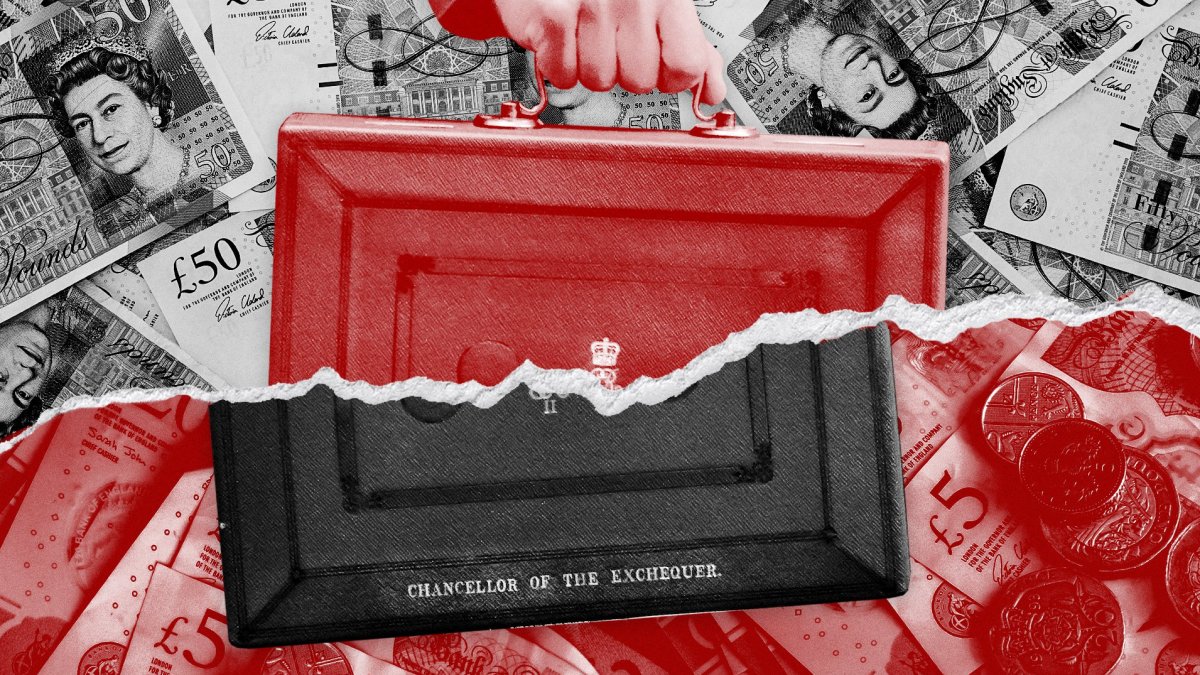
‘Andy wants to spend, spend, spend’: No 10 and Treasury split over Budget
Full Article
Original Source
Read the full article at Inews →KhanList aggregates and links to publicly available news content. We do not host full articles from third-party sources. Always verify important information with original sources.