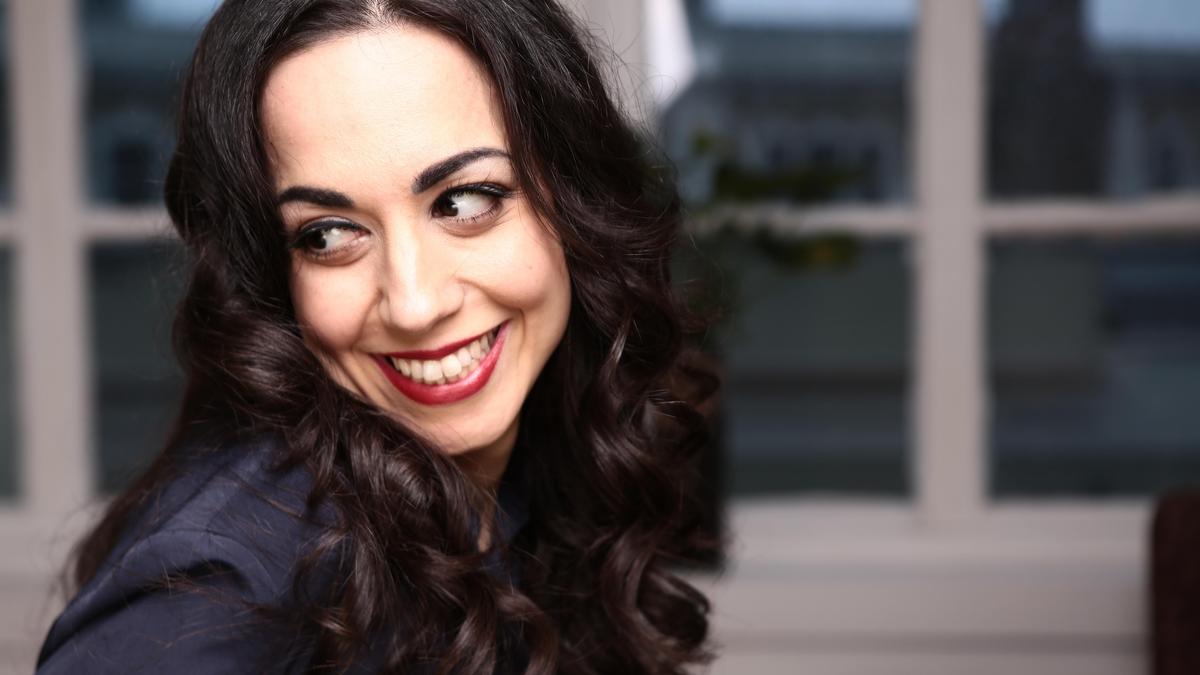
Andrea Oskis is a psychologust-psychotherapist with a doctorate in attachment theory | Photo Credit: Special arrangement Among millions of books — recipe books, food memoirs — that jostle for attention in the cookbook arena, Andrea Oskis’s The Kitchen Shrink - How the food we eat reveals who we are - and how we love, has the tenacity of a long-distance runner. What it discusses about food, relationships, family and home stays with you long after the last page has been turned.Andrea, speaking from London, tells me how her Greek Cypriot roots influenced not only what she ate as a child and who she loved, but also her work as a psychologist and psychotherapist.“I started off as a psychologist and academic. In my twenties , I enrolled to be a psychotherapist and did my PhD in the field of attachment theory which examines the psychology of relationships. I ended up both teaching and researching. My life is really split in half. And then I write in between all of that,” says Andrea, 43, of her work that was set rolling when she first studied Cognitive Science for her undergraduate degree from the University of Westminster. “I followed it up with psychotherapy training at The John Bowlby Centre, the only place in the UK that offers attachment-based psychotherapy training.” Andrea recalls noticing that the most powerful stories that came into the consulting room were actually the very ordinary ones about food “ They would always take me and the patient towards something about love or loss, and something really formative for their life. Food is a really powerful storyteller. I’m Greek. So food has always been an important part of family life and friendships. This book was about bringing both of them together,” she says. The Kitchen Shrink | Photo Credit: Special arrangement The book, published by Bloomsbury, is a volume of oral histories in which Andrea examines food through the tropes of childhood, ethnicity and generational trauma. How does attachment theory work in the modern world with younger people? “I think my answer to that would always be to lean towards how we’re born and who we are in the world in terms of evolution,” says Andrea. “When we come into this world, we need to attach ourselves to a caregiver for survival. And part of that attachment is a process that involves feeding.” Andrea says that when she interacts with people seeking professional help she feels “a lot of people’s psychological problems are rooted in some form of attachment going wrong at earlier stages in life”. She explores this through the story of Rose, her patient, who says that her mother created food while her father just put food on the table. Isn’t this also a kind of love as long as it was provided for? Andrea says, “The idea is that providing something always has to come with an emotional component. Whatever we provide has to have some notion of an emotional connection to the other person involved. And that’s what gives it an attachment function.” In another chapter, Andrea looks at how well married couples approach food and attachment. Do they know each other’s favourite foods? For this, she examines the marriage of her parents through a questionnaire in the light of changing food preferences and health challenges.“One of the questions that came up was naming each other’s three favourite foods. The time stamp for that was actually in the 1970s. And I think it comes from a wider notion of this idea that we must be the same in order to relate with each other. My parents in terms of heritage were quite different, and that really made itself shown through food. But despite that, they could make a marriage work.”Andrea also examines discussions around the dinner table that may not be related to food and how depending on how well the conversation goes, it tells on how the diners approach the meal. She writes of Leonard, a child who has his worst encounters around the dinner table with a father who threatens him and withholds his dessert. Does that psychologically affect how we digest that meal?“I think there is a relationship because if we are sitting around the table, we have closeness, which is something that attachment theory speaks a lot about. Physical closeness does not guarantee emotional closeness. That’s why things escalate because the real emotional issue isn’t being spoken about. My argument would be that the table can be a really powerful way of bringing people together and having those conversations, because dinner time is such a regular feature of human life. If used well it can be a really important way of being able to talk about those feelings” she says.For someone who writes about food and attachments Andrea says she does not enjoy the process of cooking. However, her work has enabled her to travel paths that give her and her patients an identity far beyond the dinner table. Published - August 20, 2026 03:36 pm IST
Andrea Oskis explores how our food determines our relationships in her book ‘The Kitchen Shrink’
Full Article
Original Source
Read the full article at Thehindu →KhanList aggregates and links to publicly available news content. We do not host full articles from third-party sources. Always verify important information with original sources.