
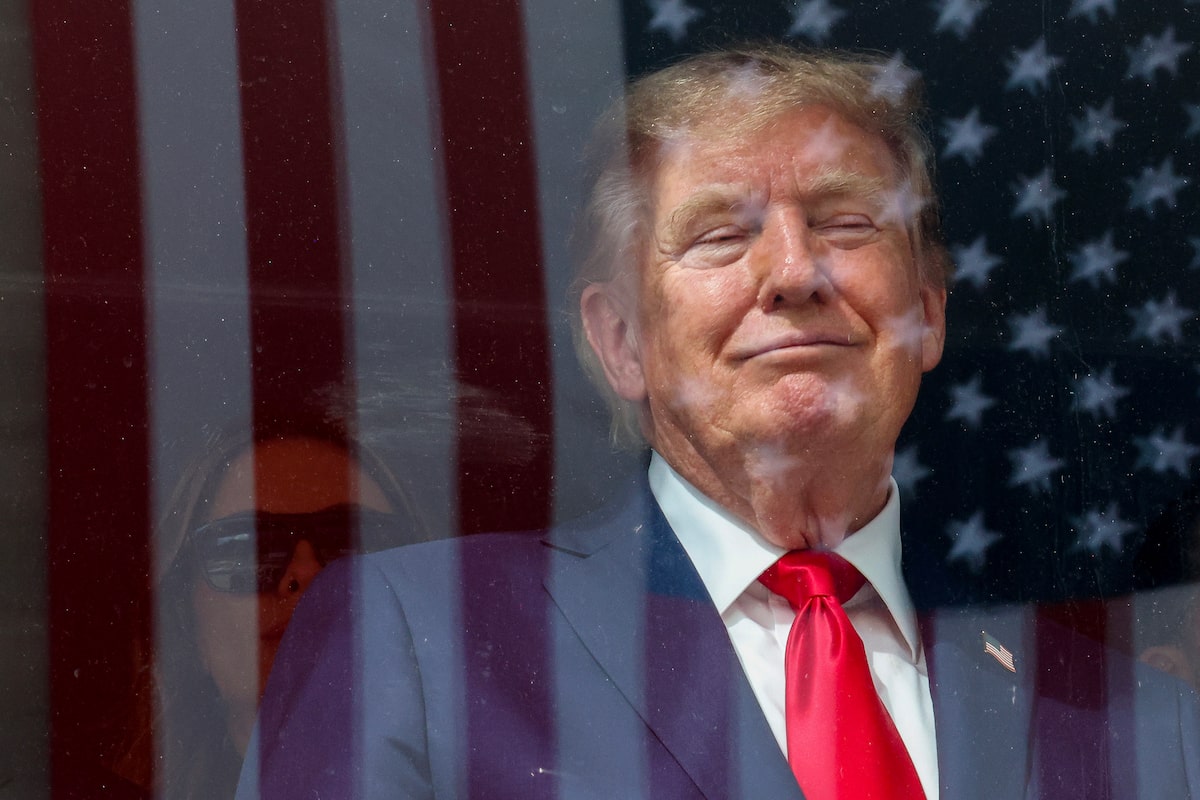
Open this photo in gallery:U.S. President Donald Trump watches the end of the NTT INDYCAR Series on Sunday in Washington, D.C.Mike Kropf/Getty ImagesNine centuries ago, the theologian Moses Maimonides, seeking to understand the complexities of life, wrote a volume called The Guide for the Perplexed. Those searching for wisdom on the state of the Canada-U.S. relationship after the abrupt break in bilateral trade negotiations surely are perplexed − but have no guide. Nearly two decades ago, the WB Television Network created a TV drama called Jack & Bobby in which there were fleeting but troubling references to a mysterious future conflict called the “War of the Americas.” No one in the period in which that show aired − Paul Martin was prime minister − could have taken the notion seriously, and certainly no one would have imagined that when a prime minister in 2026 spoke of Canada being at war, the opponent would be the United States. Trump revives annexation comments as governors warn tariffs on Canada will harm AmericansMark Carney − who said “Canada is becoming stronger and less dependent on America“ − surely meant the word “war” metaphorically, as in the phrase American philosopher William James employed in a famous 1910 speech, “The Moral Equivalent of War,” or in relation to the trade war that has been simmering since Donald Trump’s first term, only to break into wildfire flames in recent days. The two countries aren’t in a conflict like the India-Pakistan hostilities that have flared for three-quarters of a century. It’s more like the Anglo-Dutch trade fight of the 17th century, though this one involves two countries that were, since the years leading up to the Second World War until the middle of the last decade, allies arguably without precedent in the history of humankind. Now, the question is whether this is a permanent break or merely another temporary but significant episode like the two countries’ long-ago military conflicts: the 1775 invasion of Quebec, the War of 1812 and the Fenian raids of 1866 and 1870-1871. History suggests that while Mr. Carney is right that Canada’s ties to the United States are now in a different form, they have not been severed completely. “This isn’t the end of anything,” said Christopher Ragan, the emeritus McGill University economist and author of Canada’s most widely used postsecondary economics textbook. “It’s the beginning of another policy tantrum from Donald Trump. He wanted a political win and didn’t get it. And the question now may be: If he can’t deal with little Canada, what can he do? But this shows we’re not prepared to cave to American pressure.”Premiers present united front behind Carney, but divisions emerge on next stepsProf. Ragan said this episode may be a symbolic turn to a world in which countries everywhere grow more protectionist. “If you care about your industries and supply chains, you may have to pay an economic price,” he said. “If we’re going to diversify our trade away from the U.S., there may be a price to pay. But it may lead to more economic security for us all.”It’s clear large segments of the U.S. political world are troubled by this development. Thirteen American states border Canada and have a stake in Canada-U.S. trade and tourism. The reaction was swift from several political figures from those border states.“Canada is not our enemy − any suggestion otherwise is ridiculous,“ Republican Governor Phil Scott of Vermont said. “At a time of growing economic and geopolitical uncertainty, the United States should be strengthening this partnership, not weakening it.” Democratic Senator Patty Murray of Washington, a state where Canada is the largest trade partner, said in a social-media post that “Trump owes our friends and neighbours an apology for nearly 2 years of his boorish insults and jeers.” Democratic Governor Kathy Hochul of New York spoke of the President “needlessly picking fights with our allies and raising prices here at home.”Business leaders brace for lengthy trade war after talks break downCanadian trade is also important in states far from the border. The absence of U.S. alcohol from Canadian liquor stores, for example, affects the states led by two governors likely to run for the Democratic presidential nomination in 2028: Gavin Newsom of California (wine) and Andy Beshear of Kentucky (bourbon). But Canada can expect no succour if Vice-President JD Vance is the successor to Mr. Trump. He recently taunted Canada and mocked Mr. Carney. “It’s always regrettable when our relations deteriorate, and it is clear that the U.S. is at fault here,” said Douglas Irwin, the Dartmouth College economist regarded as the leading American academic expert on trade. “But let’s hope the Americans come to their senses, decide the friction isn’t worth it, and the two countries get back to negotiating.“But,” he added, “the Canadians have to realize it won’t be over until this administration is over.”
Americans, too, are wondering why the U.S. and Canada are embroiled in a trade war
Full Article
Original Source
Read the full article at Theglobeandmail →KhanList aggregates and links to publicly available news content. We do not host full articles from third-party sources. Always verify important information with original sources.