
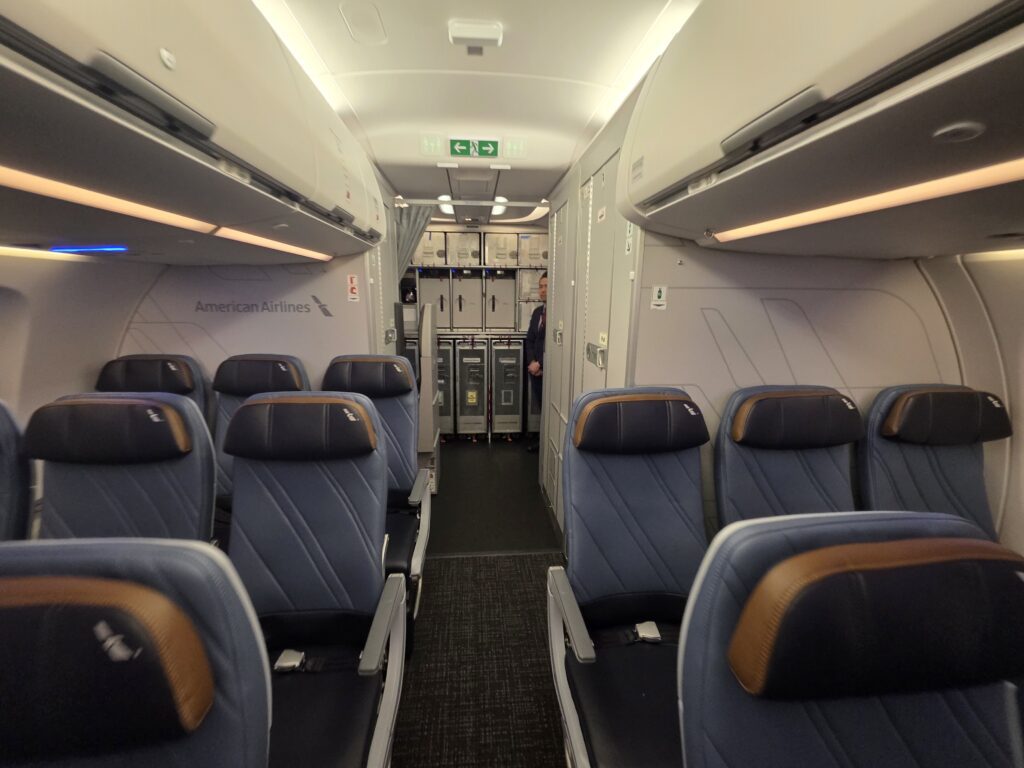
American and United’s premium-heavy Airbus A321XLRs could come with an odd expense: flying extra weight across the Atlantic because too few people bought coach tickets. A new report claims Iberia already loads ballast at the back of its planes on some lightly booked flights, and has even moved business class passengers into economy to get the balance right. Enilria flags the issue, and argues it could be worse for American and United because they’ve put more premium seats and fewer coach seats on the same aircraft. The balance concern makes sense, but there’s also speculation that this explains United’s rear snack bar, and that it’ll push airlines to slash economy fares to fill the back, I’m not as convinced by. The A321XLR is supposed to make smaller long haul markets work. Airlines can offer a nonstop without finding enough passengers to fill a widebody. American and United are also betting that more of those passengers will pay for a better seat. That’s needed, because the plane has a lower trip cost but a higher per-passenger cost. They need premium passengers to make the proposition work. Iberia has 182 seats: 14 business class and 168 economy. American has 155 seats: 20 business class suites, 12 premium economy and 123 coach. United has 150 seats: 20 Polaris business class, 12 premium economy and 118 economy, including extra-legroom seats. A plane can be well below its weight limit and still have too much weight up front. Large premium cabins with heavy seats can contribute to that. Fill those seats and not the ones in the back and weight and balance can be an issue. Enilria suggests that the plane draws fuel from its rear center tank first. As that fuel is consumed, the aircraft’s center of gravity would move forward. I’m not familiar with the XLR’s fuel-transfer sequence. But fuel burn changes balance and the aircraft has to remain within its limits as its load changes. Too much weight forward could make raising the nose for landing difficult. That’s why load planning can call for moving bags, seating passengers farther back, or adding ballast. What I don’t follow is the argument that United put a snack bar at the extreme rear to move galley weight aft and help offset the front cabin, because United’s A321neo Coastliner also has a rear economy snack bar, and doesn’t have the XLR’s distinctive rear center tank. Limiting passenger count on the Coastliner with a snack bar could make sense, and placement of it in the XLR could be related to ballast, but that’s not obvious. Adding ballast means more fuel to transport the extra weight. It needs to be loaded, and takes up limited hold space. But it can make sense because you need less sand than equivalent passenger weight, because it can be placed farther back in the aircraft – causing it to have more leverage than weight in the passenger cabin. It also seems to me that an airline can move bags and passengers back in the cabin instead of adding weight. As a result, I’m not sure this changes the revenue management equation that much – selling fares at dirt cheap prices just to add weight to planes that aren’t selling out. That’s sometimes the approach, but it can also cannibalize existing premium revenue and passengers who would pay more for their ticket take the option to pay less. Topics on this page
American And United’s Premium-Heavy A321XLRs May Need Ballast To Fly?
Full Article
Original Source
Read the full article at Viewfromthewing →KhanList aggregates and links to publicly available news content. We do not host full articles from third-party sources. Always verify important information with original sources.