
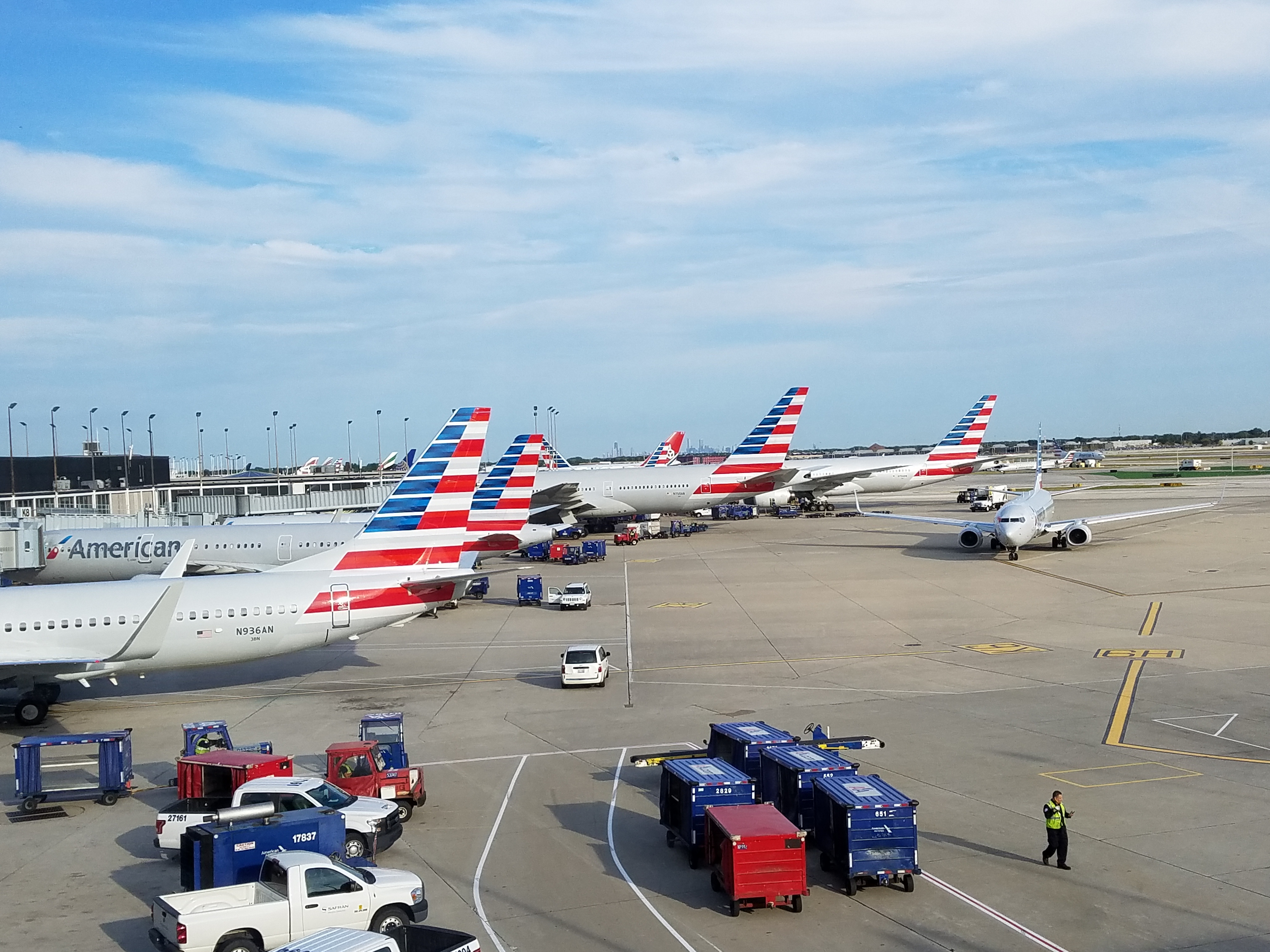
American Airlines just lost its appeal to undo Chicago O’Hare’s gate reshuffle. But it’s already bought two gates from Spirit, earned back gate space through its own growth, and survived United’s effort to push it out of Chicago. The airline’s position is stronger than when it sued, and judges haven’t finally decided whether the city broke its contract. The new ruling upholds the refusal to issue a preliminary injunction. The question of whether Chicago took American’s gates too early, after promising to give the airline a chance to grow into additional space first still hasn’t been resolved. I still think American has the better argument about the contract. I’ve also been skeptical from the beginning that they’d get an injunction, since money damages seemed possible. The November 19 appellate decision fits that distinction, although the trial judge’s preliminary reading of the contract was unfavorable to American. The judge accepted that Chicago made American an explicit promise The dispute goes back to the 2018 airport lease. United was getting gates freed up by Delta’s move to Terminal 5. American objected to widening United’s advantage, and Chicago agreed to three additional gates on the north side of the L concourse extension. The lease called for gate assignments following an attached map, with those assignments remaining in place for at least twelve months. American’s argument was that it needed to actually receive the promised capacity before that protected period could run. Otherwise United could grow using its additional gates while American waited for its own, and then the city would use the unequal flying to take gates away from American. The way gates work at Chicago O’Hare is that prior flying determines future gate space (or, technically, ‘linear frontage’). That’s the problem I identified when American first filed its lawsuit. The timing was part of the bargain that got American to support the redevelopment agreement in the first place. And the trial judget accepted that the city and American had agreed to tie the process to the three additional gates becoming operational: For purposes of this motion, that much—the Court has no doubt—was the deal. His position, though, is that the city’s fingers were crossed, suggesting that the explicit written commitment didn’t make it into the final lease, or at least that American couldn’t establish that it had: The language identifies completion of the Terminal 5 expansion and an airline’s relocation there as the triggers. It doesn’t separately name completion of American’s three gates. The additional gates appear on the map as common use space, which the city controls, rather than space reserved for American’s preferential use. The lease says it’s the complete agreement. The judge treated its language as unambiguous and excluded the earlier negotiations as a way to add a condition to it. American’s last additional gate became operational March 14, 2025. Under its reading, the protected year therefore ran through March 2026, and the next redetermination could begin April 1, 2027. Chicago instead treated the protected period as having begun in December 2023, allowing redistribution in 2025. The city’s reading is silly. The map is part of the signed agreement. Requiring the city to deliver the capacity shown there before starting a year of protected assignments doesn’t require inventing a promise outside the contract. And designating a gate common use doesn’t explain how a gate that isn’t operational can fulfill a promise intended to let an airline ramp up flying. Why American lost the injunction appeal The appellate court assumed American could satisfy the initial requirements for an injunction and still concluded that the harm from blocking the gate changes justified denying one. It was reviewing whether the trial judge abused his discretion, NOT deciding the contract dispute from scratch. American’s problem was that it didn’t establish losing the gates would destroy its Chicago hub. It planned to operate the same number of flights using fewer gates, with more flying at less attractive times and less room to recover from delays. That could cost money, make operations worse and harm passengers but it made the injury look measurable. That was my original point – that this would be a case for future damages rather than an injunction. Meanwhile, the other airlines had planned schedules around the redistribution. United projected more than 2,000 cancellations if it were blocked. That number was overblown but the court accepted that changing the arrangements would disrupt passengers, other airlines, and airport construction. And the expectation that American would win gates back in the next allocation (which it did) undercut the argument that it faced an irreversible decline. Timing hurt American, too. Chicago announced the redistribution in February 2025. American sued in May but didn’t request preliminary relief until July. By the September hearing, the October gate changes were imminent and preparations were well underway. American argued that the city shouldn’t get to invoke the hardships from correcting an agreement they deliberately broke. The appeals court rejected that approach because it saw a reasonable dispute over what the contract meant. In my view, Chicago (intentionally) muddied the contract issue enough to make it less clear. This decision doesn’t end American’s lawsuit. It upholds the denial of a preliminary injunction. The contract claims and potential damages are still unresolved. The court rejected the argument that implementation of the gate changes had made the appeal moot, since a court could still order an effective remedy. United’s strategy ran into the airport’s actual capacity Chicago seemed strongly inclined to help its hometown airline. United’s headquarters are valuable to the city, especially with rumors of a move to Denver hanging over the relationship. My coverage of the gate dispute even generated an angry phone call from Chicago “shadow mayor” Jason Lee. United saw a chance to turn American’s slow recovery from the pandemic into a permanent retreat. American had retired too many aircraft and couldn’t rebuild everywhere at once. Fewer Chicago departures meant fewer gates, which could make future growth harder. United CEO Scott Kirby tried to create pressure by talking up American’s Chicago losses and getting financial analysts to question why it should stay. United then announced additional flying on the morning of American’s earnings call, practically writing the questions for them. This was strategic flying. United clearly didn’t want all of that additional capacity. It wanted invesors to believe that any growth would be matched, so American couldn’t improve its gate position and would just lose more money trying. Kirby told analysts United would add “as many flights as are required” to protect its gate count. Then the Federal Aviation Administration intervened. The airport couldn’t handle the schedules airlines were filing, especially with construction constraining movement on the ground. Its summer order capped scheduled arrivals and departures at 2,708 per day from May 17 through October 24. The government used approved summer 2025 schedules as its baseline. It rejected rewarding airlines for filing unrealistic 2026 schedules to improve their negotiating position. United’s much larger proposed buildup didn’t entitle it to preserve that bigger share while forcing American to shrink. The government effectively called United’s bluff. The cap limited American, too, but it protected the existing competitive balance against United’s attempt to overwhelm it with additional flights. American had also grown enough during 2025 to earn back gate space in October’s redistribution. The returned space amounts to roughly three narrowbody gate equivalents. Separately, American acquired Spirit’s G8 and G10 gate leases for $30 million, which I was first to report. That reduces the practical stakes of this appeal, but it still seems that Chicago broke its agreement to benefit United. American needs Chicago to rebuild the business Kirby claims American loses so much money in Chicago that it should leave. Some version of those losses are real, created in part by the undersized schedule it had been flying. But the size and meaning of the losses get overstated. It requires assigning headquarters overhead to the hub that doesn’t disappear if the hub closes. And American would lose connecting traffic and credit card customers if that happened, too. American needs to be relevant in the largest markets where people spend heavily on cards. Retreating from Chicago would make AAdvantage less valuable to Chicago customers, and make its Citibank cards harder to sell and less attractive to spend on. Attributing credit card revenue to the customers and markets that generate it produces a different picture than spreading that revenue across flights throughout the network. That’s why Chicago belongs alongside American’s efforts to rebuild Los Angeles as gates return after construction, and its plans to bring Alaska Airlines into its Atlantic and Pacific joint ventures. They’re working to regain relevance in the largest spend markets in the country. The Chicago fight has also given employees something to rally around. In the post-earnings employee meeting I covered in January, Chief Commercial Officer Nat Pieper called United the “common enemy” and made it out to be a battle for loyalty and credit card performance. He reported roughly 20% growth in loyalty enrollments, card acquisitions, and local market share over the preceding nine months. Topics on this page
American Airlines Loses O’Hare Gate Appeal—But United’s Plan To Drive It Out Of Chicago Is Failing
Full Article
Original Source
Read the full article at Viewfromthewing →KhanList aggregates and links to publicly available news content. We do not host full articles from third-party sources. Always verify important information with original sources.