
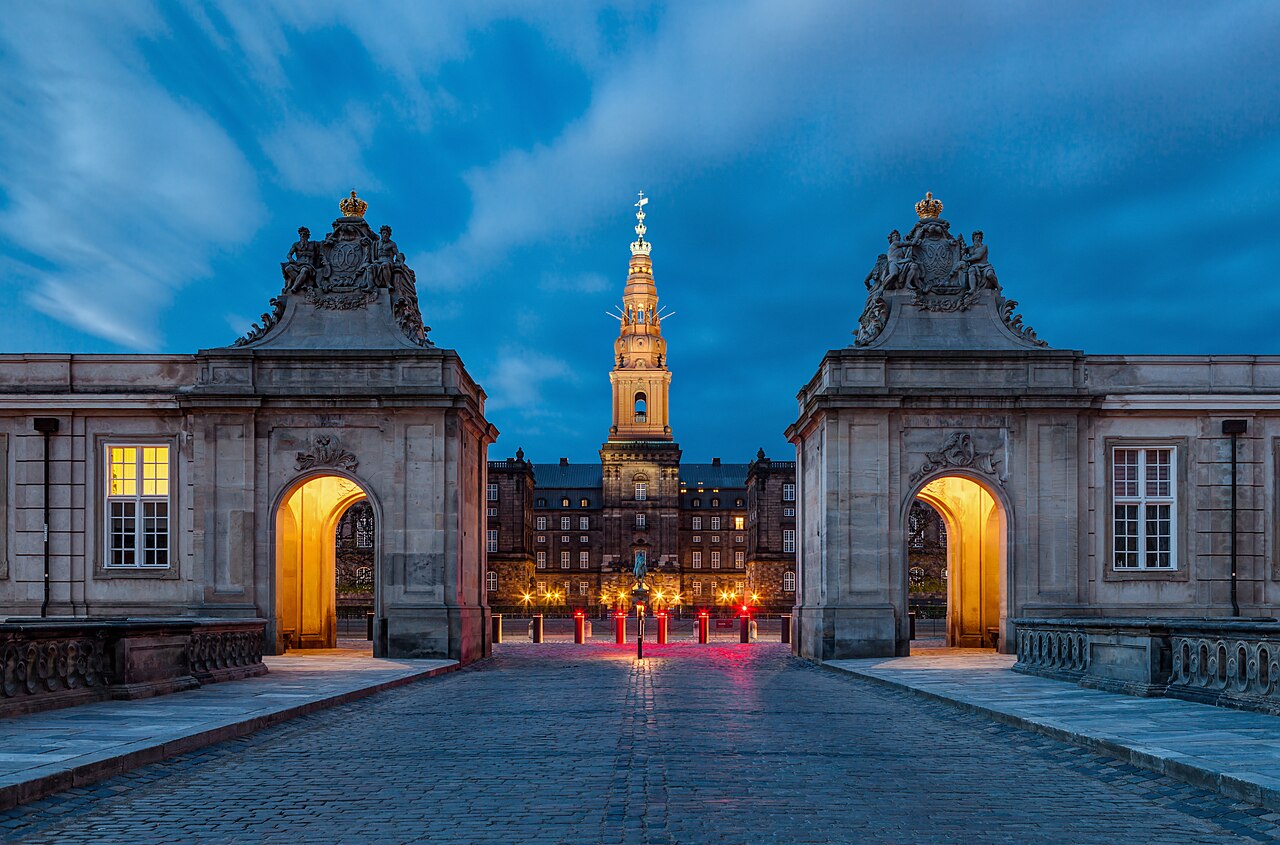
Denmark Conversations in Copenhagen revealed what a life without financial terror would be like. (Moahim/Wikimedia Commons/Creative Commons) I was sitting in a coffee shop in Copenhagen, Denmark ruining my vacation. For about the hundredth time I found myself calculating how much the trip was costing, and whether, as a retiree, I had saved enough not to outlive my money. At the end of life, I was likely to face tens of thousands of nursing home expenses, with years of increasing medical expenses on the way down. Then there was inflation and the tottering Social Security and Medicare situations to worry about. My expensive coffee was getting cold. I looked around the room full of Danes and realized something. No matter what else, not a single one of them could be worrying about anything close to what I was thinking about. Every Dane gets free universal health care, free public schools and universities, pensions, generous unemployment insurance, and more or less cost-free elder care. The mom looking at pastries enjoys heavily subsidized child care. The things that shadowed my life—such as paying for child care and then trying to figure out how to pay for my kids’ college without leaving them burdened with life-long student loans—were not a factor here. Was I going to doom myself to tax hell by withdrawing from the Roth IRA and traditional IRA in the wrong order? Do I have to pay someone to advise me on how to access my own money saved over a lifetime, decades in which I denied myself and my family so there would be something left over at the end? I was not a happy guy. I approached the mom for someone to talk to. She was curious to meet a tourist, and like most people I met, friendly and open. The presumptions that govern a stranger approaching you in a big American city did not apply. I asked her if she was happy, and she replied that indeed she, and most Danes, were. I looked it up later; four of the five happiest nations on earth are Nordic countries, with Denmark at number two. (The U.S. is down at 24th, with Afghanistan understandably ranking globally as the unhappiest place.) I wanted to know why Danes might be so happy. I turned the topic to one of my biggest worries, healthcare, attracting the attention of an older man nearby. (Of course everyone spoke English: Denmark consistently ranks among the world's best non-native English-speaking countries, the product of an excellent public school system that starts foreign-language training in first grade). I practically had them in tears laughing as I tried to explain how healthcare works in America, with its HMOs, PPOs, Obamacare, Medicare, copays, deductibles, in- and out-of-network, and more. I told them that, after paying Medicare taxes all my working life, I still had to pay several hundred dollars more each month in retirement (plus a new form of income tax called IRMAA) for a health insurance system that covers most Americans so incompletely that those who can afford it have to buy private supplemental insurance, as well as paying copays for most doctor visits. And this is after you figure out the Medicare system itself, a complex mess that requires you to choose among Parts A–D. And if you don’t sign up for Medicare “on time,” you will have a penalty attached to your premiums for the rest of your life. Then I tried to explain retirement. It starts with choosing when to start collecting your Social Security in America; if you take it at age 62 you get less money each month for more months, versus age 70 when you get more money but for fewer months, because you die. The cut-off age to balance the choices is somewhere around 80-something, so you have to make an irrevocable decision estimating your own death. There was a similar ghoulish calculation for my meager pension: I agreed to take less money each month betting I’ll die before my wife, leaving some for her as a widow. In Denmark every person gets healthcare. They usually pay nothing. Some do buy supplemental insurance for faster access to specialists, but it is generally through a nonprofit organization. Old-age pensions are supported by a combination of taxes and mandatory occupational pension contributions. Together the entire multilevel retirement system typically replaces over 70 percent of former wages. In the U.S., the average worker sees roughly 40 percent replaced by Social Security, higher lifetime earners much lower. There are low rates of elderly poverty in Denmark. Significant retirement income comes from pre-funded, government-held occupational pension funds that you pay directly into while working, alleviating the burden on future taxpayers. This is wholly unlike the American system, which may soon run out of money or reduce benefits to stay solvent. We pivoted to the big question of taxes. I’d read that if the U.S. tax code were made into an audiobook, it would take roughly 19 days of continuous listening to finish. The entire code and associated regulations is over 4 million words long. Americans spend hours doing their taxes themselves, usually with the aid of expensive software, or spend hundreds of dollars or more paying CPAs and tax professionals to do the task for them. For Danes, the tax agency prepares an annual tax assessment using the information it has already received from banks, mortgage companies, investment firms, and the like. Taxpayers log into the government’s online system and review the return, approving it electronically or, in rare cases, making changes. For most, the process takes only a few minutes and is stress-free. People, my tablemates told me, tend to trust their government, perhaps the most shocking thing I learned this day. Americans often don’t appreciate that trust itself can be an economic asset. Subscribe Today Get daily emails in your inbox Like most Americans, I assumed the taxes must be crushing. I had to look up later how much Danes pay in taxes and try to compare it to the U.S. It is a complex question. But to try and bring some clarity to all this, Organization for Economic Co-operation and Development (OECD) calculations set the average tax wedge Americans pay at about 30 percent. For Denmark, the same OECD study shows a single worker earning an average wage faces a tax wedge of 36 percent. But in return, Danes receive all the benefits mentioned above and more. By contrast, Americans pay for all of those things after taxes—in addition to the anxiety of not knowing if things will work out. Most Danes also get five or more weeks of paid vacation per year. I think the Danes are getting a better deal, and that helps make them happy. I was left angry about our system, our way of life actually, which places so much emphasis in the private sphere on making the right choices or personally suffering the consequences, and in the public sphere on paying much for the comparatively little that we get. It is easy to see why Americans carry such a high psychological burden, especially financial stress, right until our deaths relieve us. Most every financial decision seems to come with the possibility of ruining my future. That simply does not exist in the same way in places like Denmark, or the other Scandinavian countries, or to a lesser degree even in Canada or Japan. As our informal coffee club broke up, I wondered, why can’t we Americans live this way? Walking back through rainy Copenhagen, I realized something. I hadn’t spent the afternoon envying Denmark’s architecture or museums or bicycle culture, all quite lovely. I envied something much simpler: the absence of constant financial fear. And one more thing: As I insisted on paying for my own coffee, I learned that tipping isn’t expected in Denmark. What a way to live.
America Can Learn from Denmark on Good Government
Full Article
Original Source
Read the full article at Theamericanconservative →KhanList aggregates and links to publicly available news content. We do not host full articles from third-party sources. Always verify important information with original sources.