
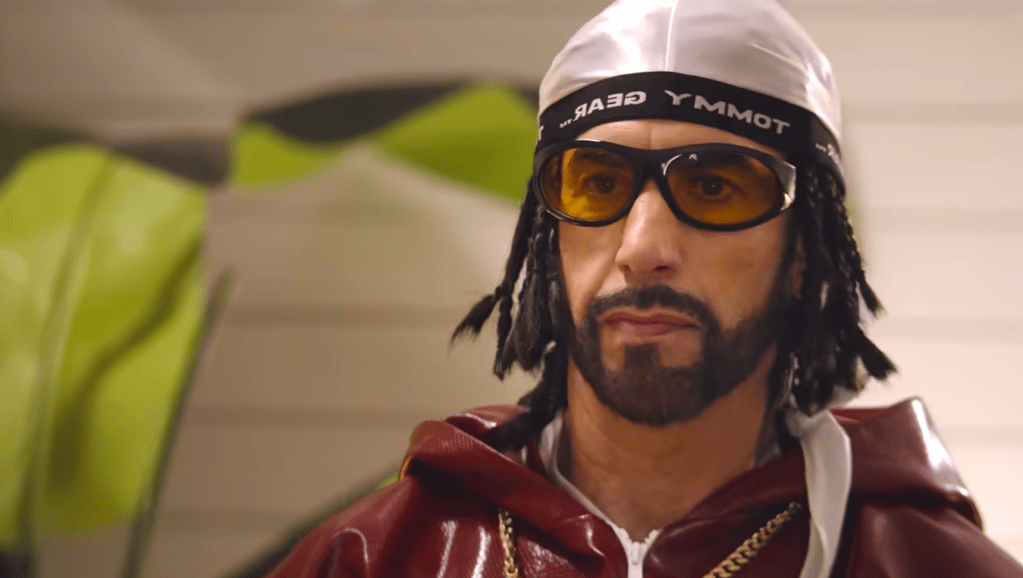
EXCLUSIVE: As the self-anointed “voice of youth” in the late 1990s, Ali G was a British cultural sensation, parroted in school playgrounds and quoted in Parliament. But nearly 30 years on, Sacha Baron Cohen has been criticized for “microwaving a relic from a generation ago” with his unexpected decision to reboot the suburban rude boy. In interviews with Deadline, Black British comedians voiced dismay at Amazon MGM Studios’ upcoming film Ali G: Who Iz I?, arguing that the character is no longer associated with its roots of satirizing white men trying to adopt Black street culture. Instead, they said Ali G perpetuates racial stereotypes, diminishes the Black experience, and appropriates culture in a way that is damaging to the Black community. Baron Cohen and Amazon MGM Studios declined to comment, but Deadline spoke with Colton Dunn, one of three Black writers who worked on Ali G: Who Iz I?, who said he did not recognize the criticisms. He argued that Baron Cohen remains faithful to Ali G’s origins, adding that the jokes target the movie’s subjects rather than Black people. “From my point of view, Ali G is not a racist character. Ali G is a tool to expose racists,” he said. Watch on Deadline Dunn explained: “He puts himself in the most ridiculous situations, and he doesn’t do that because he’s racist. He goes into these crazy-ass places, places where people would kill him if they knew what was going down. I don’t think he’s doing that from a racist point of view. That’s why I signed on. I wouldn’t sign on to work with somebody that I thought was racist, that’s against everything that I’ve done.” The debate erupted after the trailer for Ali G: Who Iz I? went viral last month. Jack Black, Tom Brady and Diplo all endorsed the character’s return, but it also sparked an online campaign to get the movie shut out of British cinemas because Ali G perpetuates “harmful stereotypes.” The campaign looks set to fail (Vue is among the theater chains planning to screen Who Iz I? when Sony releases it in the UK on October 23), but its message resonated with some in the Black British comedy community. Gina Yashere, a standup who co-created and starred in CBS comedy Bob Hearts Abishola, accused Baron Cohen of ostensibly adopting Blackface and “cosplaying” as another race. “He’s not targeting white people,” she told Deadline. “People watching that character are going to laugh because it’s a caricature of Black people.” Curtis Walker, another standup who starred in BBC series Paramount City, said he found Ali G “degrading” and “disgusting,” adding that it was “sad” that Amazon MGM Studios was backing the character, rather than Black creators. Yashire and Walker first voiced their concerns 26 years ago, when they were interviewed by New Nation, a newspaper for Britain’s Black community. The criticisms then grew louder at the Ali G in Da House premiere in 2002, when protesters demonstrated in Leicester Square, waving placards comparing the comic creation to Al Jolson, the American entertainer who was famous for performing in Blackface. Baron Cohen was aware of the concerns at the time, not least because Walker confronted him at an industry event. Baron Cohen told WTF with Marc Maron in 2016 that he decided not to engage publicly with the critics, even though he considered himself “vehemently against any form of racism.” He has long asserted that Ali G wants to be Black, but his true ethnicity is intentionally ambiguous. “He’s not Black. He is delusional,” he told NPR’s Fresh Air in 2009. Yashire and Walker’s views are shared by younger Black comics in the UK. Dane Baptiste, creator of BBC shows Sunny D and Bamous, said Ali G created a “skewed idea of Blackness” in Britain, and his revival is akin to “microwaving a relic from a generation ago.” He told Deadline: “After Black Lives Matter and the brief humanization of Black people and Black creatives, it seems very dubious that we are now regressing back, not just five years, but 25 years, to bring back a character that was able to flourish because there were no accurate portrayals of Black Britishness on screen.” Mo Gilligan, one of the UK’s most successful comedians, picked up on this theme during a recent appearance on The Louis Theroux Podcast. The BAFTA-winner said the depiction of Ali G became very “normalized” in the UK and there was a sense among some in the Black community that “you were being laughed at, not laughed with.” Sacha Baron Cohen as Ali G Athena Kugblenu, a BBC New Comedy Awards finalist, argued that the latest incarnation of Ali G has had to embrace more “acute” racial stereotypes, including dreadlocks and a rastacap, because his costume is no longer unusual amid the assimilation of Black culture over the past 30 years. “He’s an analogue character in a digital age,” she wrote in an Instagram post liked by fellow comics, including Living With Yourself star Aisling Bea. A source close to Baron Cohen denied that Ali G has dreadlocks in the film. Michael Eboda, the former New Nation editor and CEO of Powerful Media, added: “There are far more serious things in the world than Ali G. It’s just something that has had its time. It was there for a minute, and now it’s just a bit sad that he’s having to rehash it.” Colton Dunn, whose credits include Widow’s Bay and Key and Peele, found Ali G “hilarious” when he first encountered the character during high school. “We all felt we knew a guy just like Ali G. I don’t remember it being controversial at all,” he said. “I don’t know what the experience is like for the Black performers in Britain. I’m not going to speak on their experience and I respect their experience, but I also respect my experience.” Dunn declined to comment on specific scenes or storylines, but said Baron Cohen has been working on the movie for years and Ali G’s contemporary relevance has been honed alongside many collaborators. The film is expected to touch on issues including cancel culture and immigration, while also having “ridiculous, silly-ass fun,” according to Dunn. Peter Fincham, the British television producer who first gave Ali G a platform in topical comedy series The 11 O’Clock Show, told Deadline that he was fascinated to see how the character has moved with the times. He admitted, however, that if a young white comedian was creating Ali G today, “questions would be asked” by studios and broadcasters. “The culture has changed. Sacha’s a very smart guy and will be sensitive to that, and I’m sure it will be reflected in the film,” said Fincham, who co-hosts Insiders: The TV Podcast.
‘Ali G: Who Iz I?’ Writer Defends Amazon Movie Amid Outcry Over Sacha Baron Cohen’s Character Reinforcing “Harmful” Racial Stereotypes
Full Article
Original Source
Read the full article at Deadline →KhanList aggregates and links to publicly available news content. We do not host full articles from third-party sources. Always verify important information with original sources.