
“There can never have been a popular entertainer quite like me,” writes Alexei Sayle in his new book, “and almost certainly there never will be again.” That sounds rather vainglorious in print but has the advantage of being true: the list of comedians who were raised by committed communists but went on to revolutionise stand-up comedy, have hit BBC television shows and record a No 1 hit single is short and features only his name. It is easy to forget just how successful Sayle was in the late 80s. He was everywhere: on television with his BBC show Alexei Sayle’s Stuff; in films with roles in Gorky Park and 8; on stage at the Old Vic in The Tempest, directed by Jonathan Miller; and even in the charts with his No 1 hit single “‘Ullo John! Gotta New Motor?” Sayle has told his story in two volumes of memoir: Stalin Ate My Homework and Thatcher Stole My Trousers. He was planning on calling his new book Blair Boiled My Cat, but in the end he decided to make less a conventional memoir and more a story of his life as told through nine political marches he’s been on, starting in 1959 and ending in 2025. How I’ve Tried to Change the World: By Walking Down the Middle of the Street Shouting is a story about activism but also about the ongoing tension between Sayle’s political principles and his personal ambitions. Sayle loves going on marches. “It’s very moving,” he says over a flat white in a café near his Bloomsbury home. “In the early days, I was often in floods of tears from both a sense of community and a sense of outrage.” Sayle was introduced to marches by his parents Joe and Molly, who were both members of the local communist party. The marches he writes about are inevitably left wing, but it is notable that most of them were not actually very successful – the march against the war in Iraq, for example, did little to stop the march to war in Iraq. Aren’t marches a bit pointless? “They’re both completely pointless and completely essential,” he says. “It’s about the power of public opinion but also the limitations of it.” Sayle grew up in Liverpool, but moved to London in 1971 to study at Chelsea College of Art. After graduating, he took on a string of jobs including factory floor sweeper, civil servant and small-time drug dealer before ending up as a college lecturer. It was around then, in spring 1979, that Sayle answered an advert in Private Eye magazine calling for performers at a new club opening in Soho to be called the Comedy Store. He became its first compere, ushering in the era of what came to be called “alternative comedy”. “I think people wanted their lives reflected back to them,” he says. “It would have happened anyway, but I think that I imposed a kind of identity on it that was non-sexist, non-racist, all that stuff.” Alexei Sayle, front right, in The Young Ones (Photo: Image Net/Sky TV) Sayle had an aggressive stage persona, with shaven head, ill-fitting suit and machine gun delivery. Does he think he scared some of his fellow performers? “Sometimes, yeah,” he says. “I struggled a bit with that myself, because that guy was very different to me – he was not me at all.” It was while he was at the Comedy Store that Sayle ran into a group of aspiring comedians with whom he would work first on The Young Ones and later The Comic Strip. The group included Rik Mayall, Adrian Edmondson, Dawn French and Jennifer Saunders. My sense of Sayle in that period was of someone who was in those groups but not wholly part of them – there was something slightly edge of frame about him. “I wanted to be by myself from the start, really,” he agrees. Was that shyness, I ask? “I knew I needed a kind of ensemble show, but I had a desire for all the attention,” he says, demolishing my theory. “I just wanted it to be all about me.” One key comedy figure not mentioned in Sayle’s book is Ben Elton, even though Elton was a central figure in the creation and writing of The Young Ones, in which Sayle appeared. Sayle’s silence is something of a contrast to Elton’s own recent memoir What Have I Done?, in which he wrote at some length about Sayle. “Alexei wrote a weekly column in Time Out,” he recalled, “and that week, he’d devoted the majority of it to saying that I was basically an unfunny, middle-class, posturing, hypocritical little shit… I’d known Alexei for years and although aware of his antipathy to me, I’d never imagined he would make such a very calculated and coldly focused public attack… It was an unsettling feeling, to be so loathed.” I’m a little nervous about raising this with Sayle, but he doesn’t duck the question but instead is admirably honest. “My feeling was that he took a lot from me and then was much more successful,” he says. “I was certainly horrible to him and would say shitty things about him in interviews.” In his book, Elton writes about how eventually Sayle apologised to him for his past actions. Sayle confirms this did happen, but is mystified as to why Elton was revisiting and reopening old wounds. “He’s infinitely richer and more successful than me,” he says. “He’s had so many more successful books and TV series – why is he bothering?” Still, Sayle has seen his share of success – but he has also been, in his telling, solidly committed to political principles. “I was determined to be as mainstream as I could while not rejecting or watering down what I believed,” he says. “There was nothing noble about sticking to my principles. It’s just I find it impossible not to.” This has made for some somewhat curious career choices. He turned down taking part in Comic Relief, because he felt that the charity “essentially aids capitalism and exploitation by ameliorating it, by being a sticking plaster” – but he did almost end up with a role in a spin-off of The Golden Girls. I’m sorry, what? “It’s that thing about wanting to be big,” he says by way of explanation. “I had this agent who was very keen on me breaking me in the States, so I went out to LA to audition in front of the Golden Girls.” For reasons that he is still not entirely clear about, during the audition Sayle decided it might be a good idea if he started tap dancing. “I was tap dancing in front of Betty White and Rue McClanahan,” he says. These are people who Stephen Sondheim had written musicals for. They were so f**king unpleasant about my tap dancing. They were so unimpressed, quite rightly.” In his book, Sayle writes that “90s Alexei could be a bit of a bastard”. What does that mean? “I was a tremendous prick, he explains “I had started working out in the gym and I had discovered Armani suits and was just a bit of a wanker.” By the mid-90s, comedy fashions had changed and alternative comedy had been overtaken by the more laddish humour of newcomers like David Baddiel and Frank Skinner. “Suddenly, everything went away from me,” he says. “I was so out of fashion and it was all about Skinner and Baddiel, and what I was doing was so not what people wanted. I took it badly – I couldn’t really understand what had happened.” ‘I was determined to be as mainstream as I could while not watering down what I believed,’ says Sayle (Photo: Roberto Ricciuti/Getty) Sayle stepped back from stand-up and turned to writing – novels and two volumes of memoirs – and in recent years he has turned to podcasting. “You get the same sense as if you’d done a show for Radio 4 that went out to four million people except none of that is true,” he says. “You’re just working, you know, and you forget you’re not getting paid. I don’t make anything from it but it makes me feel kind of modern.” Sayle promoted his podcast on TikTok with some short videos that combined interpretative dance with lectures on communism. They were a surprise hit. “They had about 12 million views,” he says “I was very pleased with myself for doing it. I was so cock-a-hoop, you know. I was still relevant.” Sayle is now 74, and to his relief, less ambitious than in his youth. “One of those Greek philosophers talks about his libido that when it dies it’s like being unshackled from a madman,” he says. “I would say that about my ambition. It was a kind of madman.” What he remains chained to is fighting for a better world. “The conditions that are creating autocracy are also making people feel they need to come up with an alternative,” he says. “You can’t be complacent when it’s a neck-and-neck race between fascism and a better world.” For Alexei Sayle, the fight and the march goes on. ‘How I’ve Tried to Change the World: By Walking Down the Middle of the Street Shouting’ is published on 3 September by W&N, £16.99
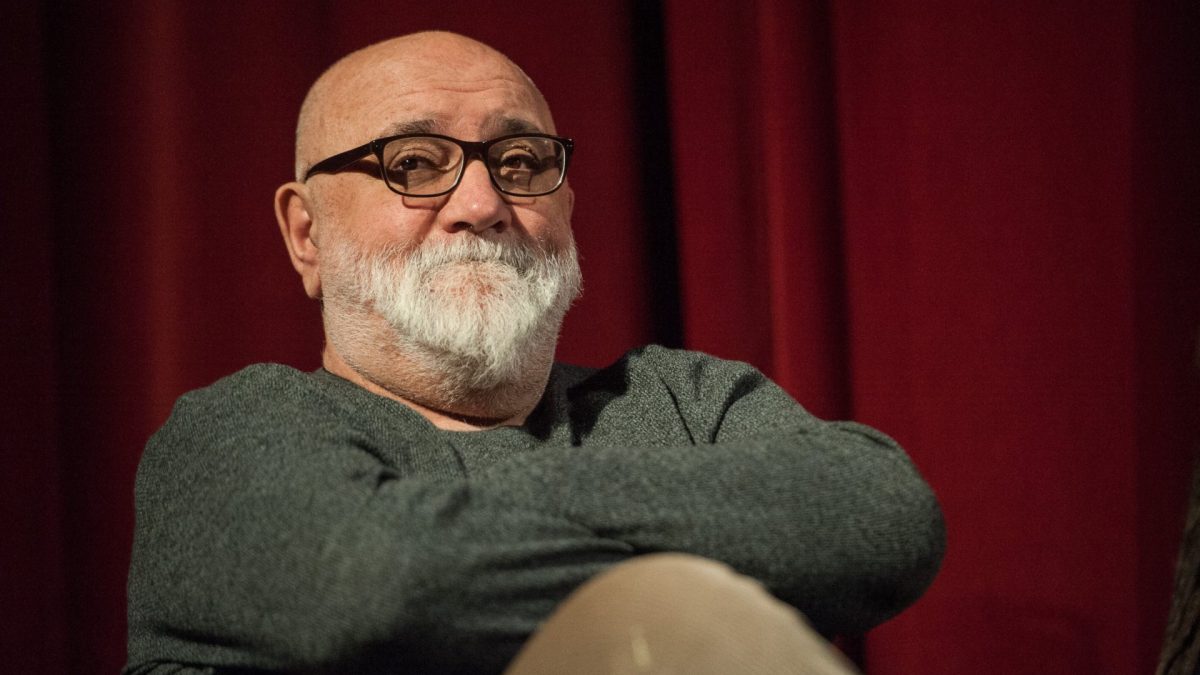
Alexei Sayle: ‘Ben Elton took a lot from me and then was more successful’
Full Article
Original Source
Read the full article at Inews →KhanList aggregates and links to publicly available news content. We do not host full articles from third-party sources. Always verify important information with original sources.