
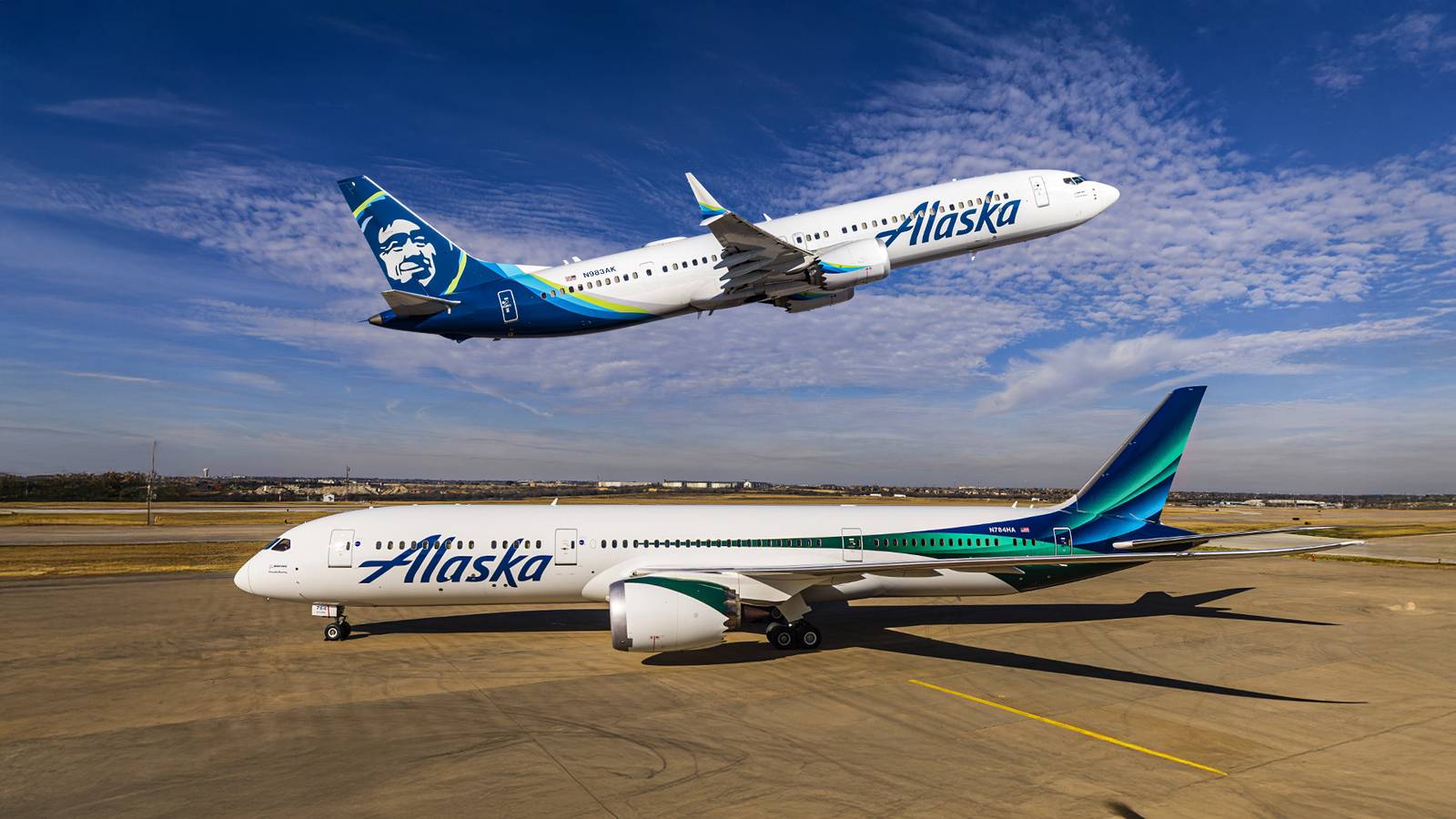
Published Sep 17, 2026, 3:00 PM EDT Brandon's passion for aviation started at a young age. He became involved in the flight simulator and VATSIM communities, which sparked his interest in aviation and eventually led him to earn his private pilot license. Outside of work, he continues to build flight hours, explore new airports, and stay involved in the aviation community. Alaska Airlines crossed the Atlantic for the first time in April 2026, launching nonstop service from Seattle-Tacoma International Airport(SEA) to Rome Fiumicino (FCO) on a Boeing 787-9 inherited from Hawaiian Airlines. Within a month, the airline added daily year-round service to London Heathrow (LHR) on the same widebody type and daily seasonal service to Reykjavík Keflavik (KEF) on a Boeing 737 MAX 8. An airline that had never operated a widebody aircraft before September 2024 was running three transatlantic routes by the end of May 2026, using two different aircraft types on three different operating schedules. Each route represents a different level of commitment. London is a year-round widebody bet against British Airways, Delta, and Virgin Atlantic on one of the world's most competitive corridors. Rome is a seasonal widebody test on a city pair no carrier had previously served nonstop. Reykjavík is a narrowbody transatlantic crossing that preserves Alaska's limited 787 fleet for the longer routes while opening a third European destination using the 737 MAX 8s the airline already had. The airline also announced two more European destinations, Athens and Paris, for summer 2027. Three Routes, Three Aircraft Strategies Credit: Parkdolly | Shutterstock Alaska Airlines entered the transatlantic market for the first time in spring 2026 with three European routes from Seattle-Tacoma International Airport (SEA), each using different equipment and operating under different schedules. Seattle to Rome: Leonardo da Vinci-Fiumicino Airport (FCO) launched on April 28 as a daily seasonal service on the Boeing 787-9, operating through October 23. Seattle to London Heathrow (LHR) launched on May 21 as a daily year-round service on the 787-9. Seattle to Reykjavik Keflavik International Airport (KEF) launched on May 28 as a daily seasonal service on the Boeing 737 MAX 8, operating through September 7. The three routes represent three distinct approaches to building a transatlantic network from scratch. The London route is a permanent, year-round commitment using widebody equipment on one of the most competitive transatlantic corridors in the world. The Rome route is a seasonal test using the same widebody on a route no carrier had previously served nonstop. The Reykjavík route is a narrowbody operation on a shorter crossing that does not require a 787 and preserves Alaska's limited widebody fleet for the two longer services. Each route carries a different level of financial commitment, competitive exposure, and strategic intent. The transatlantic expansion was made possible by Alaska's September 2024 merger with Hawaiian Airlines, which gave Alaska access to Boeing 787-9 Dreamliners for the first time. Alaska had never operated a widebody aircraft in its 93-year history before the merger. Hawaiian's 787-9 fleet, configured with the Leihōkū Suites premium cabin product, provided the long-range equipment Alaska needed to reach Europe from Seattle without ordering new aircraft or waiting years for deliveries. The 737 MAX 8 on the Reykjavík route was already in Alaska's fleet, so it required no additional equipment acquisition. Three European routes opened using aircraft the airline already had on hand, one type from the merger and one from the existing fleet. London: The Year-Round 787 Bet Credit: Dylanhatfield.com | Shutterstock The London route is the commitment that defines whether Alaska's transatlantic strategy is serious or experimental. It is a permanent network addition that requires Alaska to fill a widebody aircraft in both directions every day through the winter months, when leisure demand drops and the route must sustain itself on business travel, visiting friends and relatives, and connecting passengers from Alaska's domestic network. Alaska launched the route into direct competition with three established carriers. British Airways, Delta Air Lines, and Virgin Atlantic all operate SEA-LHR service year-round. Alaska is the fourth carrier on the city pair and the only one based in Seattle. The competitive dynamics favor Alaska on the connecting-traffic side: passengers originating in Portland, Boise, Sacramento, San Jose, and dozens of other West Coast cities Alaska serves domestically can connect in Seattle onto the London flight without changing airlines or alliances. The 787-9 on the route carries the Leihōkū Suites product in business class, which Alaska inherited from Hawaiian Airlines and has retained as its premium long-haul cabin. The suites feature lie-flat seats with direct aisle access in a 1-2-1 configuration, a product that is competitive with British Airways' Club Suite and Delta One Suites on the same route. Alaska Air Group CEO Ben Minicucci described the London service as reinforcing Alaska's position as "the fourth-largest global airline in the U.S." and strengthening the carrier's international network. The airline also announced plans for a new global Alaska Lounge at Seattle-Tacoma International Airport (SEA), scheduled to open in late 2027, which will be the largest airline lounge in Seattle and one of the largest in the country. Rome: The Seasonal 787 Test Credit: MikeDotta | Shutterstock The Rome route is a different proposition. Seattle to Rome Fiumicino (FCO) launched on April 28, 2026, as Alaska's first-ever transatlantic flight, but it operates seasonally through October 23 rather than year-round. The seasonal schedule limits Alaska's financial exposure on a route no carrier has ever served nonstop. No airline had previously connected Seattle and Rome with direct service, which means there is no historical demand data for the city pair. Alaska is building the market from zero rather than competing for share on an established route. The route generated an immediate competitive response. Within weeks of Alaska's June 2025 announcement, Delta Air Lines added four weekly flights on the same Seattle-to-Rome corridor for summer 2026. Delta's decision to enter a market it had not previously served nonstop validates Alaska's assessment that the demand exists, but it also means Alaska is no longer operating the route without competition. Two carriers on a previously unserved city pair is a faster competitive escalation than most new route launches produce. Alaska operates daily. Delta operates four times weekly. Combined, the two carriers offer approximately 11 weekly nonstop departures on a route that had zero 12 months earlier. Alaska has positioned the Rome route as more than a point-to-point leisure service. The airline markets one-stop connections between Hawaii and Europe through Seattle, giving travelers in Honolulu (HNL), Maui (OGG), and Kona (KOA) a path to Italy that routes through Alaska's Seattle hub rather than requiring a connection on a different carrier through Los Angeles, San Francisco, or the East Coast. Ivan Bassato, Chief Aviation Officer at Aeroporti di Roma, described the route as "the first-ever scheduled connection between the two cities" and emphasized the economic value of linking the Pacific Northwest directly to Italy. Whether the seasonal service converts to year-round depends on how the route performs through its first summer. If load factors and revenue per departure justify the widebody commitment through the winter, Alaska has the equipment and gate infrastructure at Seattle to make it permanent. Reykjavík: The Narrowbody Transatlantic Play Credit: Audio und werbung | Shutterstock The Reykjavík route is the most operationally unconventional of the three. Alaska is flying a Boeing 737 MAX 8 across the Atlantic on a daily seasonal service from May 28 through September 7, a 103-day operating window timed to Iceland's peak summer tourism season. The route covers about 2,500 nautical miles (4,630 km), well within the 737 MAX 8's published range of about 3,550 nautical miles (6,570 km), leaving enough margin for headwinds, fuel reserves, and diversions without requiring payload restrictions. The 737 MAX 8 is not the aircraft most travelers associate with a transatlantic crossing, but the distance between Seattle and Reykjavík is comparable to a domestic US transcontinental flight. The narrowbody choice is a fleet management decision. Alaska inherited a small number of 787-9s from Hawaiian Airlines. Those aircraft are committed to the London and Rome routes, which are both longer crossings that require widebody range. Using a 737 MAX 8 on the Reykjavík route opens a third European destination without pulling a 787 off either of the two services that need it. Alaska operates over 300 737 MAX 8s, making the type its most available aircraft by a wide margin. Assigning one to Reykjavík for the summer has no measurable impact on domestic operations. Assigning another 787 would mean pulling a widebody off a route where no narrowbody alternative exists. Alaska timed the route to coincide with the August 12, 2026, total solar eclipse, which will be visible in its totality from Iceland. The airline is marketing the route to eclipse-viewing travelers as one of the most accessible paths from the US West Coast to one of the best viewing locations in the world. Beyond the eclipse, Alaska's partnership with Icelandair extends the route's value beyond Reykjavík. Icelandair operates more than 35 daily departures from Keflavik International Airport (KEF) to destinations across Europe, and Alaska's Atmos Rewards Gold, Platinum, and Titanium elites and first class passengers have access to Icelandair's Saga Lounge at KEF. The Icelandair connection gives Alaska passengers a gateway to dozens of European cities through Keflavik without Alaska operating the onward flights itself, a strategy that mirrors how Icelandair has used its Reykjavík hub to connect North American and European traffic for decades. What Comes Next: Athens And Paris In 2027 Credit: nblx | Shutterstock Alaska has already announced two additional European destinations for summer 2027. Seattle to Athens International Airport (ATH) launches May 12 with three weekly flights on the 787-9. Seattle to Paris Charles de Gaulle Airport (CDG) launches May 25 with five weekly flights on the 787-9. Both routes operate seasonally through October. Athens will be the longest route Alaska Airlines has ever flown and the only nonstop connection between the US West Coast and the Greek capital. Paris adds another major European hub to Alaska's network and gives the airline a direct presence at two of the world's most important international airports: London Heathrow and Paris Charles de Gaulle. The pace of expansion from zero European routes in March 2026 to five by May 2027 is faster than most analysts expected when the Hawaiian merger closed. Alaska went from an airline that had never crossed the Atlantic to a carrier serving London, Rome, Reykjavík, Athens, and Paris from a single hub within 13 months. The speed is possible because the merger gave Alaska immediate access to widebody equipment rather than requiring a years-long process of ordering 787s from Boeing and waiting in the delivery queue. Hawaiian's 787-9s arrived with crews already trained on the type, maintenance programs already established, and a premium cabin product already installed. Alaska inherited a transatlantic-capable fleet and deployed it within 18 months of closing the merger. Alaska has indicated that at least five more long-haul destinations are planned from Seattle by 2030, with both European and Asian routes under consideration. Seoul and Tokyo are expected on the Asian side, building on Hawaiian's existing Pacific network. The European network will likely grow based on how the 2026 and 2027 routes perform. The three fleet strategies Alaska deployed in its first transatlantic summer, year-round widebody, seasonal widebody, and seasonal narrowbody, give the airline a framework for evaluating future routes.
Alaska Airlines' 1st Transatlantic Summer Was Really Just 3 Different Fleet Bets From Seattle
Full Article
Original Source
Read the full article at Simpleflying →KhanList aggregates and links to publicly available news content. We do not host full articles from third-party sources. Always verify important information with original sources.