
For years, the sprawling warehouses powering artificial intelligence have been built on Earth, consuming enormous amounts of electricity and water and running into resistance from the communities where they are located.Now, some of the technology industry’s biggest names are looking to the skies. Google, SpaceX, and a collection of startups are exploring whether the next generation of AI infrastructure could operate in orbit, powered by the sun and freed from many of the constraints that make terrestrial data centers so controversial.The idea sounds almost tailor-made for an industry facing difficulty growing on Earth: Put the computers where sunlight is abundant, eliminate the need for massive supplies of cooling water, and avoid the local fights over land, power grids, and noise. While computers can certainly run in space, the difficulty comes when companies try to build, launch, power, cool, connect, maintain, and eventually replace enough orbital data centers to make a meaningful dent in the infrastructure being built on Earth.“The possibility is of course there,” Amit Verma, an electrical engineering professor at Texas A&M University-Kingsville, told the Washington Examiner. “The feasibility and sustainability — those are engineering questions that need to be addressed before this becomes a very viable option.”Nonetheless, Google’s Project Suncatcher envisions interconnected, solar-powered satellites carrying the company’s Tensor Processing Units, or TPUs, to perform machine-learning workloads in orbit. Google is preparing a prototype mission with its first test satellites expected to launch next week.SpaceX CEO Elon Musk has floated an even more ambitious vision of up to one million satellites functioning as orbital data centers. Startup Starcloud, meanwhile, has asked the Federal Communications Commission for permission to deploy as many as 88,000 satellites as a distributed data center, while Blue Origin has proposed its own large orbital computing constellation. The federal government is taking the concept seriously, too. A Government Accountability Office report published in April identified space-based data centers as a potential way to reduce the resources consumed by data centers on Earth. Sens. Ted Cruz (R-TX) and John Hickenlooper (D-CO) also introduced legislation in June that would create a Pentagon pilot program to test commercial orbital data centers for national security applications. That interest comes as the public has bucked data centers being built in their communities, and in some cases, their backyards. A September Pew Research Center survey found that 60% of U.S. adults would be uncomfortable with a new data center operating in their area.Space could theoretically remove some of those local pressures, but at the same time, it introduces an entirely new set of problems.Space does not come with free cooling One of the most counterintuitive challenges is heat. On Earth, data centers can rely on water-based cooling systems to carry heat away from computing equipment. In space, there is no atmosphere to conduct or convect that heat away. Instead, a spacecraft has to radiate heat into space.“A data center capable of running AI models could require tens of megawatts of power,” Verma said. The more electricity the computers consume, the more waste heat they generate, requiring larger systems to radiate that heat away.Ben Lee, a professor at the University of Pennsylvania who studies computer architecture and sustainable computing, told the Washington Examiner the basic technologies needed to power a spacecraft are well understood. The difficulty is combining them at the scale required for an AI data center.“The techniques that we’ve got for air cooling or liquid cooling data centers through cooling towers and evaporative water loss obviously won’t work in a vacuum,” Lee said. “So we need a strategy for cooling the data centers.”Radiation presents another issue. Computer chips designed for terrestrial data centers are not built to operate indefinitely in the harsh radiation environment of space.“We can’t just take something off the shelf that we’ve designed for terrestrial data centers, launch it into space, and expect it to perform in the same way,” Lee said.Companies can shield hardware or develop radiation-resistant components, but both approaches add complexity, weight or cost.And then there is the problem of keeping the machines current. AI hardware is evolving at a pace that is difficult to reconcile with the logistics of orbital infrastructure.“The technology changes every couple of years,” Verma said. “The GPUs that you have there…will become obsolete in two [or] three years. They need to be replaced.”In a terrestrial data center, replacing an obsolete GPU means sending a truck to the facility, rather than launching more replacement infrastructure into space. The launch problem The economics of orbital data centers depend on the cost of getting enormous amounts of hardware into orbit and, additionally, keeping it there.GAO noted that large-scale deployment would require advances not only in computing, cooling, and communications but also in manufacturing and launch capacity. The agency said some companies envision constellations of thousands of satellites, while projects designed to process data generated in space are substantially closer to technological maturity than massive orbital facilities designed to train AI models. Karen Howard, director of science and technology assessment at GAO, told the Washington Examiner the current launch industry is nowhere near the scale that would be required for the largest proposals.The FAA projects roughly 200 launches in 2026, Howard said, while some orbital data center concepts contemplate tens of thousands, or even millions, of satellites.“Even if industry can develop data centers (small or large) for space, it doesn’t have the manufacturing and launch capacity, and related ability to reduce the cost of launch, that would be necessary to meaningfully replace or even significantly supplement Earth-based data centers yet,” Howard said.Space-based computing does not have to beat a data center in Virginia or Texas on every metric to have a commercial purpose. It could make sense for workloads that originate in space or require specialized infrastructure.The first data centers in space may not look like data centers Every day, satellites collect enormous quantities of imagery and other information. Much of that data currently has to be transmitted back to Earth before it can be processed.Howard said processing some of that information in orbit could be more immediately useful than trying to train enormous AI models in space.NASA has estimated that two of its Earth-observation missions alone generate about 100 terabytes of data per day. A satellite could process that information before sending it to Earth, eliminating useless or redundant material and reducing the amount of data that needs to travel through already-constrained communications networks.The military is pursuing similar concepts. The Space Development Agency is developing satellites capable of processing raw sensor data onboard and producing missile tracks that can be transmitted to the ground.“That processing can also increase the speed of decision-making using remotely sensed data,” Howard said.Lee sees a similar intermediate step. Rather than immediately building a giant orbital replica of an Amazon or Google data center, companies could put smaller amounts of computing power onto satellites that already exist.“Maybe Starlink satellites are already handling a lot of compute communication. Maybe add a little bit of compute to those Starlink satellites,” Lee said.Then there is the environmental argument Space data centers are being pitched partly as an environmental solution to terrestrial data centers.But environmental groups are warning that the solution could create a different set of environmental problems.A coalition represented by Earthjustice petitioned the FCC in July for a programmatic environmental review before the agency approves orbital data center constellations. The groups pointed to proposals collectively involving more than one million satellites and argued that the federal government should assess their environmental consequences before allowing the projects to proceed. More objects in low Earth orbit mean more potential collisions. A collision can create debris, which in turn creates additional objects that other spacecraft must avoid.Howard noted that Starlink satellites already perform collision-avoidance maneuvers, averaging roughly 40 per satellite each year, according to data she provided. With thousands of additional data center satellites, and some proposals contemplating vastly larger numbers, orbital traffic could become difficult to manage.Furthermore, the question of what happens when data centers stop working poses another question. Many proposed systems envision relatively short-lived hardware that would need to be regularly replaced. Satellites in low Earth orbit can be deliberately deorbited, but that creates its own environmental and debris concerns.There are also broader questions about who controls data processed in orbit, how those systems will be governed, and what happens when commercial infrastructure becomes critical to communications and computing. In other words, moving the data center does not make the infrastructure disappear; rather, it changes the infrastructure and the regulatory questions surrounding it.A different kind of data center race The most realistic future is likely not a choice between Earth and space for the sprawling data centers. Lee expressed caution, saying that the technological hurdles are significant enough that researchers should think in terms of fundamental research rather than commercial deployment.“I don’t think it’s going to be in the next year or two,” Lee said. “I think 10 to 20 years, I think, is realistic.”NEWLY UNCOVERED OPENAI ATTACKS PUT MORE PRESSURE ON GLOBAL LEADERS TO FIND A WAY FORWARDThat timeline leaves plenty of room for the technology to change, allowing time for the economics of terrestrial energy, nuclear power, geothermal energy, launch vehicles, and AI chips to also develop further. “If it takes 10, 20 years to figure out how to launch data centers into space,” Lee said, “small modular reactors or geothermal or other things might make a huge amount of progress during that time frame.”
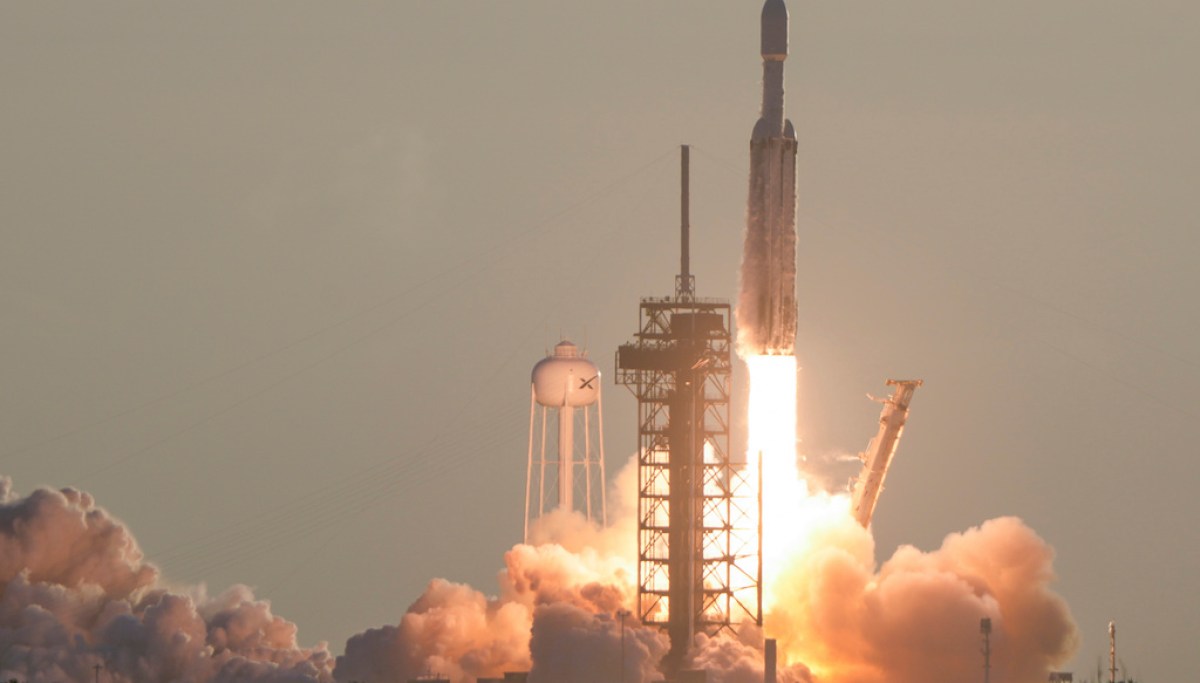
AI’s data center problem could move to space
Full Article
Original Source
Read the full article at Washingtonexaminer →KhanList aggregates and links to publicly available news content. We do not host full articles from third-party sources. Always verify important information with original sources.