
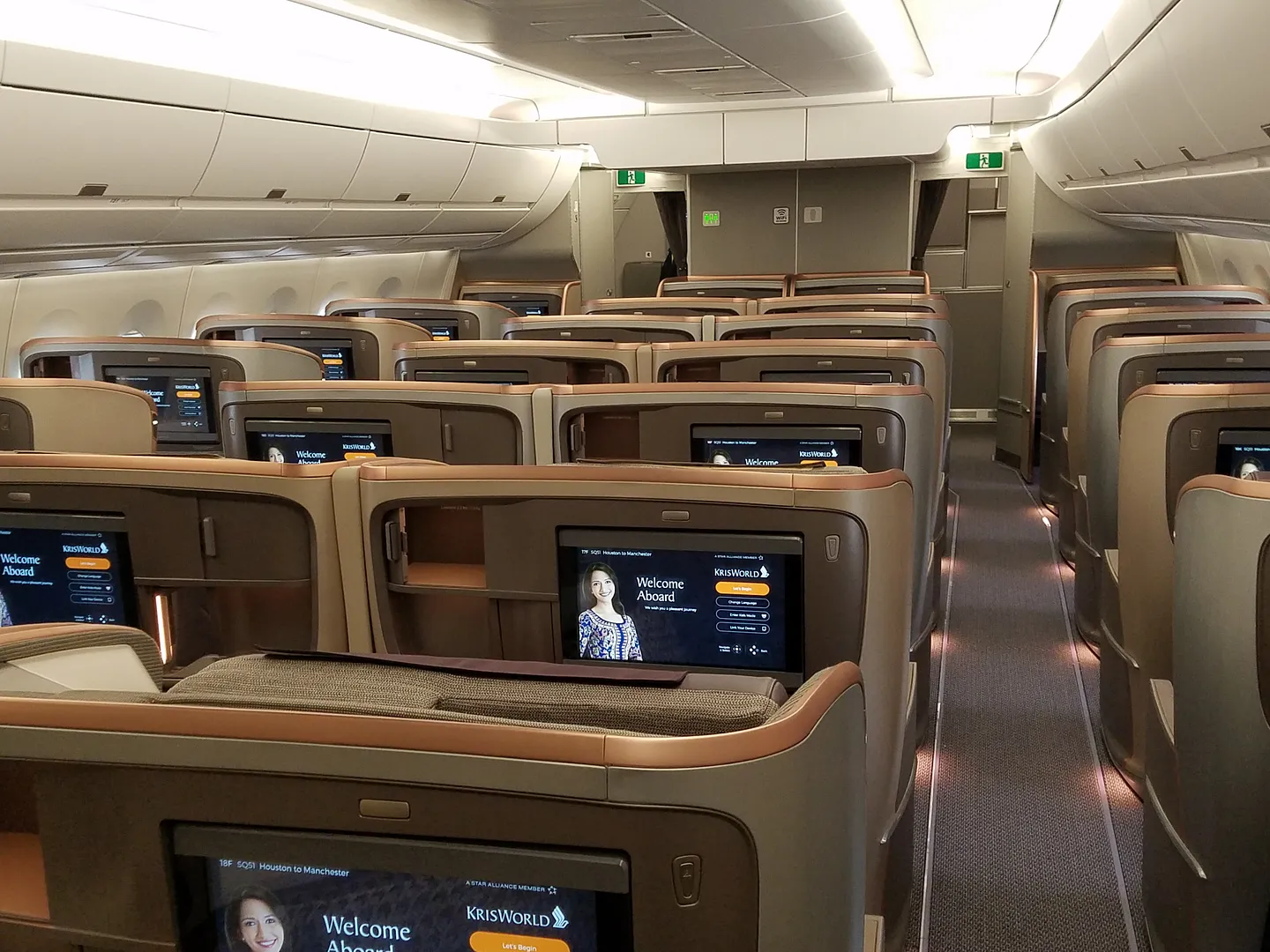
Airline revenue management consultant Oliver Ranson argues that unbundling lounge access from business class is unlikely to raise much revenue and creates new risks for airlines. He is right, and the problem is broader than lounges. U.S., European and Middle Eastern airlines are degrading the quality of their business class products by ‘unbundling’ business class with new Basic Business Class fares the way they’ve already done to coach – purposely offering a worse experience to passengers spending less for their premium product but still spending thousands of dollars to buy the tickets at the prices the airline offers. That’s dangerous. Air France and KLM already sell Business Light cash fares without lounge access. Starting September 8, Flying Blue is extending the idea to awards. A New York – Paris business award that costs 60,000 miles today will still start at 60,000 miles, but it will lose lounge access, one checked bag and the ability to change or cancel. The Standard award that restores today’s package will cost 75,000 miles. That is not making business class awards more accessible. It is charging 25% more miles for what 60,000 miles buys today. The Airline’s Face A Real Challenge Airlines have built enormous premium cabins. United’s newest Boeing 787-9 configuration has 64 Polaris seats. American plans 70 Flagship Suites on its refurbished Boeing 777-300ERs. Delta says its Airbus A350-1000 will have a 50% premium seat mix. An empty flat bed at pushback is spoiled inventory. It can never be sold again, while the incremental cost of carrying one more passenger is far below the average fare. Airlines need to discount those seats, and selling an extra seat at a discount makes them more money. They just don’t want to give the discount to the passenger who was already going to buy a seat on that flight for $7,000. That’s a revenue management problem, not a customer problem though. Headlines say Delta’s basic business class “could mean you can finally afford a seat”, while United’s version was presented as a way “to make premium flying cheaper.” Delta itself calls this a “lower price point.” None of that is true. Delta’s own launch example showed Basic Business at $2,689 and Classic at $2,889. That is a 7% difference. A United example was just $100. Finnair’s Business Light has often been about 10% less than regular business class. At the margin, a traveler can spend slightly less than the newly-priced bundle. But airlines are not creating a new $1,500 transatlantic flat bed ticket. They are putting new restrictions on the lowest fares and moving the old product up the ladder. The Old 50-Day Fare Fence Worked—Until Airlines Needed To Discount Closer To Departure For years airlines separated leisure passengers from business travelers with discounted Z fares that often required purchase 50 or 90 days in advance, along with minimum stays and big change penalties. A vacationer taking a cruise could plan that far ahead. A business traveler generally could not. This worked, and flexibility remained a good fare fence because it maps to both customer value and airline risk. A passenger who may cancel can cause the airline to spoil the seat, and the airline should charge for taking that risk. But advance purchase is a blunt instrument. At 50 days, the airline doesn’t know how many of its 64 business seats will go empty. Release too many cheap seats and it dilutes later high fare revenue. Hold them back and the leisure customer may book another airline. More leisure travelers book later now, too. Airlines want to make the discounting decision when they can see that the cabin will spoil, but that is precisely when the old advance purchase fares disappeared. Basic business is an attempt to create a new fence that works close to departure. The trouble is that the things being removed don’t separate the customers airlines need to separate. Basic Economy Had A Competitive Purpose That Basic Business Does Not Basic economy allowed major airlines to price-match Spirit and Frontier while offering a similarly worse product. Corporate travel policies often would not buy it. A traditional airline could show the same low fare in a search result without letting every high fare customer buy the product they had been buying before but for less money. There is no comparable long-haul ultra-low-cost business class threat. ZIPAIR sells a bed plus add-ons product, but it is a small niche rather than a network competitor forcing Delta or United to price match across the Atlantic and Pacific. And business class passengers overwhelmingly buy the seat. Delta says 97% of its Delta One customers identify the flat bed as their reason for choosing the cabin. That makes the usual basic business restrictions weak tools. Nonrefundability matters less on a close-in purchase because there are fewer days left for plans to change. A traveler can skip the lounge, use a credit card or status benefit, visit a restaurant, or simply arrive at the airport later. A late buyer who cannot select a seat may have had only middle seats left anyway. In many 1-2-1 cabins, every seat is at least broadly similar, as long as the airline’s not Lufthansa. Elite status may restore the missing benefits, making the cheapest fare especially attractive to some of the airline’s most valuable customers. If the discount is small, it doesn’t stimulate a new market. If it’s large, managed travel may simply buy down: the employee still gets the flat bed and the company saves money. (And many of those companies get corporate discounts, anyway.) Either way, removing an expensive airport lounge is not a reliable way to distinguish willingness to pay for the bed. Two More Problems With Charging For The Lounge I’ve argued that airlines should generally bundle benefits with near-zero marginal cost. Different customers value different parts of a bundle, and the airline can capture more total willingness to pay by including all of them. Cable television packages illustrate the economics well. Ranson adds two important points. Setting a separate lounge price puts a published value on a benefit that previously had only a nominal one. If the lounge is closed, loses power or turns away a passenger because it is full, customers now have a clear refund benchmark. He notes that British Airways is giving $45 vouchers while its Boston lounges are closed, while Air France-KLM wanted £100 each way in his example for the fare that included lounge access. Lounge unbundling selects the wrong passengers. A passenger with a short Amsterdam connection may be paying more for the airline’s schedule while having only 25 minutes to sit in the lounge. That high-value traveler rationally buys the cheaper no-lounge fare. And if a middling lounge charges separately, the passenger who wants a quiet chair for an hour may opt out while the customer planning to eat and drink heavily still buys in. Cost per user rises, the price rises, and the lounge becomes an expensive poor product. A great lounge should be bundled because it helps sell the ticket. A bad lounge has little separate willingness to pay. In this model, lounge unbundling just isn’t a good fare fence. I part company with Ranson where he says baggage unbundling is “always” a good idea. Checked bags have real weight and handling costs, but one business class passenger leaving a second bag at home usually will won’t eliminate a baggage handler or shorten an aircraft turn. It’s also leisure travelers more likely to check bags, so imposes higher costs on the more price sensitive passengers, which is the opposite of what the airline is trying to achieve. He is on stronger ground with seat assignments. Saving genuinely better seats for late high fare passengers can create value. SWISS charging for its more spacious “throne” seats makes sense. Those seats are limited in quantity and better. British Airways charging most nonelites merely to sit together in Club World is somethnig they’ve done for years, and can make some sense given their position at London Heathrow, large premium cabins, and frequent need to discount – though it’s an irritant. At Least 15 Airlines Now Have Some Version Of Basic Business They’re trying different restrictions, as airlines believe that business class must work the same way that basic economy does even if they’re not quite sure yet how. Delta has launched Basic Business with seat assignment after check-in, one fewer checked bag, lower mileage earning, change fees and, for travel after January 18, 2027, no Delta One check-in or fare-based lounge access. United is rolling out Polaris Base with paid seat selection, one bag and no changes and it keeps United Club access but not the Polaris Lounge. Air Canada introduced Business Basic in July. It keeps Maple Leaf Lounge access but not Signature Suite access, and includes one checked bag, paid seating and change fees. JetBlue says Mint Base is coming in the next several weeks without BlueHouse access, complimentary advance seating or free changes and cancellations. Air France and KLM, Emirates, Qatar Airways, Finnair and Etihad sell more complete versions of stripped business class, generally removing lounge access and advance seat selection and tightening baggage or flexibility. Lufthansa, SWISS, Austrian, Brussels Airlines and Discover now sell Business Light on many intercontinental routes. Their version is milder: it keeps the lounge and priority services but includes one checked bag, paid seat selection and more restrictive fare rules. That is at least 15 airline brands across ten groups, including products announced but not yet fully rolled out. It doesn’t count British Airways which has charged many business class passengers for advance seat assignments for years. Iberia does this on some fares. Singapore Airlines now limits passengers on its cheapest Business Lite fares and most awards to choosing from the back portion of the cabin. What Airlines Should Do Instead There is no perfect fence. If there were, airlines would already charge every customer exactly what they were willing to pay (that’s what Delta is aiming towards). But several approaches would align customer behavior better than restricting lounge access. Keep flexibility as the main public fare distinction. Refundability and changeability have economic value and create spoilage risk for the airline. Advance purchase, minimum-stay and roundtrip restrictions can still supplement that. Use close-in paid upgrades and bids. Sell an upgrade from coach or premium economy after the ticket is purchased, once high fare demand has largely been depleted close to departure. The original ticket’s restrictions remain, and the offer keeps the discounted business price opaque. (Airlines need to vary timing and maintain reserve prices so they don’t train everyone to wait, but they already use this tool aggressively). Discount through channels with real leisure fences. Vacation packages, consolidator and cruise fares, companion offers, loyalty member promotions and other closed or opaque channels can move surplus seats without posting the same deal to every passenger booking channel. Liquidate through Chase Points Boost. Drop mileage award deals. Charge for physical product differences. A larger first-row suite, a throne seat, extra privacy or a companion pair is a legitimate upsell, where the passenger gets actual value. Charging every business passenger to select one of many substantially similar seats is just a penalty for buying the lower fare. Manage lounge crowding directly. Limit guests, arrival access and very early entry, reserve space at peaks, or sell incremental access to cardholders and coach passengers when capacity exists. Do not use a short connection and low interest in a lounge use as evidence that someone has low willingness to pay for a flat bed. If the goal really is accessibility, build an true seat-only product. ZIPAIR can work because the bed is actually cheaper and the add-ons are modest. A $2,689 fare instead of $2,889 with the lounge and seat assignment removed is not that. And if an airline regularly cannot fill 64 or 70 business class seats without fire-sale upgrades, the fare fence may not be the fundamental error. The seat map may be! Airlines need to discount. They need those discounts to be targeted. But basic business mostly removes benefits that high value passengers are willing to skip while preserving the thing they are buying anyway. It risks teaching exactly the wrong customers to pay less. Topics on this page
Airlines Are Making Business Class Worse, Not Cheaper—Why Their “Basic” Strategy May Backfire
Full Article
Original Source
Read the full article at Viewfromthewing →KhanList aggregates and links to publicly available news content. We do not host full articles from third-party sources. Always verify important information with original sources.