
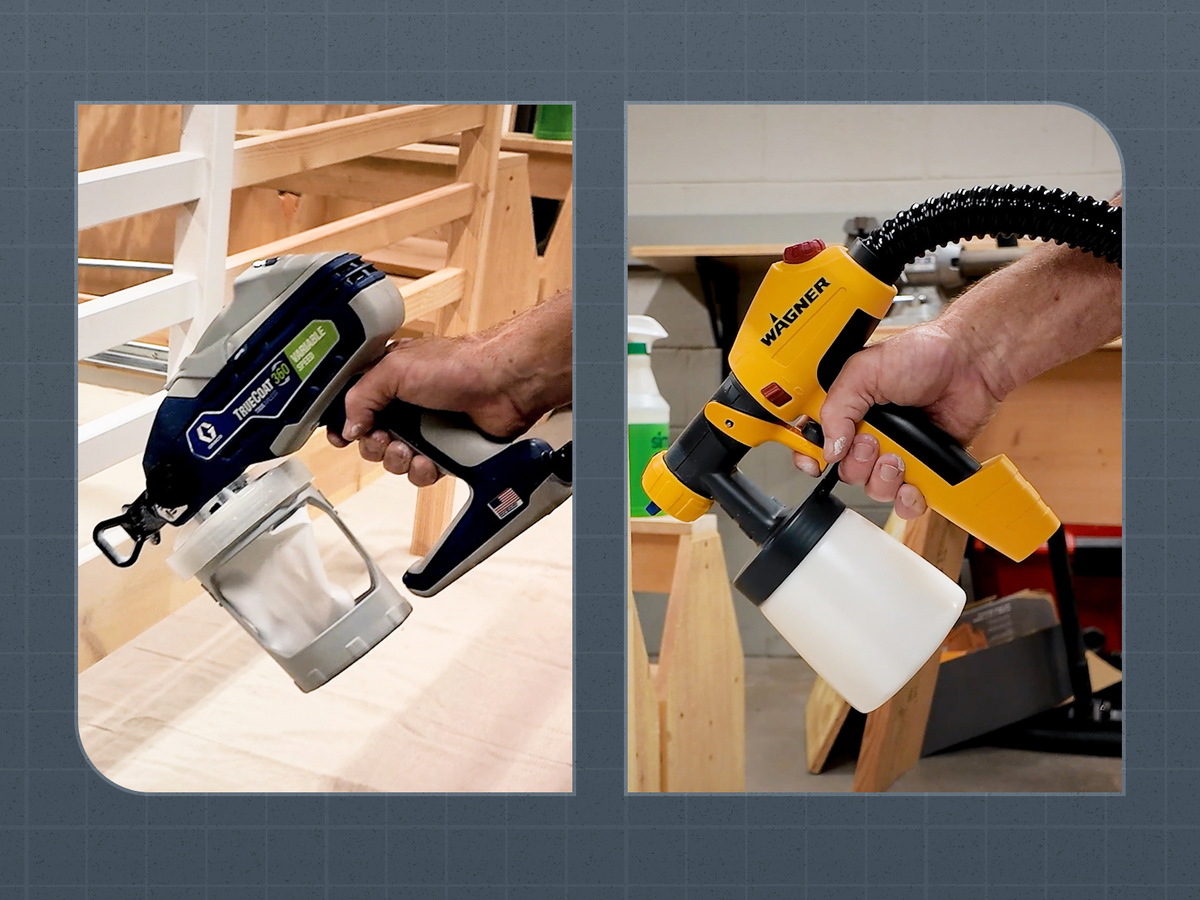
4 min readOne of the first decisions you need to make when you’re shopping for a paint sprayer is whether you want a model that’s high volume, low pressure (HVLP) or one that’s airless. What defines these two sprayer types isn’t the shape of the gun or where the paint goes. It’s what happens when you pull the trigger. And ultimately, the paint sprayer that you choose should be suited to the job at hand.To help explain the difference between the two and why it matters, I did a head-to-head comparison of our best value pick, the airless Graco TrueCoat 360 Variable Speed, and the HVLP Wagner Flexio 5000, which we recommend as the best for painting furniture.ProsEasy setupMultiple speed settings let you dial in controlSprays upside downConsTransition from prime to spray is a little awkwardWeight3.5 lbPower SourceCorded electricityHose LengthBucket-mountedMax Flow Rate0.20 GPMProsEverything stores nicely in a hard-sided caseThe two included sprayer heads (detail and wide) add versatilityCleaning was easier than most airless modelsConsNot the smoothest sprayWeight14.6 lbPower SourceCorded electricityHose Length11.5 ftMax Flow Rate0.14 GPMThe Graco and Wagner paint sprayers are, in some ways, quite similar. Both are compact tools that are designed for interior projects (for exterior projects, look to the Graco Magnum ProX17 Cart Airless Paint Sprayer) and are capable of producing an excellent finish. But the difference is in the method of paint delivery.Admittedly, my testing method was a bit flawed. I used an old, unfinished wood bed frame that I had sitting in storage for months. Granted, it’s a piece of furniture, so I can tell you off the bat that the Wagner is the better choice. But if I had, say, three bed frames that I needed to paint quickly, I might grab the Graco. Here’s why.Airless Wins on Speed and PortabilityAirless sprayers, like the Graco TrueCoat 360 Variable Speed use a piston pump to pressurize the paint before forcing it through a small spray-tip opening, where it atomizes as it exits onto your workpiece.I started the Graco with a narrow tip installed and at 2 on its dial of 10 settings, which is where I had good results with it when I tested this paint sprayer previously.Even at that relatively low setting, it laid down an impressive amount of paint. I could coat a section of the bed frame in seconds, but that speed came with a cost. I had to move quickly to avoid runs, and the amount of overspray became a cause for concern. Despite laying drop cloths well beyond the bed frame, enough paint traveled past them that I had to stop and clean the shop floor.None of this takes away from what the airless TrueCoat 360 does exceptionally well. This thing moves paint. If I had two dozen louvered shutters or doors lined up in the shop, I’d grab this sprayer again in a heartbeat. I could move down the line quickly, turn the gun sideways, and even invert it if necessary to reach inside louvers and other awkward areas without interrupting the spray.It’s also very portable. The Graco is self-contained, so aside from its short power cord, there’s no turbine or air hose to lug around behind you. The Wagner, which I’ll talk about in a minute, requires the turbine to stay on the ground, and an 11-1/2-foot hose connects it to the gun. That takes weight out of your hand while you’re spraying—a welcome relief compared to the Graco when it’s filled with paint—but it also means there’s more equipment to contend with when you’re moving around a room.HVLP Is Preferable When Control Is CriticalHVLP sprayers, like the Wagner Flexio 5000, use a turbine housed in a separate unit to push a large volume of air at low pressure. That air breaks the paint into fine droplets at the nozzle and carries them onto the surface. This method of operation gives you considerable control over the spray process, and that’s exactly how this paint sprayer performed. These types of sprayers typically have adjustments for airflow, material flow, spray width, and spray pattern.It took me a little longer to cover the same amount of material, but I could adjust the spray to the width and shape of the work and take my time making each pass. Overspray was considerably less, although I’d still recommend being overly cautious by covering the area around what you’re spraying.The Wagner comes with an inherent learning curve. Initially, the paint can appear almost spattered on the surface, with droplets that are larger than what I was seeing from the Graco.My first instinct was to correct that by bumping up the paint feed dial, which ended up just piling on more paint, this time with a more voluminous spattering effect. From there, I dialed the sprayer back down to my original setting and learned to let the tool do its job. With a slow, controlled pass, those droplets bonded together and leveled out in a very smooth, consistent finish.The TL;DR ComparisonWith the Graco, I found myself trying to control the tool itself and how much paint I was putting down. With the Wagner, I was controlling where the paint actually went in a more specific manner. I don't think one is universally better than the other. Like most paint sprayers, they simply excel at different kinds of work.The Graco TrueCoat 360What it does well: It works quickly, is portable, and sprays with consistency at just about any angle to cover a lot of material fast.What it’s good for: Doors, shutters, fencing, long runs of trim, and other production-style workThe Wagner Flexio 5000What it does well: It’s a little slower and requires more setup, but the HVLP system gave me noticeably better control, substantially less overspray, and a smooth, even surface on the bed frame.What it’s good for: Furniture or other detail-oriented projects—particularly those that are fixed in place and favor minimal oversprayAll things considered, if I had to choose one over the other, I’d take the Wagner. It may give up some speed to the Graco, but its control, minimal overspray, and easier cleanup make it the sprayer I’d feel comfortable using for most projects in my painting work.More Paint Sprayers We LoveTitan ControlMax 18V Backpack Paint SprayerWagner Flexio 2500 Handheld HVLP Paint SprayerBest for Interior Walls and CeilingsGraco Magnum X5 Stand Airless Paint SprayerPaul Russell Smith is a former NYC ironworker turned screenwriter (Grace Point) and home renovation specialist. He lives in a crooked old farmhouse in Stockton, NJ, where he’s just as likely to be clearing a clogged pipe as rewriting a third act. When he’s not working, he enjoys hiking, pedestrian beer, and cooking over a live fire. His self-proclaimed spirit animal is the English Bulldog.
Airless vs. HVLP Paint Sprayers: Which Is Better, Faster, and Neater for DIY Projects?
Full Article
Original Source
Read the full article at Popularmechanics →KhanList aggregates and links to publicly available news content. We do not host full articles from third-party sources. Always verify important information with original sources.