
Widebody aircraft design sits in a world that is governed by a relentless thermodynamic paradox: the heavier and larger a flagship twinjet becomes, the more ruthlessly punishing its propulsion demands are. When Airbus leadership began signaling serious intent around a potential Airbus A350 stretch designed to challenge the Boeing 777-9 in the four-hundred-seat market segment, industry watchers immediately looked past fuselage dimensions and straight toward the pylons. The central tension of this proposed aircraft is not aerodynamic, but mechanical. Stretching the A350 family further pushes the current powerplants well beyond their thermal and rotational limits, pushing Airbus into a strategic corner it has successfully avoided for decades. Airbus could easily maintain its exclusive engine partnership with Rolls-Royce, but it could also pry open the door to rival manufacturers. The Four-Hundred-Seat Vacuum Commercial aviation market dynamics leave a distinct opening in the highest-capacity twin-engine category. Boeing currently commands this specific territory with the upcoming ultra-large 777-9, and Airbus Commercial Aircraft Chief Executive Officer Lars Wagner confirmed that customer demand is forming around a conceptual further stretch of the widebody family, frequently designated as the A350-2000, as reported by Simple Flying. Speaking during industry briefings, Wagner noted that formal launch decisions regarding both this large twinjet and a potential A350-500 narrowbody evolution could materialize early in the manufacturer's next five-year planning cycle. This market pivot arrives as Airbus accelerates its industrial output across the existing twin-aisle portfolio. Production lines are aggressively scaling toward a target rate of 12 A350 airframes per month by 2028, with internal studies indicating that sustained airline demand will ultimately require pushing output beyond that threshold, a milestone that would necessitate capital investments into secondary assembly infrastructure. The trouble is that at current rates, even that 12 rate is unachievable, according to Simple Flying reporting. A stretched variant carrying roughly four hundred passengers would need a significant escalation in takeoff thrust, pushing the boundaries of what existing powerplant architectures can deliver without severe compromises. This operational reality brings the engine supplier question to the forefront of executive planning. What Is The Trent XWB-97? To understand why a stretched A350 creates a propulsion crisis, we need to focus on the extreme engineering compromises already embedded in the current flagship engine variant. The Rolls-Royce Trent XWB-97, engineered specifically to power the heavy A350-1000 and the A350F freighter variant, is an extraordinary feat of aerospace design, but it operates at the absolute frontier of its design envelope. To extract 97,000 pounds of thrust from the platform, Rolls-Royce engineers had to scale up significantly from the baseline XWB-84 found on the smaller A350-900. Achieving this higher thrust class meant designing a core that is 5% larger, spinning the fan 6% faster, reinforcing the containment casing, thickening the titanium fan blades, and running internal turbine temperatures considerably hotter. Choosing to squeeze maximum power out of an existing core layout rather than clean-sheet designing an entirely new powerplant, Rolls-Royce prioritized rapid time-to-market over operational breathing room. That architectural choice carries a heavy toll in harsh environments. In hot, sandy operating regions, the extreme temperatures and rapid rotational speeds accelerate component wear, prompting Rolls-Royce to roll out comprehensive engineering upgrades aimed at boosting time-on-wing durability by 50% under standard conditions and doubling it in severe climates. A Switch To General Electric? Credit: GE Aerospace Faced with these profound engineering constraints, Airbus leadership finds itself weighing a historic departure from its procurement strategy. Since the inception of the A350 program, Rolls-Royce has enjoyed absolute exclusivity as the sole engine supplier for the entire twin-aisle family. However, when pressed by aviation journalists on whether Rolls-Royce would automatically retain that exclusive position for a potential A350-2000, Lars Wagner pointedly declined to confirm it, as noted by Air Data News. Behind closed doors, industry reports from Reuters indicate that Airbus has already held exploratory discussions with GE Aerospace regarding alternative propulsion solutions. GE produces an engine that sits squarely in the required performance tier, which is the massive GE9X, featuring a certified thrust class stretching between 105,000 and 110,000 pounds. Designed specifically to power the rival 777X, the GE9X is an attractive high-thrust option capable of lifting a 400-seat ultra-long-haul aircraft without needing a complete blank-sheet development program. Opening the A350 pylon to GE Aerospace would shatter a 20-year precedent of single-source propulsion, adding some complex structural integration hurdles. Adapting a competing powerplant to the A350 wing box will mean needing substantial redesigns of pylon aerodynamics, mounting bulkheads, and bleed-air systems. Despite this, for airlines weary of single-vendor dependency and lingering durability constraints, the prospect of genuine engine competition on Airbus's largest widebody would offer unprecedented leverage over maintenance and lifecycle operating costs. A New Engine Would Take Away Fleet Commonality Benefits The debate over a stretched A350 engine is not confined to boardrooms in Toulouse and Derby, as it directly impacts the operational economics of major global carriers. When airlines invest in ultra-long-haul flagships, maintenance commonality and fleet flexibility dictate long-term asset value. An airline operating a mixed fleet of A350-900s and A350-1000s benefits immensely from identical engine type ratings, shared spare parts inventories, and standardized maintenance training protocols. Introducing a completely different high-thrust engine type into the equation, such as a GE powerplant variant, would fracture that commonality for the hypothetical A350-2000 sub-fleet. Network planners would have to weigh the performance advantages of a more powerful engine against the operational friction of maintaining dual-vendor propulsion silos within the same long-haul division. Conversely, sticking exclusively with Rolls-Royce would mean that the manufacturer would have to commit billions of dollars toward developing an advanced derivative or an entirely new core, investments that must ultimately be recovered through engine pricing and aftermarket support agreements. Furthermore, the actual ramp and gate compatibility at congested mega-hubs around the world place strict parameters on aircraft geometry. A stretched fuselage combined with a massive high-bypass turbofan fan cowl, whether that be an uprated Trent or a modified GE design, shifts the center of gravity and alters aircraft weight distribution during ground operations, which means that rigorous certification testing is required from both the European Union Aviation Safety Agency and the Federal Aviation Administration. More Time To Wait For A Stretched A350? Beyond the immediate engineering and exclusivity debates lies an unforgiving industrial calendar. Rolls-Royce Chief Executive Officer Tufan Erginbilgic has made it explicitly clear that if Airbus selects a stretched airframe design needing a larger turbine and higher thrust class, developing an entirely new or heavily modified powerplant will require six to seven years of dedicated engineering, as per Simple Flying reporting. That development horizon pushes any potential entry into service well into the early 2030s, aligning the program with a critical replacement cycle for early-generation twin-aisle aircraft. This timeline intersects with massive industrial scaling pressures across the aerospace manufacturing ecosystem. Even with delays ongoing, Airbus is still highly committed to its A350 production rate toward 12 aircraft per month by 2028, with internal leadership anticipating that long-term market demand will force output even higher. Surpassing that rate would be impossible without significant capital expenditure and stable supply chains, but key aerostructure suppliers have already flagged margin pressures and supply chain friction across widebody programs. Complicating matters further, Rolls-Royce will need to balance its ongoing manufacturing commitments for the current Trent XWB-97 and the incoming A350F freighter variant against the immense capital outlay required for a stretched-variant engine. Committing engineering resources to a brand-new high-thrust turbine while simultaneously rolling out durability enhancements for hot-climate operators is a major challenge that Airbus will need to take head-on. No Green Light Just Yet The path forward for Airbus rests on its ability to properly manage a combination of industrial production capacity, crystallizing airline demand, and fundamental propulsion feasibility. As the manufacturer prepares to enter its next five-year strategic planning cycle, the decision to formally launch an A350-2000 will really be an ultimate litmus test for how Europe's leading planemaker manages its high-capacity widebody roadmap through the middle of the twenty-first century. At the center of this strategic calculus lies an unprecedented test of manufacturer partnerships. Whether Rolls-Royce chooses to aggressively fund a high-risk core overhaul to preserve its exclusive grip on the A350 family, or whether Airbus officially shatters decades of single-source tradition by opening a competitive engine race to GE Aerospace, the resolution will redefine long-haul twin-engine economics. A definitive launch authorization is by no means granted yet, and so, the Trent XWB platform will remain stretched to its absolute thermodynamic frontier until Airbus finally gives the green light for the next stage of the A350 expansion. How Airbus resolves this pylon dilemma in the coming months will determine not only whether it can successfully capture the four-hundred-seat market segment, but how the aerospace industry powers the next generation of global aviation.
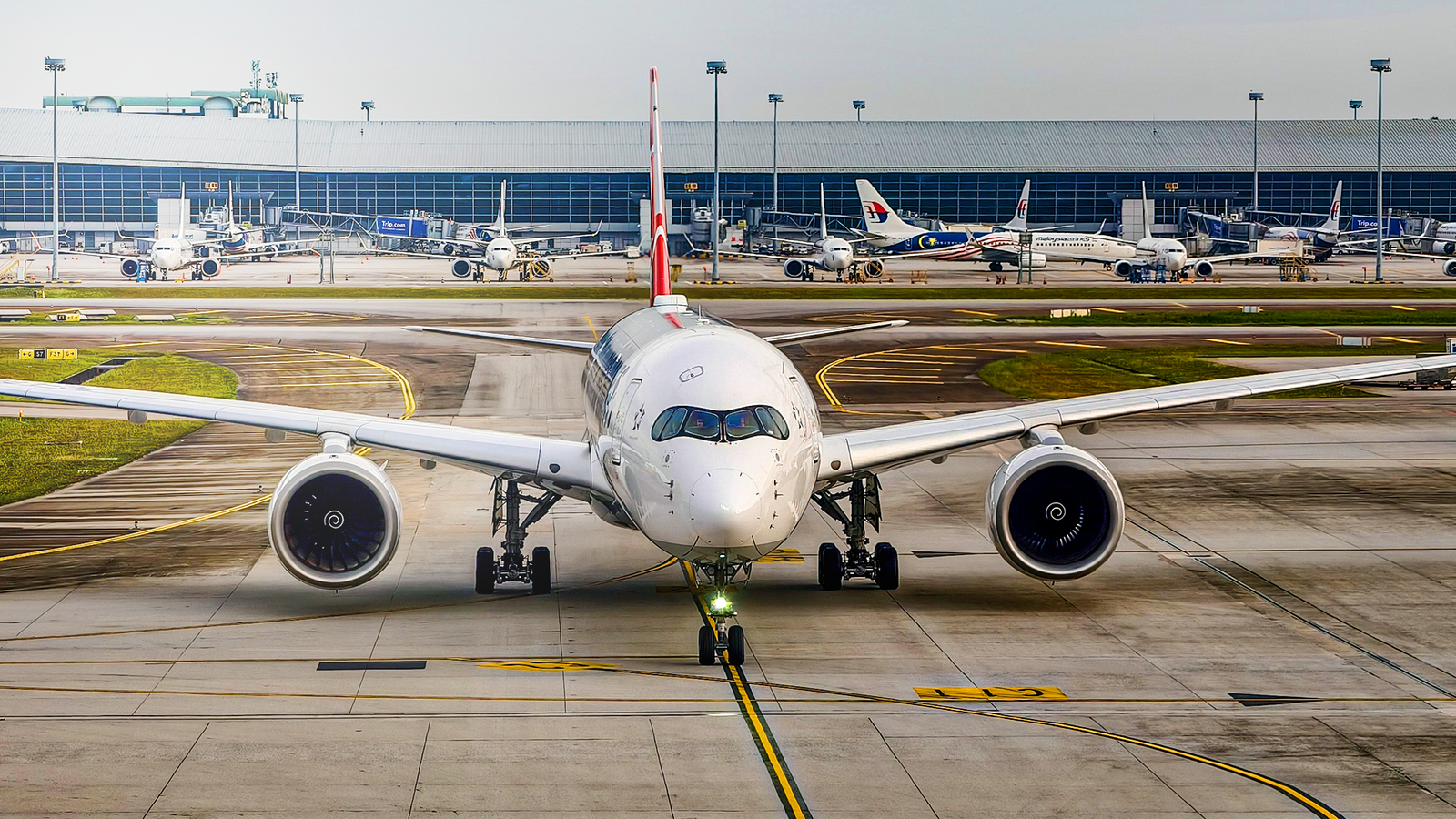
Airbus Would Need To Reexamine Rolls-Royce's Trent XWB If It Really Wanted To Stretch The A350
Full Article
Original Source
Read the full article at Simpleflying →KhanList aggregates and links to publicly available news content. We do not host full articles from third-party sources. Always verify important information with original sources.