
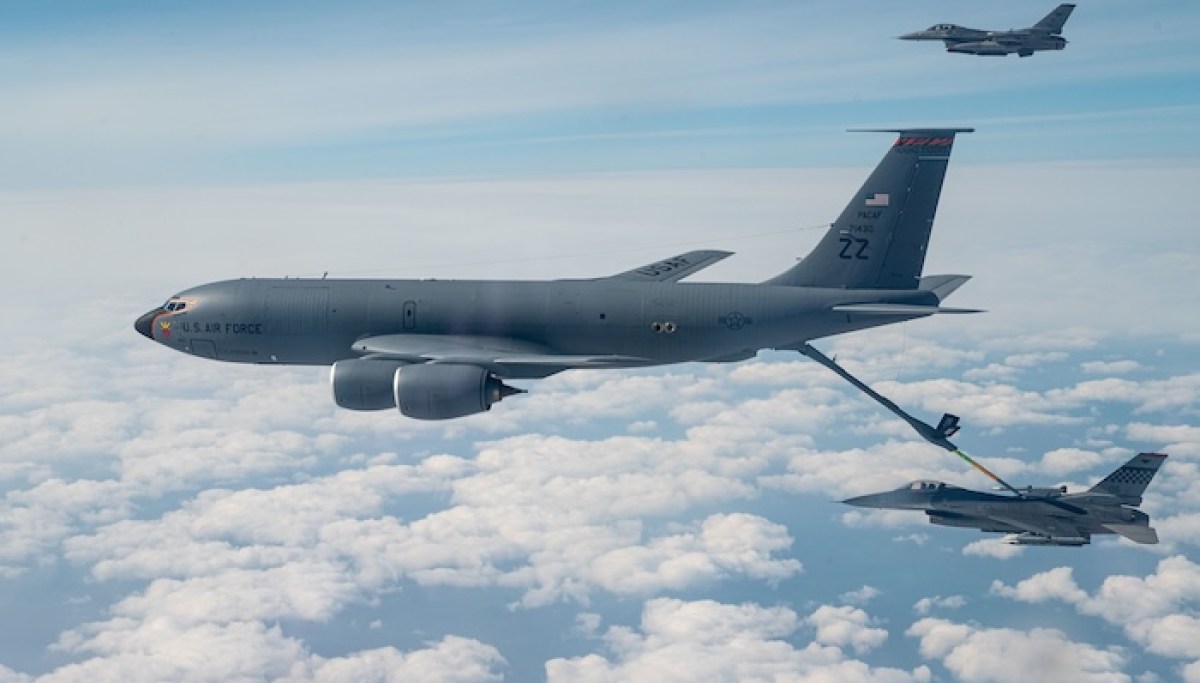
NATIONAL HARBOR, Maryland — The Air Force’s effort to modernize its fleet of refueler aircraft will take decades and require the long-term sustainment of both the legacy and newer platforms.The KC-135 Stratotanker, which carries fuel and can transfer it to other planes in flight, was first deployed in 1956, 70 years ago, and it will remain in the force’s fleet for the foreseeable future.“The last KC-135 pilot has not been born,” Air Mobility Command Deputy Commander Maj. Gen. Gerald Donohue said at the Air and Space Force Association’s Air and Space Conference. “This is just a statement of fact when you consider the time it takes to modernize, and so we will have to sustain our legacy platform as well as our newest platforms, and ensure that the joint force is supported by being able to execute the mission,” he said.The Air Force has begun replacing them with the KC-46As, which first entered service in January 2019.In March 2026, the Air Force reported having 373 KC-135s and 104 KC-46As in its inventory and that it expected to reach 65 KC-135s and 113 KC-46As by the end of the fiscal year, according to a recent Government Accountability Office report.“Over the years, the Air Force invested heavily in modernizing the fleet and modifying its composition, including pursuing an effort to gradually replace its legacy tankers with the new KC-46A aircraft,” it said. “However, the Air Force’s KC-46A program is faced with major production delays and deficiencies, continuing to put increased pressure on the aging KC-135 fleet.”Critical issues with the KC-46A have delayed the transition, prompting continued efforts to refurbish KC-135s. The GAO report said, “Air Force officials noted these efforts will help extend the life of the aircraft until at least 2050, and potentially to 2075.”“The percentage of aerial refueling tankers that are available and mission capable has remained persistently below the standards that the Air Force established for the fleet,” the report reads. “Moreover, the percentage of fully mission capable tankers—those capable of performing all their missions—is even smaller.”The refuelers have played a critical role in the U.S. war in Iran as they allow aircraft to take off from anywhere.BREAKING DOWN THE MILITARY’S NEARLY $40 BILLION IRAN WAR“When you think about the global nature of what we were doing, with some of our bombers flying back and forth from home, you know how many tankers it takes to do that?” Chief of Staff of the Air Force Gen. Ken Wilsbach told reporters at the conference. “It’s a lot, and just for just one flight of bombers, coming and going from the United States takes a lot of tankers.”During his keynote address, Wilsbach highlighted a particular pilot, call sign Rocket, who flew a 34-hour combat mission in a B-1 bomber. The bomber was able to fly that long with eight aerial refuels.Seven KC-135s have been damaged in the war. Two KC-135 crashed over Iraq, killing six service members on board one of the aircraft, according to a recent Department of Defense Inspector General report. Five KC-135s were destroyed in Saudi Arabia in Iranian attacks.
Air Force’s refueler modernization will take decades
Full Article
Original Source
Read the full article at Washingtonexaminer →KhanList aggregates and links to publicly available news content. We do not host full articles from third-party sources. Always verify important information with original sources.