
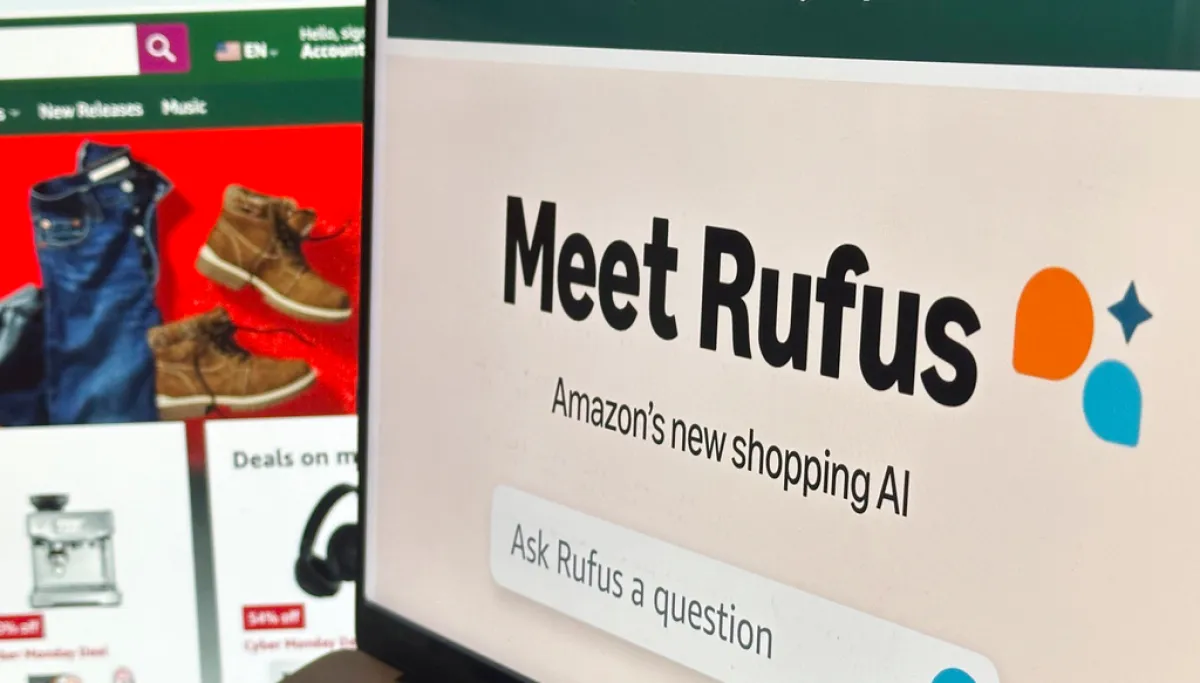
Traffic from AI tools to U.S. retail websites is expected to more than double this holiday season as shoppers hand gift searches, and increasingly the checkout itself, to chatbots, even as surveys show most shoppers still don’t trust the bots to spend their money.Tech companies and retailers are pitching tools such as ChatGPT, Google’s Gemini, and Anthropic’s Claude as a personal shopper in your pocket, one that can find gifts, track deals, and even check out on its own.But as AI moves from suggesting products to buying them, a harder question is following it into the checkout line: Can shoppers trust it to get the order right, put their interests first, and keep their money safe? A fast-growing way to shop Adobe forecasts a 130% jump in AI-driven traffic to U.S. retail sites, measured by shoppers clicking a link, compared with last year. The biggest increases are expected on Thanksgiving, up 159%, Black Friday, up 95%, and Cyber Monday, up 88%. Overall, Adobe projects online holiday spending will reach a record $275.1 billion from Nov. 1 to Dec. 31.That growth builds on a breakout 2025 season, when Adobe found AI-driven traffic to retail sites rose 693.4% from the year before.“Consumers embraced generative AI more than ever as a shopping assistant,” Vivek Pandya, lead analyst at Adobe Digital Insights, said in January.The growth is not just retailers’ wishful thinking. In a Bain & Co. survey, nearly a quarter of online shoppers said they plan to start their holiday shopping on an AI platform such as ChatGPT, Gemini, or Claude, up from 17% last year. That is still a minority, but the one-year jump suggests chatbots are fast becoming a front door to shopping, a role long held by search engines and retailers’ own websites.Those who use the tools tend to like them. Most AI shoppers in an Adobe survey said they felt more confident in what they bought and were less likely to send it back, a sign the technology may take some of the guesswork out of gift buying.From suggestions to checkout What is new this year is that the AI does more than recommend. Industry publication Digiday has called the 2026 holiday season the first in which the shopping agent actually pays.Google added agentic checkout to its AI Mode search and Gemini app last November, starting with retailers such as Wayfair, Chewy, and Quince. At the National Retail Federation’s annual conference in January, Google CEO Sundar Pichai said users would be able to buy directly within those tools through the company’s new Universal Commerce Protocol, which Google has begun rolling out in Canada. He added that things get interesting when “the buyer is actually using an agent to do the shopping,” Retail Dive reported.OpenAI introduced Instant Checkout in ChatGPT in 2025, letting users buy from merchants such as Etsy without leaving the chat, and has since launched a ChatGPT wallet that routes agent purchases through retailers’ own checkouts. Anthropic released a set of tools for building shopping agents on its Claude models in September, ahead of the holiday rush.Retailers are building their own. Amazon replaced its Rufus assistant in May with Alexa for Shopping, which can compare products, fill a cart, and reorder past purchases. Walmart lets customers cap how much an agent can spend at $50, $100, or $200.The companies are also fighting over turf. Amazon has sued Perplexity over its Comet browser agent’s access to Amazon’s site and has blocked Meta’s Muse AI agent from its store, saying the agent never identified itself as AI, accessed customer accounts without permission, and stored shoppers’ login credentials, Techlicious reported.The trust gap For all the enthusiasm, most shoppers are not ready to let a bot spend their money unsupervised.The numbers flip once the AI is asked to pay. Only 16% of consumers said they would trust generative AI to complete a purchase with their permission, according to a Deloitte survey of 4,000 U.S. consumers this fall. Payments-fraud firm Riskified found comfort with agents making purchases actually fell over the past year, even as use of the tools grew. The pattern suggests shoppers are glad to let AI do the research but want to keep their own hands on the wallet.That caution extends to the advice itself. About half of shoppers used AI to research a purchase in the past year, but only about a third trust its recommendations completely or mostly, according to survey firm Alchemer, a sign many consumers are relying on a tool they don’t fully believe and treating it as a starting point rather than a final answer.One worry is accuracy. Amazon’s Buy for Me agent, which buys from other websites on a shopper’s behalf, frustrated buyers and sellers last holiday season with AI-generated listings that did not match merchants’ actual inventory, Bloomberg reported.Amazon has said the programs, which it is still testing, “help customers discover brands and products not currently sold in Amazon’s store,” according to Modern Retail.Beyond accuracy, shoppers have reason to ask whose side the agent is on. Unlike a human personal shopper, an AI agent is built by a company that may also profit from advertisers, retail partners, or checkout fees. When OpenAI launched Instant Checkout, it acknowledged the feature could affect how results are ranked. Shoppers are alert to the conflict: Three-quarters of respondents in a survey by marketing company Quad said paid influence over an agent’s picks would make them trust it less.Scammers are cashing in on the boom, too. AI has made it cheaper and faster to build convincing fake storefronts. More than a quarter of consumers in the U.S. and Europe said they had run into an AI-related shopping scam in the past year, according to a Malwarebytes survey. Security researchers warn those fake stores now have a new target: the AI agent shopping on a consumer’s behalf, which may not tell a polished fake from a real store. In September, six banks, including Bank of America and Capital One, warned that the more control shoppers give an agent, the more damage a scammer can do if it is hijacked or impersonated.How to shop smarter with AI An AI tool’s top pick is not a seal of approval. The Better Business Bureau has warned that businesses ranked first in AI search results are not necessarily the most trustworthy, in part because paid advertising can register with AI systems as a sign of credibility.“Visibility alone is not the same thing as an endorsement of trust,” said Cameron Nakashima, the BBB’s media engagement and digital campaigns manager.Consumer advocates and security researchers offer a few common-sense guardrails for shoppers who want the convenience without the risk: Treat an AI recommendation as a starting point, not a background check on the seller. Confirm the store is legitimate before buying. Review the cart before the agent pays, and use spending limits where a retailer offers them. Ask whether results are sponsored, and compare prices on at least one other site. Pay with a credit card, which typically offers stronger fraud protections than a debit card. Be wary of deals that look too good to be true, especially from stores you have never heard of. TRUMP KEPT HIS PROMISES. IT COST REPUBLICANS THE MIDTERM ELECTIONSThe tools are likely to keep improving, and the companies behind them are betting shoppers will warm up. In a survey by identity-security company Okta, 62% of early adopters said they would already let an agent buy without checking first, an indicator of where the rest of the market could be headed.For everyone else, the safest approach this season may be to let AI do the legwork and keep the final click for yourself.
AI is now your holiday personal shopper — can you trust it?
Full Article
Original Source
Read the full article at Washingtonexaminer →KhanList aggregates and links to publicly available news content. We do not host full articles from third-party sources. Always verify important information with original sources.