
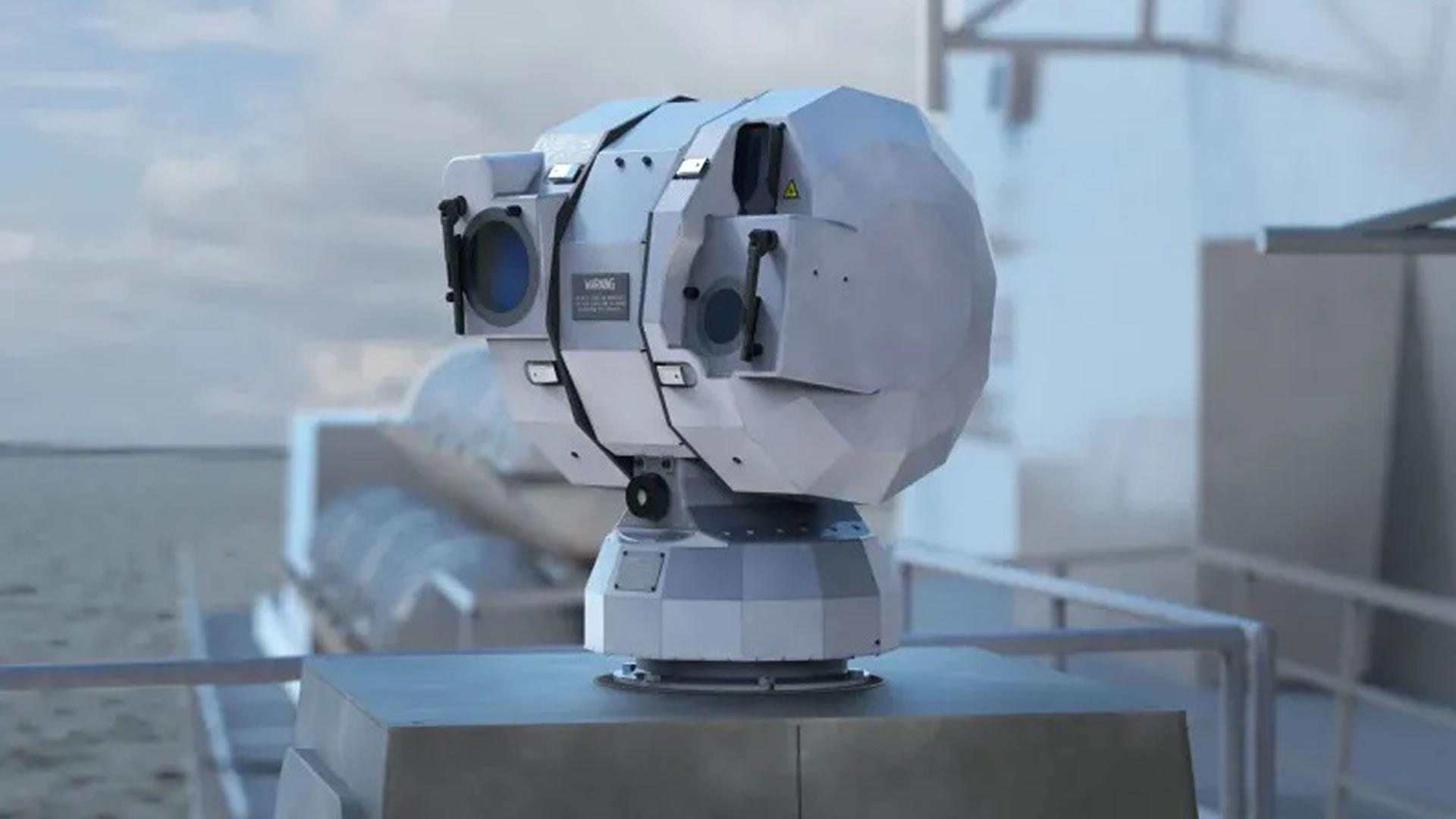
Key TakeawaysUK's Chess Dynamics has landed a £3 million ($4 million) contract to supply its SeaEagle fire control system to the Indonesian Navy.These systems will offer the ships greatly improved capability to identify, track, and engage targets (including aerial targets) using their naval guns.The cameras of new system can operate passively, meaning they don't need to transmit detectable signals like radar. The UK’s Chess Dynamics has landed a £3 million ($4 million) contract to supply its SeaEagle fire control system to the Indonesian Navy. Delivered in cooperation with Indonesia’s state-owned PT Len Industri, SeaEagle will be installed on two Bung Tomo-class light corvettes for the Indonesian Navy (TNI AL). These systems will offer the ships greatly improved capability to identify, track, and engage targets (including aerial targets) using their naval guns. To this end, it is not a new offensive capability, but rather an upgrade to existing optics. The SeaEagle Fire Control Electro-Optical (FCEO) is a highly sophisticated, stabilized camera and targeting system. This kind of electro-optical system uses sensors like visible-light cameras and thermal imagers. Depending on the design, such systems can also come with laser rangefinders. Such systems are able to identify and acquire targets like vessels and other objects even in low-light conditions. Giving old seadogs new eyes These maritime surveillance systems are able to track moving objects by keeping their sensors trained on a target despite the ship rolling, pitching, and changing directions. The system is also able to calculate targeting information like bearing, elevation, and range that can be fed to the ship’s 76 mm OTO Melara guns. Importantly, SeaEagle will interface with the ships’ existing Thales TACTICOS Combat Management System. What’s more, SeaEagle’s cameras can operate passively, meaning they don’t need to transmit detectable signals like radar. This makes the system particularly useful for discreet target tracking, although its laser rangefinder does emit detectable pulses when used. This is very interesting, as using radar can announce its presence. Electro-optical tracking can be considerably more discreet, although lasers are detectable and the system remains limited by visibility and atmospheric conditions. The main advantage of this for the Indonesian Navy is that their ships will effectively be able to upgrade gun capability without replacing the guns wholesale. It will also enable the Indonesian Navy to beef up parts of its roster without commissioning new vessels. The three Bung Tomo-class warships are British-built vessels that Indonesia acquired after their original customer, Brunei, declined to take delivery. Being corvettes, they are relatively small warships, but still capable of carrying out significant naval operations. So, rather than buying entirely new vessels, Indonesia is modernising its electronics, sensors and command systems. According to reports, one, the KRI Usman Harun (359), already has SeaEagle installed. Part of a wider upgrade package The KRI Bung Tomo (357) and KRI John Lie (358) will now be upgraded under this new contract. According to reports, this forms part of a larger modernization program for the Indonesian Navy. Other upgrades will include SMART-S Mk2 radar system, STIR EO Mk2 fire controls, and Vigile Mk2 R-ESM designed to detect and analyze electromagnetic signals emitted by other platforms. There is overlap in the capabilities of some of these, but this is by design. They not only complement each other, but also provide a level of redundancy, which is critically important for modern warships. It is worth noting that the modernisation of KRI Usman Harun was originally expected to be completed by the end of 2023. However, the work has taken considerably longer than anticipated, highlighting the potential complexity of integrating modern systems into ageing warshipsGet the latest in engineering, tech, space & science - delivered daily to your inbox.Christopher graduated from Cardiff University in 2004 with a Masters Degree in Geology. Since then, he has worked exclusively within the Built Environment, Occupational Health and Safety and Environmental Consultancy industries. He is a qualified and accredited Energy Consultant, Green Deal Assessor and Practitioner member of IEMA. Chris’s main interests range from Science and Engineering, Military and Ancient History to Politics and Philosophy.
Aging warships to get Western eyes to improve naval gun targeting with modern tech
Full Article
Original Source
Read the full article at Interestingengineering →KhanList aggregates and links to publicly available news content. We do not host full articles from third-party sources. Always verify important information with original sources.