
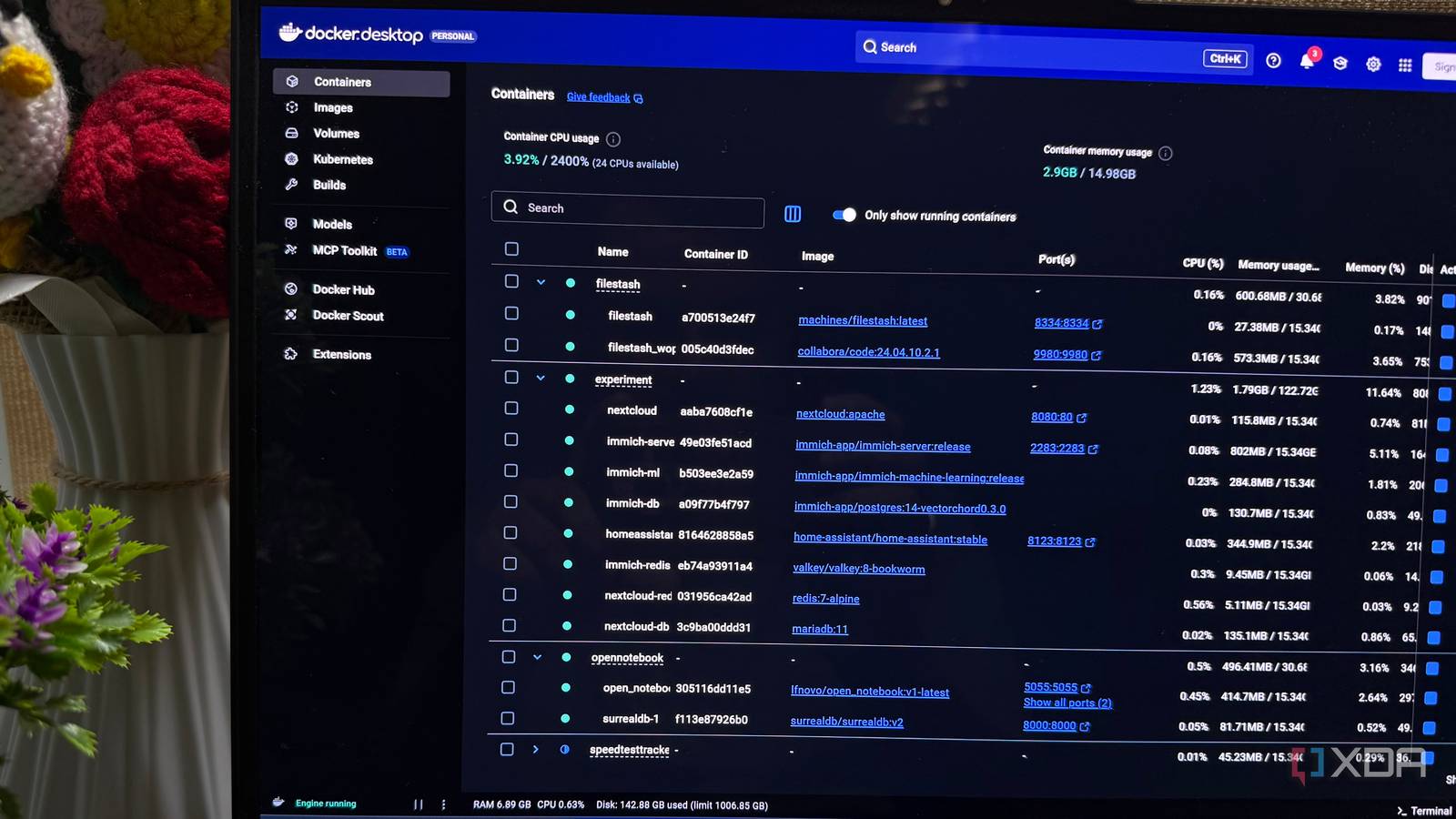
Published Oct 1, 2026, 7:30 AM EDT Beginning his professional journey in the tech industry in 2018, Yash spent over three years as a Software Engineer. After that, he shifted his focus to empowering readers through informative and engaging content on his tech blog – DiGiTAL BiRYANi. He has also published tech articles for MakeTechEasier. He loves to explore new tech gadgets and platforms. When he is not writing, you’ll find him exploring food. He is known as Digital Chef Yash among his readers because of his love for Technology and Food. Self-hosting started as a simple way for me to have more control over the software and data I use every day. But after running my own services for years, I realized that getting something running is often the easiest part. The real challenge is living with that setup over time. Some decisions that seemed perfectly reasonable at first ended up creating unnecessary work later. Others taught me things I wouldn't have understood from simply reading a setup guide. Looking back, those experiences changed how I approach self-hosting today. These are the mistakes that shaped that change and the ones I would avoid if I were starting again. Self-hosting everything just because I could I stopped collecting self-hosted apps like Pokémon The first mistake I made was treating self-hosting as a challenge to see how much of my digital life I could move onto my own server. If I found an open-source alternative to a service I used, I wanted to try it. Before long, I had containers for things I barely used, simply because I could run them. That approach looked impressive on paper, but it made my setup unnecessarily complicated. Every new service added another interface to learn and another application to keep track of. Some tools solved problems I didn't actually have, while others were just fun experiments that I forgot about after a few weeks. I eventually stopped asking, “Can I self-host this?” and started asking, “Do I actually need to self-host this?” That small change helped me build a much smaller setup that I genuinely use instead of maintaining a collection of projects just for the sake of it. Exposing services directly to the internet I learned to close the doors I also learned the hard way that making a self-hosted service accessible from anywhere doesn't mean it needs to be exposed directly to the internet. In the beginning, I opened ports whenever I needed remote access and didn't think much about what else I was making reachable. That approach made things convenient, but it also gave me more things to worry about. Every exposed service became another potential entry point, especially when I was running dashboards and admin panels that were never designed to be publicly accessible. I eventually changed how I handle remote access. I keep most of my services behind a reverse proxy with HTTPS and use private access methods for anything that doesn't need to be public. I also stopped exposing management interfaces just because it was the quickest way to reach them. Now, internet access is something I deliberately configure rather than something I enable by default. Backups aren't optional My data needed a safety net For a while, I treated backups as something I would set up later. If a service was running fine and all my files were on the server, I assumed everything was under control. That changed when I had to deal with lost or corrupted data and realized how quickly a small problem could turn into a much bigger one. Now, backups are part of setting up any service that stores important data. I back up the files, databases, and application data that would be difficult or impossible to replace. I also keep copies in different locations instead of relying entirely on the same machine running my services. Most importantly, I automate the backup process. I don't want to depend on remembering to run a backup every few days. A self-hosted setup gives me control over my data, but that control is only useful when I have a reliable way to get it back. I stopped chasing every new update I used to treat every available update as something I needed to install right away. Whenever I opened my Docker dashboard and saw a list of new image versions, I would update several services at once. It felt like a good way to keep everything current, but it often created problems I didn't expect. An update can change how an application works, remove an option, or introduce a compatibility issue with another component. When several services are updated together, figuring out what caused the problem becomes much harder. I now take a slower approach. For services I rely on every day, I check the release notes before updating and avoid making several major changes at once. I also give new versions some time before jumping in, especially when an application has a history of breaking changes. Keeping everything updated is important, but I no longer confuse “newest” with “necessary.” Documentation is a must Future me needs better notes Earlier, I used to make small changes to my setup without writing them down because I was sure I would remember what I had done. That worked until I had to troubleshoot something months later. I would look at a Compose file or configuration and have no idea why a particular setting was there or what would happen if I removed it. Now, I document the changes that aren't obvious. I keep notes about custom configurations, ports, folder paths, environment variables, and any unusual steps required to get a service working. I also keep my Compose files organized instead of leaving important configuration scattered across different folders. This has saved me more than once when rebuilding or modifying a service. I don't have to rely on memory or retrace old forum posts to figure out what I did. Self-hosting already involves enough troubleshooting. I don't want my own forgotten decisions to become another problem. “I'll remember how I configured this” is a myth. Self-hosting gets better when you simplify After years of running my own services, I’ve realized that self-hosting isn’t about building the most impressive setup. It’s about creating something that works reliably without constantly demanding my attention. The mistakes I made taught me to think beyond the initial setup and consider the long-term effort involved. Now, I focus less on experimenting and more on building an environment I can comfortably live with.
After years of self-hosting, here are 5 mistakes I will never make again
Full Article
Original Source
Read the full article at Xda-developers →KhanList aggregates and links to publicly available news content. We do not host full articles from third-party sources. Always verify important information with original sources.