
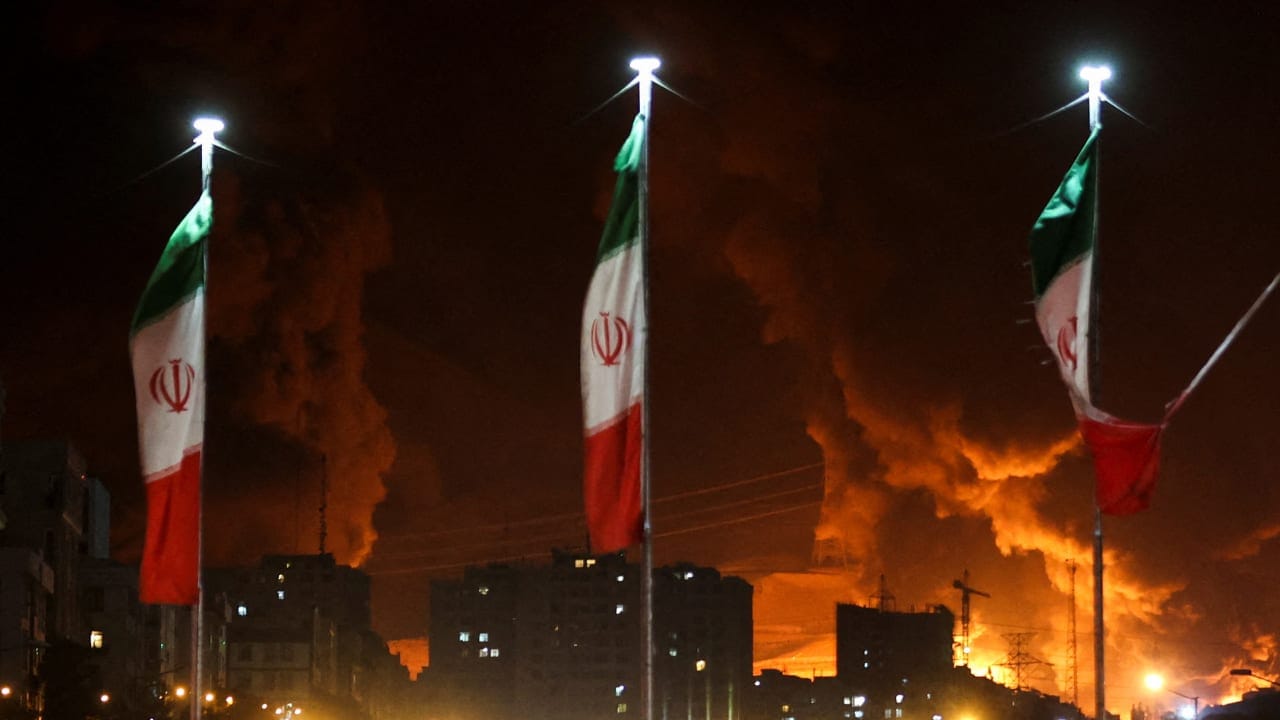
There is also a lack of clarity about why the nuclear program, which has been singled out as the reason for the conflict, has not been eviscerated, despite the time provided for the conflict.Follow us on Google Iranian flags fly as fire and smoke from an Israeli attack on Sharan Oil depot rise, following Israeli strikes on Iran, in Tehran, Iran, June 15, 2025. (photo credit: MAJID ASGARIPOUR/WANA/REUTERS)NOVEMBER 5, 2026 20:46In the wake of the US midterms, there is a lot of discussion about the Iran war and what may come next. The consensus building among many commentators and also recently elected people, from governors to members of Congress, appears to be that the war should wind down. Winding down a war is always more complex than getting involved in a war. This has been historically true for the US, whether it was the US involvement in Vietnam or the invasions of Afghanistan and Iraq.One takeaway from Vietnam was the concept of the Powell doctrine. It posited that if the US got involved in another war abroad, it needed clear, attainable objectives. This was relevant to the Bush administration in 1990 when the US agreed to send troops to help defend Kuwait after Saddam Hussein’s Iraq invaded the country.The US performed well in the 1991 Gulf War. However, many of the lessons of the Powell doctrine were forgotten during the Global War on Terror (GWOT). Later, the US returned to Iraq in 2014 to fight ISIS. This war learned from the GWOT, aiming to work through local partners so others would shoulder the burden of the fighting.The US role in Iraq ended on September 30, 2026. Once again, this illustrated that getting involved in the war made it difficult to get out, even if it was a narrowly tailored mission.The mission in Iran is not narrowly tailored. Unlike the US and Israeli strikes in June 2025, which were focused on the nuclear program, the new conflict that began in February has many elements. Israel’s prime minister has said that he ordered the IDF and Israeli intelligence services to topple the Iranian regime. The US doesn’t say this is a goal. Rather, the Trump administration has said it wants to prevent Iran from having nuclear weapons.A screengrab from a video obtained from social media on September 1, 2026, shows a military aircraft ready to take off on the day US CENTCOM said US forces carried out strikes on an Iranian military target. (credit: US CENTRAL COMMAND/HANDOUT VIA REUTERS)The attacks on Iran have led to Iran attacking shipping. This move has made the war turn into a complex naval campaign. When a war begins, and then the mission changes, it is usually called “mission creep.” This has not been the main topic for discussion in the US. The topic is more about the war in general, not defining its obtainable goals.CNN: Republicans blame Iran war for midterm lossesThe CNN headline on November 5, "Blaming the war," implies that Republicans are blaming the Iran war for the midterm loss.The headline at CNN appears symbolic. The Iran war is a major focus. This was also clear on November 4, as a number of recently elected officials, from Byron Donalds, the governor-elect in Florida, to Senator Mark Kelly, went on to discuss the Iran war and other issues.There are going to be some who argue that Iran’s regime will try to benefit from this. There is no doubt they will. However, this was baked into what former US defense secretary Donald Rumsfeld called the “known knowns” when the war began.One known known was that time was an issue. If the war drags on, that can become a challenge. The US public has wanted to end “endless wars,” a decision that transcends party lines; both the Obama and Trump administrations wanted to reduce the US role.Gaza dragged on despite Israel's history of fast, decisive warsGiven the hesitancy of the US public to engage in open-ended conflicts, the time issue was a known known. It might be noted that this used to be the case for Israel back in the day in the 1967 war and other conflicts; Jerusalem knew it had to fight fast, decisive wars. Yet the Gaza war that began with the Hamas attack continues, more than 1,100 days with no clear strategic objective, and it ends in either Gaza, Lebanon, or other places.In fact, it expanded to include new goals in Lebanon and also the stated goal of overthrowing the Iranian regime. After Israel’s recent elections, these goals may shift as well. This means that on both sides of the Atlantic, the two countries that joined to strike Iran in February 2026 may rethink what comes next.This creates several variables within the “known known” of the time constraint. The discussion about the war now may be constrained by the midterm outcome. The longer the conflict goes on, the fewer options there might be. The talk in July and October 2026 about a new “intense” bombing campaign.This did not clarify what the new campaign would do that the original one didn’t. There is also a lack of clarity about why the nuclear program, which has been singled out as the reason for the conflict, has not been eviscerated, despite the time provided for the conflict. This leaves many questions ahead, and the options may be narrowing.Follow us on Google
After US midterms, is there a time limit on the Iran war? - analysis
Full Article
Original Source
Read the full article at Jpost →KhanList aggregates and links to publicly available news content. We do not host full articles from third-party sources. Always verify important information with original sources.