
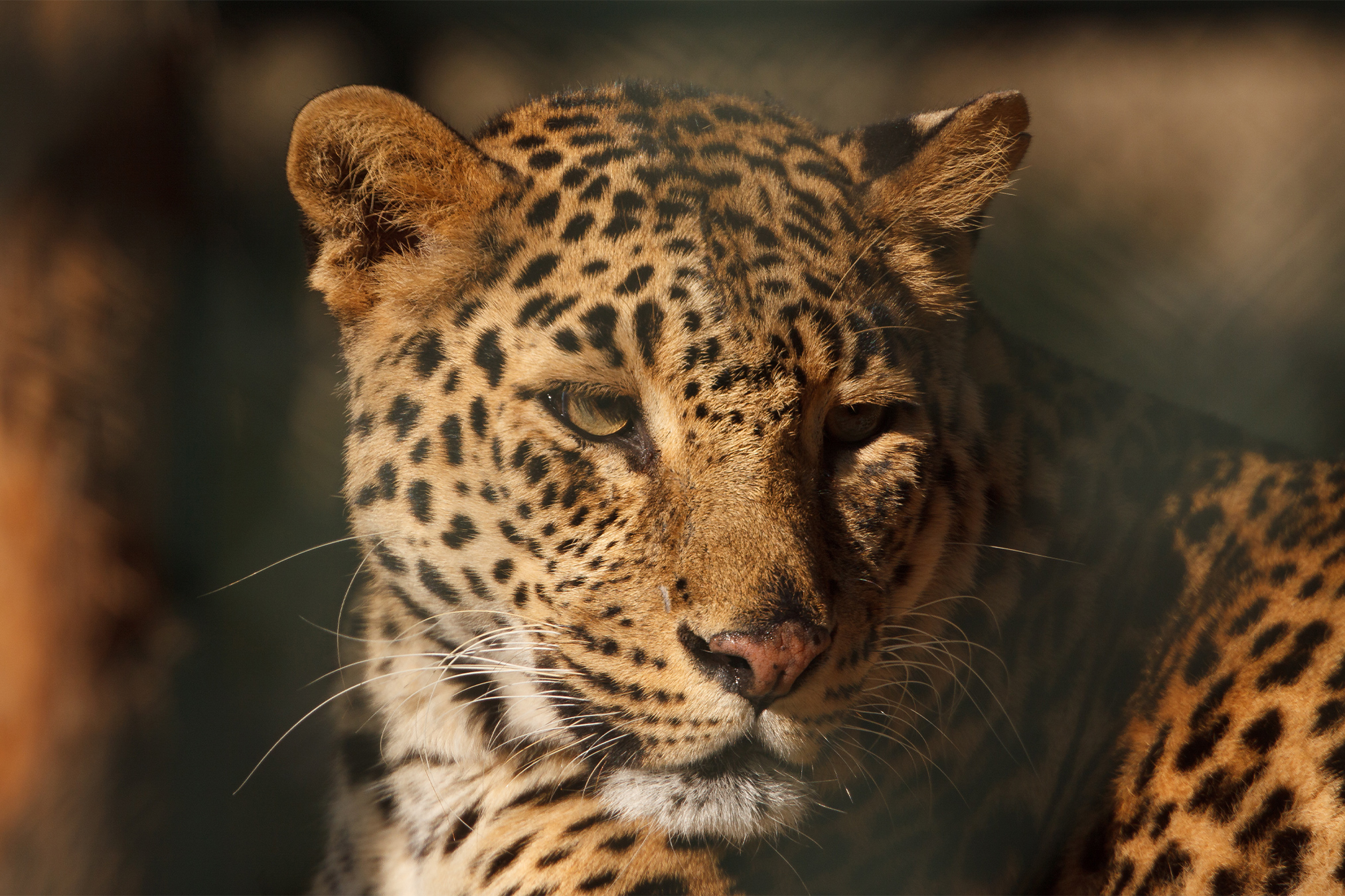
Researchers from Cornell University, WWF Nepal and local forest authorities in Nepal are testing lab-made versions of big-cat scent chemicals, which they call “BioBoundaries,” an attempt to create a chemical fence to keep big cats away from livestock.Some experiment sites report that tigers and leopards approach the scent stations, investigate them and often turn back without crossing. Of 10 compounds tested, three were linked to fewer leopard detections and two to fewer tiger detections. Some scents, however, attracted the cats; responses varied by species and locationA tiger turning away is not evidence the method prevents livestock attacks, the researchers say. Trials in Botswana suggest that one compound cut down leopard attacks, but studies in Nepal haven’t replicated this.If the scents work, dispensers could be installed around corrals or on grazing livestock, alongside stronger sheds and safer herding practices, not instead of them. Cost, refilling, manufacturing and distribution are still unresolved KATHMANDU — In March 2025, a tiger followed a forest trail through Nepal’s Khata Corridor until it reached a small iron stake next to the path. Attached to it was a dispenser releasing a laboratory-made version of a chemical found in the scent markings big cats use to mark their territory and communicate with other cats. A camera trap recorded the Bengal tiger (Panthera tigris tigris) approaching the station. The curious cat investigated the smell and then stopped, one of multiple instances of tigers and leopards coming up to these scent stations and then turning back the way they came. These encounters offer an early glimpse into an international experiment seeking to harness big cats’ territorial instinct in order to keep them away from livestock, farms and human settlements. But researchers caution that a tiger turning away from an experimental station is not yet solid evidence that the method can prevent livestock attacks. “It’s a long way from proving that — and we don’t claim otherwise,” said Martin Gilbert, a wildlife veterinarian, epidemiologist and associate professor at Cornell University in the U.S. who helped bring the research to Nepal. “At this stage, we’re asking a more fundamental question: Can these compounds reliably alter a predator’s behavior?” A woman with her goats in the buffer area in Bardiya. Image by Tulsi Rauniyar for Mongabay. Across Nepal’s buffer-zone settlements, encounters with tigers, leopards and snow leopards have led communities to use electric fences, flashing lights and other deterrents to protect livestock and homes. Large carnivores, however, may learn that lights and sounds pose no threat, while fences are expensive to build and maintain. Livestock also risk vulnerability if farmers allow them to graze in forests or when they’re kept in weak sheds. Researchers are now testing synthetic versions of chemicals that big cats use to mark territory and communicate with one another. Released from small dispensers, the compounds are intended to influence predator movements and create what the team calls “BioBoundaries” — invisible scent-based borders around vulnerable areas. So far, there have been mixed results. “The animals approached and investigated the scent but did not cross the perceived boundary,” said Shashank Poudel, head of the wildlife program at WWF Nepal. “Other compounds produced the opposite response: Instead of turning away, the tigers became more interested and visited the site more frequently. That was not the intended outcome. Another compound appeared more promising as a deterrent for leopards.” The research team installing scent dispensers on a tree. Image courtesy of WWF Nepal. Tests in Botswana The idea of using artificial territorial signals originated in Botswana in the mid-1990s, when wildlife biologist Tico McNutt proposed using long-lasting scent marks to discourage African wild dogs (Lycaon pictus) from leaving protected areas. Chemical engineer Peter Apps later began developing scent-based deterrents after camera-trap footage in 2016 recorded a leopard making a U-turn upon encountering a component of leopard urine. Apps, now a senior researcher at the field research program Botswana Predator Conservation (BPC), used gas chromatography-mass spectrometry to identify chemicals in leopard urine. This laboratory technique separates, identifies and measures chemical compounds in a sample. He then tested commercially available versions of the chemicals on wild carnivores. “We artificially create simplified equivalents of the chemical signals that predators use to mark their territories and communicate socially, and then use them to influence predators’ movements,” Apps told Mongabay. In Botswana, Apps said, one compound known as 3M3MB substantially reduced leopard attacks on livestock. Gilbert said these findings persuaded him that the approach can be tested elsewhere, although he cautioned against assuming that it would work across different species and ecosystems. “I wouldn’t say we were convinced they would work — that’s what the research is designed to find out,” Gilbert said. “What interested us was evidence from Botswana that a naturally occurring component of leopard scent could alter leopard behavior.” An African wild dog in Botswana. Image by Derek Keats via Wikimedia Commons (CC BY 2.0). Mixed signals from Nepal’s big cats Cornell University, WWF Nepal, and forest authorities in Bardiya National Park and the Dolpa district in western Nepal launched a three-year trial supported by a dozen field personnel. Researchers began testing 10 compounds at treated and control stations in the Khata Corridor — a 13-kilometer (8-mile) stretch of land that links Bardia National Park with India’s Katarniaghat Wildlife Sanctuary — in October 2024. In the research, the treated group received the substance or intervention being tested, while the control group did not, allowing researchers to compare outcomes and assess its effects. However, the experiment in Nepal was not a replication of Apps’ earlier leopard trials. Of the compounds tested in Nepal, only 3M3MB had previously been tested in Botswana, Apps said. Most of the substances had originally been identified in tiger scents. One compound that reduced leopard camera detections in Nepal subsequently produced a similar effect in Botswana. The results were mixed. The compounds triggered similar levels of avoidance in tigers and leopards, measured by a decline in camera-trap videos, according to Apps. Three compounds produced this response in leopards and two in tigers. Apps said most of the substances tested had been identified in the tiger scent, so he was not surprised that tigers investigated the odors more closely than leopards did. Tigers sniffed intensely and displayed flehmen, a behavior used to investigate chemical signals, much as they would when examining natural scent marks. Some also turned back around after sniffing the test odors, suggesting they may have interpreted them as territorial scent marks, Apps said. “The tiger responses provide evidence that scent signals can influence the behavior of another large felid, while the differences between leopards in Botswana and Nepal tell us that we shouldn’t assume responses will be universal,” Gilbert said. A tiger in Bardiya National Park, 2021. Image by AP Photo/Niranjan Shrestha. Babu Ram Lamichhane, a wildlife researcher at the nonprofit Wild Care Nepal who is not involved in the trial, said territorial behavior does not necessarily prevent tigers from using the same space. Examining tiger census data, he had found up to seven tigers recorded at the same location, although they could use the area at different times. “We will need to monitor their behavior closely to determine whether this method can be effective,” he said. The team reduced the selection from 10 compounds to six for a second phase conducted between December 2025 and June 2026. But it was delayed due to Nepal’s recent national tiger census and demands on field personnel. In the Khata Corridor, the team installed 30 stations, each consisting of an iron stake, a scent dispenser and a camera trap. The compounds are released at rates measured in millionths of a gram per hour. Local citizen scientists inspect the stations and help collect footage and field observations. Lamichhane also raised questions about how the scents would perform under different weather conditions. They might be stronger in dry conditions, he said, while rain and moisture could affect how they disperse. “Effectiveness would also depend on where dispensers are placed, how closely they are spaced and the area they cover,” he told Mongabay. In the Khata Corridor, the team installed 30 stations, each consisting of an iron stake, a scent dispenser and a camera trap. Image courtesy of WWF Nepal. Researchers leave dispensers empty during control periods and install the equipment weeks before testing begins. These measures help distinguish responses to the chemical from curiosity or fear caused by an unfamiliar object appearing in a cat’s home territory. Researchers also need to see reactions repeated among different animals and detect a measurable change in movement of animals before inferring a behavioral effect. Locals in Khata Corridor have tried early warning sirens, watchtowers and wire fencing to protect people, crops and livestock from wild animals, said Hari Gurung, chair of Khata Community Forest Coordination Committee (KCFCC), which represents 39 community forests. He said artificial scent could deter leopards, though he was not sure it would work against tigers. “If the results are positive, we could use it to protect livestock from predators,” he said. “It could become one of several measures to reduce human-wildlife conflict.” The compounds researchers used triggered similar levels of avoidance in tigers and leopards, measured by a decline in camera-trap videos. Image courtesy of WWF Nepal. From animal behavior to livestock protection If the scents prove effective, dispensers could be installed around corrals, near the settlements and other high-risk areas. Researchers could also attach scent dispensers to individual animals allowing a moving herd to carry a protective scent as they graze. Apps said collar-mounted dispensers have reduced predation in Botswana. But the approach has not been tested in Nepal, and researchers must determine which applications suit the country’s livestock practices, landscapes and carnivore species. Gilbert said scent deterrents would not remove the need for stronger sheds, appropriate herding and other safeguards. “BioBoundaries aren’t intended to replace good livestock husbandry,” he said. “What we aim to develop is an additional tool that will complement those approaches, particularly in situations where it isn’t practical to eliminate all of the underlying risk.” A farming couple with their water buffalo near Chitwan National Park. Their previous buffalo was killed by a tiger. Image by Jonas Gratzer for Mongabay. Another concern is whether discouraging a predator from approaching one household could redirect it toward another corral or grazing area. Gilbert said future trials would have to operate across a sufficiently large area to determine whether BioBoundaries reduce conflict rather than redistribute it. Predators could also learn that the synthetic scent is not accompanied by a territorial rival and begin ignoring it. Apps said African trials have shown little habituation after months of exposure, including one flock reportedly protected from leopard attacks for three years. Those findings have not yet been replicated in Nepal. Habituation may be less likely because the compounds exploit an evolved communication system rather than presenting predators with an arbitrary frightening stimulus, Apps and Gilbert said. Nevertheless, their effectiveness over prolonged exposure still requires testing. Researchers said they hope to identify several compounds that could be rotated or combined. Apps said mixtures might produce stronger effects, while keeping additional scents in reserve could help if animals eventually get used to a scent, and begin ignoring it. Whether rotation would preserve their effectiveness remains untested. “We want not just one but a couple of compounds to work,” WWF Nepal’s Poudel said. “Then we can use them in rotation.” He said some scents also caused wild boar, spotted deer and sambar to flee, raising an untested possibility that they might help protect crops from herbivores. Even if researchers identify an effective scent, they must determine how frequently dispensers need refilling, how much it will cost, and who would manufacture, approve and distribute them. Poudel said veterinary services might eventually distribute the compounds, but Gilbert said designing such a system would be premature before researchers demonstrate both repeatable avoidance and fewer livestock attacks. Domesticated yaks in Nepal. Free-roaming yaks in high elevations face the risk of snow leopard attacks. Image by Jerome Bon via Flickr (CC BY 2.0). Maintenance would be a crucial test of any community application, Lamichhane said. “Most of our measures to prevent wild animals from destroying crops or killing livestock have failed because of a lack of maintenance.” Another concern was whether the chemicals could be produced in Nepal, he added. “Ultimately, the system will need to be inexpensive, simple to deploy and practical for livestock owners to maintain [it] themselves,” Gilbert said. “Otherwise, it won’t be a viable conflict-mitigation tool.” Poudel said no single technology could solve human-wildlife conflict. Changes in wildlife distribution, farming practices, grazing, forest use and human movement can all alter where and why conflicts occur. “We often see conflict as a one-dimensional problem,” he said. “It is a wicked problem. There is no single solution.” “As long as humans and wildlife live together, conflicts are bound to occur,” Poudel said. “Our goal should be to reduce the harm.” Banner image: A leopard in the Central Zoo, Nepal. Image by Petr Meissner via Flickr (CC BY 2.0). India’s tiger success brings a new challenge: Living alongside the big cats Leopards, Nepal’s other, other big cats, face unprecedented threats FEEDBACK: Use this form to send a message to the author or editor of this post. If you’d like to post a public comment, you can do so at the bottom of the page. Credits Topics
After Botswana, Nepal tries artificial scent marking to fend big cats off villages
Full Article
Original Source
Read the full article at News →KhanList aggregates and links to publicly available news content. We do not host full articles from third-party sources. Always verify important information with original sources.