
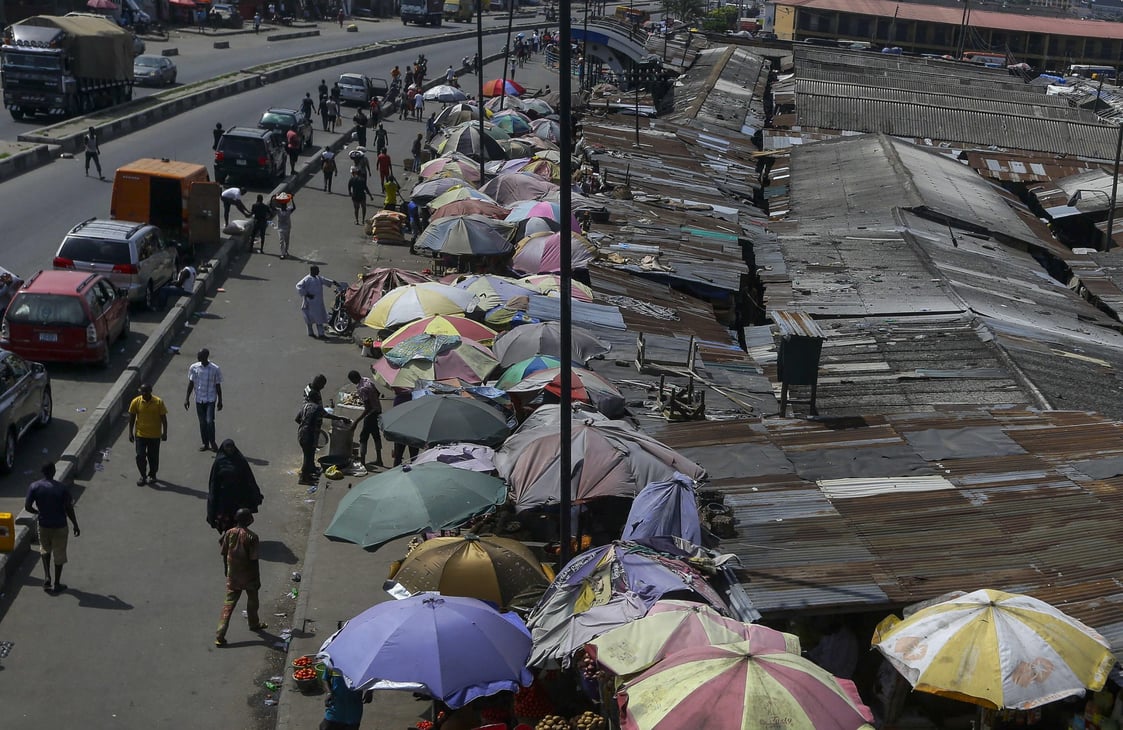
Virginia Tech researchers mapped some of Africa's megacities estimated to sink through satellite radar observations in land movement.(CN) — First Venice, then New Orleans and now several coastal African cities are projected to gradually sink into the ocean due to flooding and other adverse climate effects by 2050.Researchers at Virginia Tech first noticed the changes in sinking land by using thousands of satellite radar observations from the European Space Agency’s Sentinel-1 missions. A study published Friday in the journal Science Advances analyzes how much 20 cities are sinking through the research team’s development of high-resolution maps of vertical land motion.According to the researchers, the results of subsidence rates — another term for sinking — are “striking.”“Our study shows that we cannot fully understand future coastal flooding without measuring what is happening to the land itself,” Oluwaseyi A. Dasho, the study’s lead author and a Ph.D. graduate of Virginia Tech’s Department of Geosciences, said in a statement. “These changes are often invisible in everyday life, but over decades they can substantially increase flood exposure.”Future sea level rise is often seen as a potential major player in coastal flooding and sinking but the researchers say global climate models sometimes don’t consider local activities that contribute to the land’s movements.“Land subsidence is not simply another consequence of climate change,” Manoochehr Shirzaei, professor of geosciences at Virginia Tech and senior author of the study said in a statement. “In many places, it is influenced by local processes, including groundwater withdrawal, sediment compaction and urban development. That means we may have opportunities to reduce part of the risk through better management of land and water resources.”The researchers compared their data with the 2023 Intergovernmental Panel on Climate Change’s Sixth Assessment Report and discovered differences in projections on flood exposure and sea level rise.Renowned cities such as Lagos, Nigeria, and Alexandria, Egypt, emerged as hotspots on the African continent, with Lagos sinking at a rate of approximately five millimeters a year. For Alexandria, it’s six millimeters per year. Alexandria was also one city where the IPCC’s report and the satellite observations differed. The researchers calculated an increase in sea level rise by approximately 36% by 2050 and coastal flooding increase by about 15%.The findings reveal that 7 million people are at risk of negative impacts because of potential flooding exposure through 2100. Based on observations, metro areas such as Douala, Cameroon, and Monrovia, Liberia, are particularly positioned for substantial exposure risk.But Lagos, one of the fastest growing megacities in the world, was noted as one of the most threatened. Over 2.6 million residents already live in risk zones that may be subject to “extreme coastal water levels,” with the number likely to rise to four million by 2100, according to the researchers’ projections.“Many African coastal cities are growing rapidly, yet the measurements needed to understand their changing flood risk remain limited,” said Dasho. “We hope this work helps close that information gap and gives scientists, city planners, and decision makers better tools to protect vulnerable communities.”Subscribe to our free newslettersOur weekly newsletter Closing Arguments offers the latest about ongoing trials, major litigation and rulings in courthouses around the U.S. and the world, while the monthly Under the Lights dishes the legal dirt from Hollywood, sports, Big Tech and the arts.Additional Reads
African coastal cities projected to sink by several millimeters in next two decades
Full Article
Original Source
Read the full article at Courthousenews →KhanList aggregates and links to publicly available news content. We do not host full articles from third-party sources. Always verify important information with original sources.