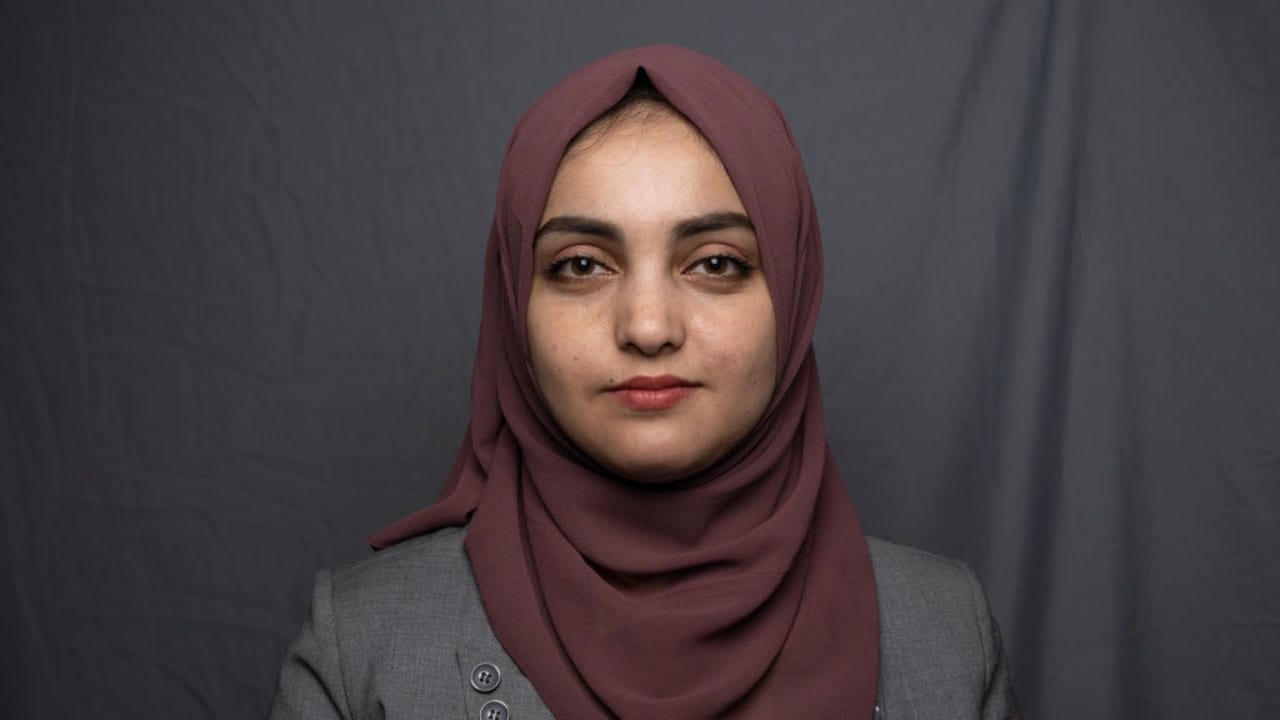
ByARSHAD MEHMOOD/THE MEDIA LINEAUGUST 18, 2026 08:37Afghan journalist Tahmina Usmani became one of the most visible women working in her country’s media after the Taliban returned to power in August 2021. She continued presenting news as female journalists disappeared from television screens, then appeared on air with her face covered when Taliban authorities imposed a new dress code.For more stories from The Media Line go to themedialine.orgNow living in Paris, Usmani told The Media Line that her decision to remain on television reflected both her commitment to journalism and her determination to preserve a public voice for Afghan women.Originally from Panjshir, Usmani was born and raised in Kabul. Her father worked in the automobile business, while her mother, who had been denied an education herself, encouraged her children to study.“Honestly speaking, she was a strong supporter of my dreams,” Usmani told The Media Line.Usmani earned a bachelor’s degree in law and political science from Rana University in Kabul and completed a journalism course. She hoped to continue studying international relations, but Afghanistan’s political upheaval disrupted those plans.She began her broadcasting career at Noor TV, where her income helped support her parents and three siblings. Usmani joined TOLOnews in August 2020 and returned to political news programming on August 27, 2021, less than two weeks after the Taliban captured Kabul.Usmani described herself as the first female TOLOnews anchor to appear after the takeover. Contemporary reporting shows that presenter Beheshta Arghand interviewed a Taliban representative on August 17, making Usmani more accurately one of the first women to return to the network’s broadcasts and political programming under the new authorities.Her presence soon became part of a larger battle over whether women would retain any place in Afghanistan’s media.In May 2022, Taliban authorities ordered female television presenters to cover their faces on air. Women initially resisted, but broadcasters were told that presenters who refused would be reassigned or dismissed. Usmani appeared on TOLOnews wearing a face covering, with international photographs capturing what became an emblem of the Taliban’s tightening control over women journalists.“It is very difficult for us,” Usmani said at the time, explaining that presenting while veiled made breathing and speaking harder. Male TOLOnews employees later wore masks in solidarity with their female colleagues.Talibans claim women to remain in broadcasting, expand restrictionsTaliban officials said they did not intend to remove women from broadcasting, but the restrictions expanded. Television dramas featuring women were banned, female presenters were subjected to strict dress requirements, and journalists faced growing pressure over what they could report and ask.“Women were required to cover their faces, and journalists faced censorship in both their reporting and interview questions,” Usmani told The Media Line.By August 2022, Usmani was among the few female journalists still working inside Afghanistan. She told Agence France-Presse that joining TOLOnews and serving as a voice for Afghan women gave her a sense of purpose during an increasingly bleak period. Usmani now believes independent journalism has become impossible inside the country.“In my view, nowadays, there’s no truly independent media in Afghanistan under Taliban rule,” she told The Media Line. “Media organizations can only operate if they publish content approved by the Taliban. Journalists who criticize the authorities risk arrest or torture or even death.”Human Rights Watch reported in 2025 that Taliban intelligence officials monitor media content, morality authorities enforce dress and conduct rules, and journalists face punishment for perceived criticism. The organization said the restrictions had produced a sharp decline in the number of women working in Afghan media.Usmani eventually concluded that remaining in Afghanistan was no longer safe.“When I realized that I could no longer live and work freely or safely in Afghanistan, I decided to leave the country,” she said. “It was one of the most difficult decisions of my life.”Journalist joins Afghanistan exile broadcaster in PakistanShe moved to Pakistan and joined Afghanistan International, an exile broadcaster that reports for Afghan audiences from outside the country. Leaving brought a different set of hardships: separation from her family, uncertain residency status, cultural adjustment, language barriers, and the struggle to find stable work.Usmani later relocated to France and is studying human rights and humanitarian action at Sciences Po in Paris through a professional certificate program in social and human sciences for young refugees.She hopes to continue both her education and her journalism while using the opportunities available to her in exile to advocate for those denied them at home.“I also hope that one day all Afghan girls, Afghanistan girls and women, as well as my fellow journalists and media colleagues, will have access to meaningful educational and professional opportunities,” Usmani told The Media Line.“Above all, I hope to see Afghanistan one day become a free, peaceful, and prosperous country where everyone can live with dignity, freedom, and hope.”Follow us on Google
Afghan journalist explains her escape from Taliban after restrictions on women in broadcasting
Full Article
Original Source
Read the full article at Jpost →KhanList aggregates and links to publicly available news content. We do not host full articles from third-party sources. Always verify important information with original sources.