
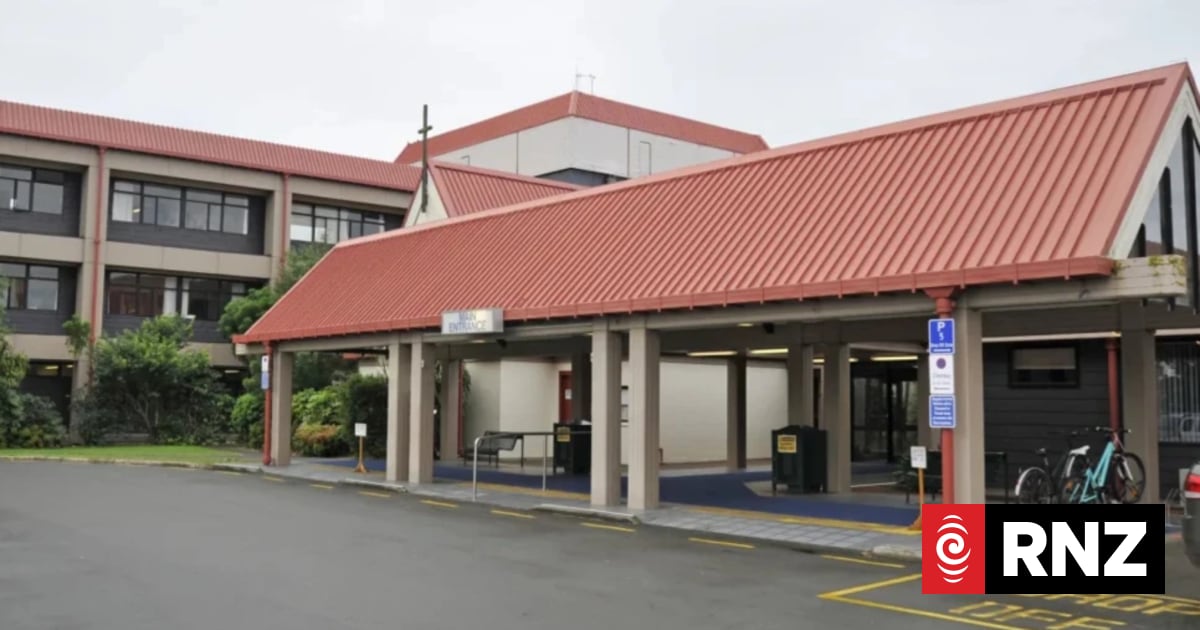
A nurse at Gisborne Hospital says the emergency department (ED) is in a state of "absolute chaos" due to ongoing staffing shortages and the surge of winter illnesses.The New Zealand Nurses Organisation (NZNO) said EDs across the country are under strain.Meanwhile, flu data shows hospitalisations have been climbing steeply nationwide for over a month.More than 30 ED nurses from Gisborne Hospital are striking for an hour on Wednesday over unsafe staffing levels.NZNO union delegate and Gisborne Hospital ED nurse Clara Dolman-Tuhou said the "absolute chaos" was not sustainable."It's placing both the patient safety and the staff wellbeing at risk, the staff are absolutely exhausted doing back-to-back 12 hour shifts," she said."You got nurses running from here, there and everywhere, you can see the strain, you can see the tiredness from everybody and you can also feel the worry."She said there'd been an influx of patients with influenza, as well as patients with respiratory syncytial virus - or RSV - particularly in children.Patients with underlying conditions were being hit the most, and some were ending up with pneumonia, she added.The hospital had lost 10 senior nurses over the past year, and what Health NZ (HNZ) was offering to replace those roles was "definitely not good enough", Dolman-Tuhou said..HNZ had offered 1.4 full time equivalent (FTE) nurses in permanent roles, 0.8 FTE for a six-month fixed-term position and 0.8 FTE for a health care assistant.Dolman-Tuhou said two new nurses had been hired so far this year.NZNO union delegate and Waikato hospital ED nurse Tracy Chisholm said it was also running way over capacity, and that it hadn't been unusual to see over 300 presentations to ED in a 24-hour period.NZNO union delegate and Waikato hospital ED nurse Tracy Chisholm.RNZ / Natalie AkoorieShe said patients could be waiting for more than eight to 10 hours."These waiting rooms are full, we have a cupboard with extra chairs in it so when we run out of chairs for the waiting room, we can find more chairs for people to sit in, or people sit in wheelchairs."Some people just get so tired and exhausted that they'll end up lying on the floor of an emergency department waiting room," Chisholm said.There was no capacity to isolate patients with influenza A from other patients, she said."If you came in with a broken leg, you might be sitting in a room [with someone] who's coughing because they have influenza A".Chisholm said the hospital got permission from HNZ to hire 10 FTE nurses following the death of a patient in an ED toilet in late June.She said it took time to advertise and hire, and these staff wouldn't be ready for this winter.It was reported on Saturday that a second patient also died in an ED toilet.Chisholm said attempts to move staff around to support areas facing high demand were not working."If you rob from Peter to pay Paul, you're kinda just moving the chairs on the Titanic."Health NZ responds to strike actionHealth New Zealand said it had been notified by NZNO that nursing staff planned to take industrial action in Gisborne Hospital's Emergency Department."Safeguarding patient care is our priority. If the strike goes ahead, the emergency department will remain open and appropriate measures will be put in place to maintain patient and staff safety and provide service continuity."Tairāwhiti is in an ongoing process looking at emergency department nursing staffing levels to ensure we have the right workforce capability, capacity and skill mix to deliver safe, high-quality patient care."This has been a collaborative process with the NZNO organiser and delegates. There have been several opportunities for feedback throughout and we remain committed to working in good faith as this process continues."Winter was always a busy time, the spokesperson said, and August demand was very high combined with increased sick leave among clinical staff."Our nurses, doctors and wider healthcare teams continue to do an outstanding job caring for patients and our community."Despite pressures, patients with the most urgent clinical needs continue to be prioritised and seen first, as we actively manage demand through established escalation processes, staff redeployment and by maximising flow through the hospital, including increasing resourced bed availability."Last week Auckland's Middlemore Hospital saw what was described by an ED doctor as an "appalling" late night surge of patients.Health NZ's group director of operations for Counties Manukau, Vanessa Thornton, said there were 457 presentations to Middlemore's ED in the 24-hour period from midnight on Wednesday, following consecutive days of high demand for care.
'Absolute chaos' at Gisborne Hospital ED as nurses struggle with staffing shortages
Full Article
Original Source
Read the full article at Rnz →KhanList aggregates and links to publicly available news content. We do not host full articles from third-party sources. Always verify important information with original sources.