
6 min readThis Week in the Laboratories of Democracy(Permanent Musical Accompaniment to This Post)Being our semi-regular weekly survey of what's going down in the several states where, as we know, the real work of governmentin' gets done and where the rifleman's stalking the sick and the lame.Our semi-regular weekly survey this week is very heavy on people who want to build things of which many other people want no part.We begin in the Commonwealth (God save it!). South from Worcester on Route 146 lies the charming town of Sutton. Back in the day, Sutton's Pleasant Valley Country Club was a regular stop on the PGA and LPGA Tours (The last PGA event at the course was in 1998.) There also was a drive-in that showed films of ... ahem ... a sophisticated nature. Anyway, I used to drive through Sutton on my way to my job in the state forest. Route 146 got progressively more rural the further you got from Worcester. Now, Bob Kraft, the owner of the New England Patriots, would like to drop a data center on the town. From CBS News:Sutton town leaders have been scrambling to research and respond to a $16 billion proposal for a data center campus backed by United Global Packaging Group and The Kraft Group, which are both affiliated with New England Patriots owner Robert Kraft. The data center would bring in millions in revenue and lower property taxes. But critics worry about the impact on the environment, public health, and home values. "We don't have town water. So we have an aquifer under the town and the amount of water that a data center might use is phenomenal," said Sutton resident Robert Dufault. He went to town hall Tuesday to sign the petition. "I would hate to see Sutton sell its soul," he told WBZ. If the town pursues a moratorium, it would hit the pause button on the project for a year, preventing any permissions on development while a bylaw is carefully created. Any decision would ultimately require a two-thirds majority vote at a town meeting.The idea of dropping a power-draining, water-gulping 10-building campus on a place as small as Sutton is exactly why data centers have become the hot-button local issues all over the country. It is sheer oligarchical bullying over which the country has raised its hackles. This would be the fourth-largest data center in the United States. And, as WGBH points out, some sports oligarchs are leading the parade on these projects, which is reason enough to give every one of these projects a serious side-eye.Kraft doesn’t have to look too far for inspiration. Miami Dolphins owner Stephen Ross is also the founder a Related Companies, which is developing a $16 billion data center project in Michigan that has received significant pushback from locals there. Overseas, Real Madrid president Florentino Perez has seen his personal wealth go up significantly thanks to the data center construction boom. He’s the president of Grupo ACS, the largest construction company in Spain, which has connections to major data center projects, including a $10 billion campus in Indiana. That shot Perez’s net worth up significantly this year.Currently, it hovers between $5 billion and $6 billion, according to Forbes.It's good to be rich in this country. You may not have noticed.Elsewhere, Erik Loomis of LG&M points us to another oligarch's dreamscape, this one in the beleaguered state of West Virginia. From The Washington Post:The jagged limestone rocks of Old Standard Quarry have weathered many eras of history. The property was the site of a Civil War battle, then a quarry, and is now a popular destination for bungee jumping, its dark green water fed by a natural spring. Recently, the state proposed yet another use for the land: as storage for radioactive nuclear waste from around the country.“I thought it was a joke,” said Pasha Majdi, president of the Jefferson County Commission. “It doesn’t make any sense.”It wasn’t a joke. Without consulting residents or local officials, Governor Patrick Morrisey’s energy office submitted a detailed pitch to the Trump administration offering the Jefferson County quarry and three other sites for a potential “Nuclear Lifecycle Innovation Campus.” The Trump administration has said such campuses would need to agree to store spent nuclear fuel—one of the nation’s most vexing environmental problems—in exchange for federal support for research, development and production facilities that aim to modernize and grow the country’s nuclear power infrastructure.Pause for a moment and roll that business-school candy corn around in your mouth for a second. A "Nuclear Lifecycle Innovation Campus." A glow-in-the-dark euphemism for the good people of Jefferson County.The administration claims the campuses could create 25,000 jobs and generate tens of billions of dollars in private investment and tax revenue. Those economics are alluring to states eager for development.We're back in the three-card monte game of "Jerbs!" that we all had to play in relation to our old friend, the Keystone XL pipeline. We have to be careful how many of these jobs are temporary construction jobs and how many are the strippers who come to town to entertain them.Twenty-six expressed some manner of interest before the federal government chose Utah, Tennessee, Oklahoma, Louisiana, Idaho and West Virginia as finalists.(Jesus, Louisiana? Really? Are you prepared to move aside one of your eleventy-million chemical plants and refineries to make room for nuclear waste disposal facilities? Take a knee on this one, okay?)“West Virginia is intentionally beginning with nuclear initiatives that are actionable and high‑value, particularly those tied to the spent and partially spent fuel stream and backend services, areas where the state can quickly demonstrate success and build momentum,” the state’s pitch promised. It assured that “West Virginia recognizes that for any project with potential community impacts, social buy-in and community alignment are foundational.”But the way things played out in West Virginia underscored how community anxiety around nuclear waste is not easily overcome. That anxiety is why there is no comprehensive plan for permanently disposing of the tens of thousands of tons of spent fuel that already exists in the United States, much less for getting rid of the waste that could be generated with the quadrupling of nuclear power capacity President Donald Trump envisions.You mean communities are anxious about becoming repositories for poisonous waste with a half-life of up to 24,000 years? What is wrong with people anyway?Energetic local community activism on issues like these was one of the most underrated sources of energy behind the historic Democratic sweep two weeks ago. People are starting to enjoy fighting the power again.In that spirit, we conclude, as is our custom, in the great state of Oklahoma, whence Blog Official Overseas Operative Friedman of the Algarve brings us yet another story about toxic waste. From the Tulsa Flyer:The Oklahoma Department of Environmental Quality has added four bodies of water—lakes Bell Cow, Overholser, Fuqua and Ponca—to its growing list of lakes with mercury advisories for fish. The advisory affects an important food source for many Oklahomans, especially those with lower incomes, people who live in rural or Indigenous communities and those who practice traditional harvesting methods. Mercury exposure in humans can affect the kidneys and brain and cause learning disabilities in children. Symptoms of exposure to mercury include loss of peripheral vision, “pins and needles” feelings in the hands, feet and around the mouth, lack of coordination of movements, impairment of speech, hearing and walking and muscle weakness.Delightful. And who was it that tried to kill Bell Cow Lake?The Environmental Protection Agency announced in February that it was rolling back mercury and air pollution standards and monitoring requirements for coal-fired power plants implemented in 2024 under President Joe Biden. The Trump administration has also prioritized reopening coal-fired plants that had previously been shuttered and upgrading coal-fired generators that were set to be retired. At least three coal-fired units in Oklahoma will get upgrades—two units at OG&E’s Sooner Generating Station in Red Rock and one unit at Grand River Dam Authority’s Grand River Energy Center in Choteau, less than a hundred miles downstream on the Neosho River from Jim. A few miles west of Choteau is the town of Inola alongside the Verdigris River, which may soon be the site of the country’s largest aluminum smelters, another source of mercury pollution.It is going to take decades to get clear of all the damage these clowns have done, if we even can, which I doubt more seriously every day.This is your democracy, America. Cherish it.
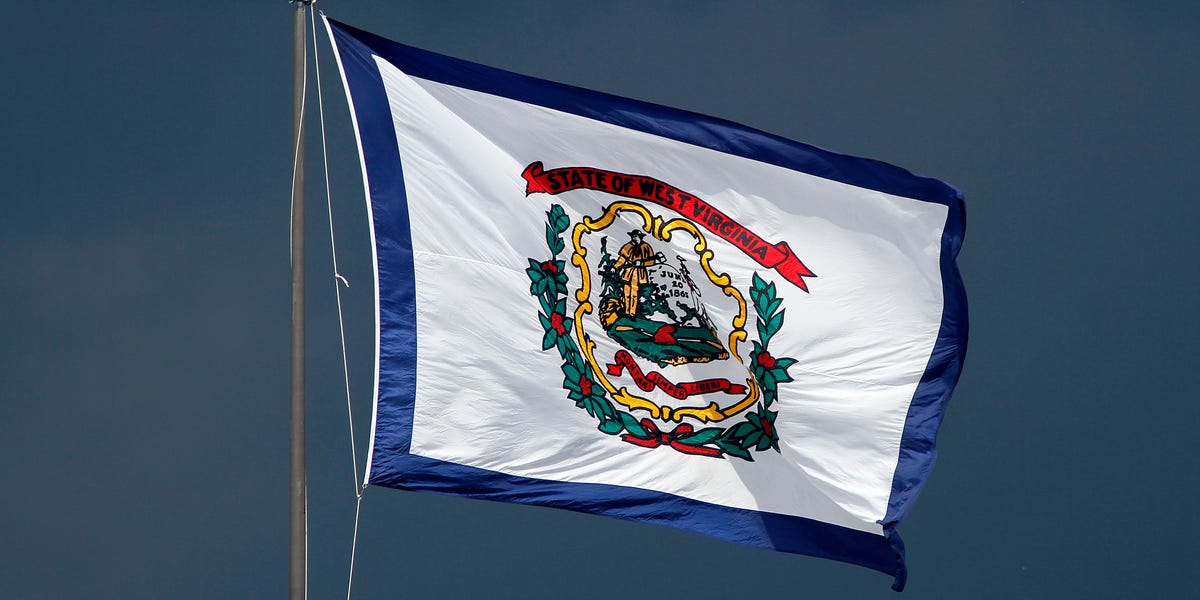
A West Virginia County Could Soon Become a Nuclear Waste Dump Against Its Will
Full Article
Original Source
Read the full article at Esquire →KhanList aggregates and links to publicly available news content. We do not host full articles from third-party sources. Always verify important information with original sources.