
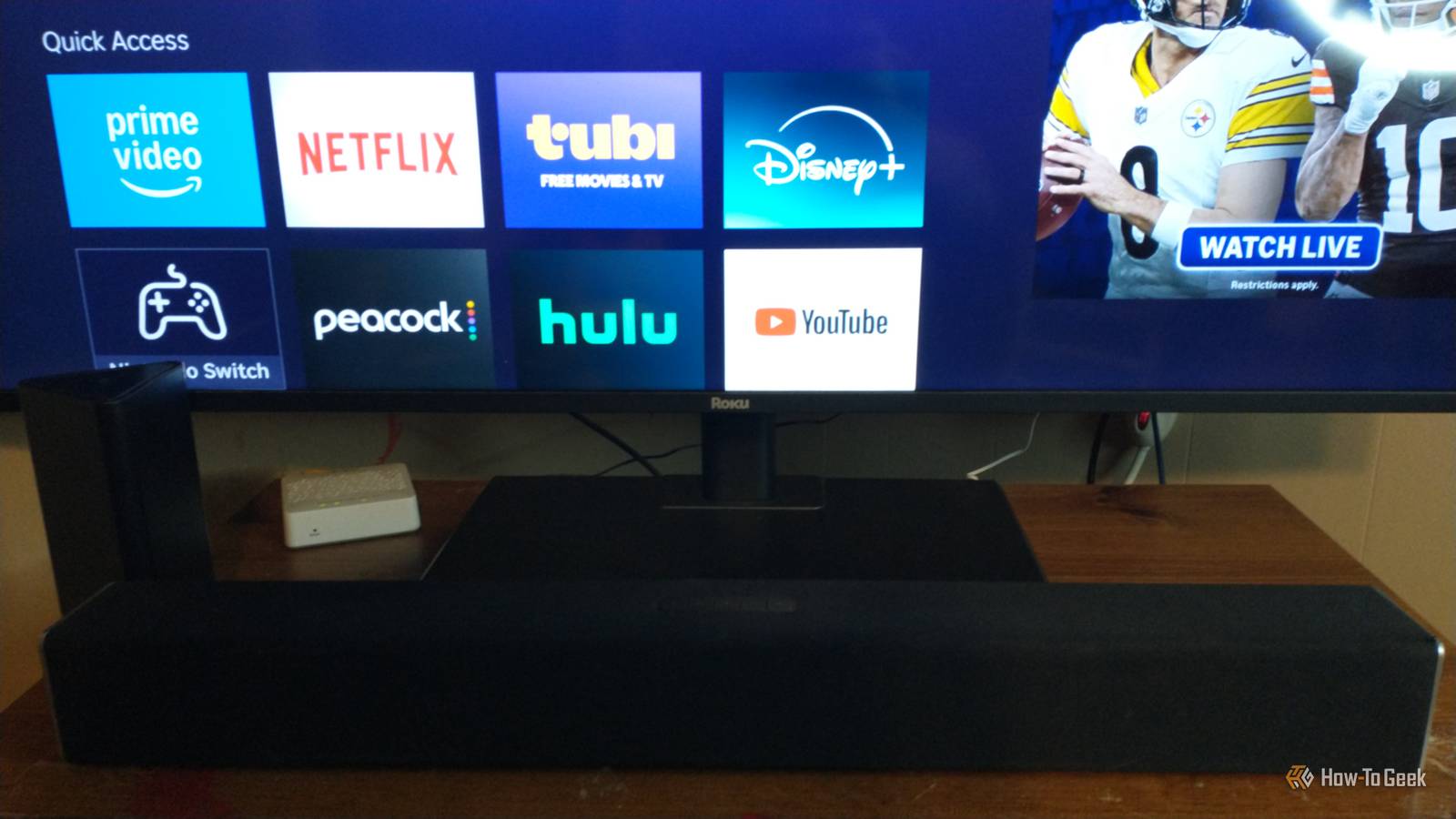
Published Oct 18, 2026, 2:00 PM EDT Steve has been editing and writing content for almost two decades, including product reviews, tech news, how-to guides, and even lifestyle and health topics. He’s served as chief editor for publications like Tech Junkie and Alphr, and has written and edited content for many other tech-related sites. His expertise in Windows, Android, iOS, Mac, and Linux simplifies the gadget and computer world for others, enabling them to shop, connect, learn, tweak, and optimize devices and software to suit their needs. When he’s not writing or editing content, he enjoys repairing and optimizing devices (and game consoles), watching movies, golfing, and spending time with the family. TVs these days are built more for profit than based on passion, so they often lack quality and dependability. But when it comes to audio, a TV's sound can only be so good, especially with how thin TVs are today. Those paper-thin speakers cannot produce impactful sound, and the output is often distorted and drowned out. But I got so used to the sound of this TV in the basement room that I never considered upgrading it, even though I knew I could. When I came across a used Vizio soundbar (SB2820n-E0) that was only $20, I figured, why not? So I bought it, took it home, and played around with it to see what I could get from it. It's nothing fancy—just an optical audio input with support for Dolby DTS Studio Sound & Trade, and TruSurround & Trade; but it also has Bluetooth to play music from my Android and iPhone, which is cool. It doubles the TV's audio immersion when I watch movies. For shows, it sounds like they're in the actual room. I never cared about enhancing the TV's audio or spending a ton of money to improve it—it's just a basement TV—but I was amazed when it gave me a livelier sound that enhanced the movie experience as I immersed myself in the story. Used soundbars are easy finds For my purpose, it was certainly worth it You often find great deals on used soundbars, mostly because people think they're not producing audio as they should, but they often don't have the device hooked up correctly or set up properly in the TV's settings. It's not their fault; it's the market. Different TV manufacturers use unique names for specific audio settings and outputs instead of an industry standard, like Sony's Bravia Sync and LG's SimpLink settings, along with HDMI ports labeled as HDMI, ARC, eARC, HDMI 2.1, or even 4K 120hz. While some people deal with Windows 11/10 sound problems, others struggle to make a soundbar work as it should. That is why you can easily find great deals on soundbars, aside from when an owner upgrades—that's how I got mine for $20. Used, cheap soundbars still serve a valuable purpose Feel the impact and enjoy more clarity Old soundbars don't compare to full-fledged surround sound speaker setups, but the technology produces livelier audio with more punch, from gunshots and battles to racing cars and voices. Even if you buy an old, cheap soundbar as I did, it still serves a valuable purpose. My Vizio soundbar gives me more audible distance, so I can hear sound better no matter where I'm at in the basement. I never thought about such a cheap upgrade for the TV downstairs. Now I can hear sounds I couldn't before, like writing on paper, jeans scraping as the characters walk, and even slight wind movements. The voices are easier to hear, too. TV speakers struggle to separate voice from other sounds, meaning it was hard to hear at times. The Vizio solved that, and voices now have more clarity and stand out beyond the crashes, booms, and storms. Old soundbar audio processors are still better than TV sound The soundbar's DTS StudioSound and TruSurround are better than the TV's Dolby Atmos effects My cheap soundbar for $20 has bigger speakers than the paper-thin, slim ones on the TV, so it delivers advanced boosts in sound-processor projection. It also normalizes audio so that voices don't get drowned out as easily. You may have ways to normalize audio on your PC, but a soundbar usually handles it automatically. My TV's speakers also face down to virtualize the environment and promote surround simulation, but they don't compare to the amplified audio output of the Vizio SB2820n-E0 soundbar, which processes audio with DTS Studio Sound & Trade and TruSurround & Trade via the optical audio input. Even though you won't get the latest Dolby Atmos & Trade; technology from an older soundbar, you still get a huge boost in audio quality. Dolby Atmos depends on the room's size, acoustics, furniture, and more that affect the audio atmosphere anyway. Of course, my TV doesn't have large speakers, so the effects are minimal to begin with. I wasn't looking for the latest and greatest surround sound setup—I just wanted to see what an old soundbar would do for my TV, plain and simple. This wasn't the living room; it was the basement living area, which didn't need a full entertainment setup. Bigger speakers and more power to drive sound Small TV speakers vs. soundbar's slightly larger ones I generally tweaked my TV's audio to make it sound better with a little more bass and slightly crisper treble, but it's hard to do on those paper-thin, small speakers. I also adjusted the sound format to add a bit of spatial surround, boosting that flat stereo effect and making the movie experience a little more lively. The Vizio soundbar has just two speakers, but it also has two acoustic chambers to enhance bass and a cabin to produce richer sound versus the TV's thin space for an audio system. The larger speakers and the technological design that promotes quality seemed to boost my immersion into the movie, no matter what I was watching. Sound creates a major impact on movies—without it, drama is reduced, attention becomes limited, and the movie can feel more boring. Overall, the soundbar better engulfed me in the movies, which is far better than the TV's audio could produce, even with Dolby Atmos. There was little distortion and minimal drowning effects, so clarity also made a big difference. For a quick, cheap way to enhance a TV, an old, used $20 soundbar does the trick While modern TVs market audio processing as a key selling point, speaker design has its limits. Small speakers with little room to improve sound don't compare to an older soundbar that can isolate frequencies, simulate surround sound, and use chambers or a larger space to improve sound quality, even if it's old-school surround and audio enhancements. With a cheap soundbar, you can enjoy your favorite Blu-ray or Netflix movies with better sound isolation, clearer voices, and a frequency-balanced output that lets you hear voices more evenly, without quiet-to-loud moments.
A used Vizio soundbar is the $20 TV upgrade I didn't know I needed
Full Article
Original Source
Read the full article at Howtogeek →KhanList aggregates and links to publicly available news content. We do not host full articles from third-party sources. Always verify important information with original sources.