
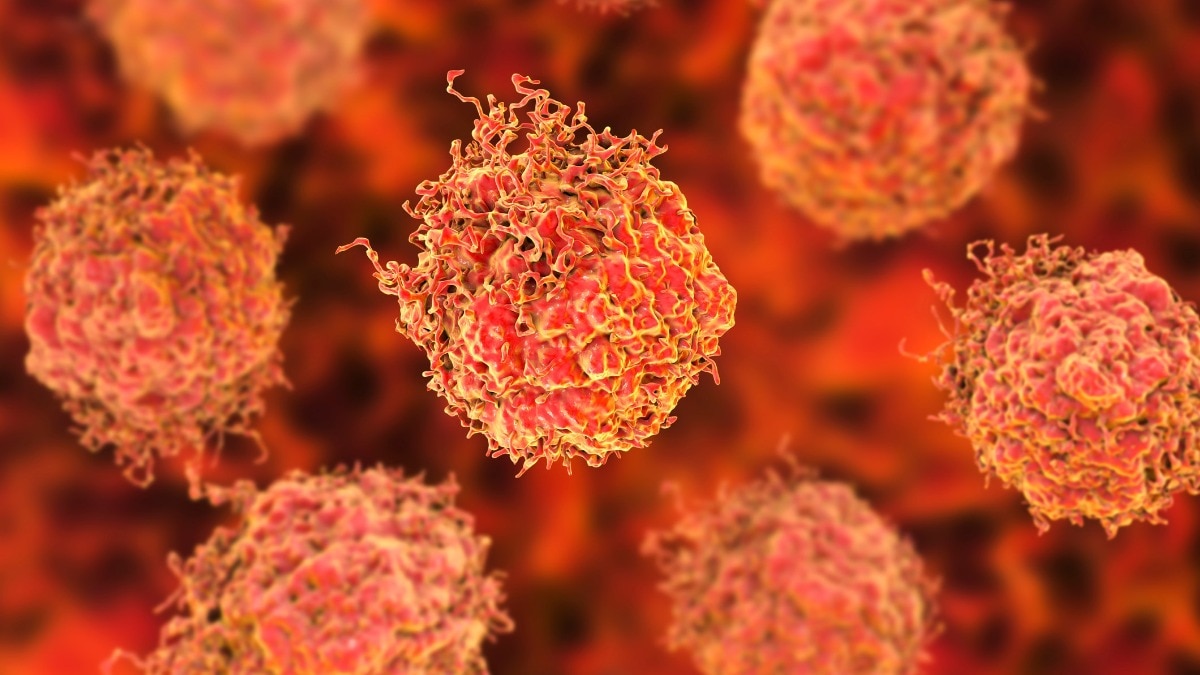
Researchers have engineered Nicotiana benthamiana, a plant, to produce paclitaxel, a widely used chemotherapy drug, increasing its production by more than 500 times.An artist's concept shows a cluster of cancer cells. (Photo: Pexels)New Delhi,Nov 24, 2026 13:12 ISTA study has found that commercial tobacco could help scientists find a cheaper and more sustainable way to produce a widely used cancer medicine.Researchers have successfully engineered the plant to manufacture paclitaxel, a chemotherapy drug used to treat breast, ovarian, cervical and certain lung cancers.The research team used Nicotiana benthamiana, a plant closely related to the tobacco used in cigarettes.It is important to note that scientists did not extract the drug from cigarettes or use nicotine. Instead, they modified the plant's genetic instructions to make it produce paclitaxel naturally. A doctor examines a chest x-ray to make a medical diagnosis. (Representational Photo: Pexels) The findings, published in the journal Nature Chemical Biology, provide a potential alternative to existing methods of producing the expensive drug, which currently relies on yew trees and laboratory-grown plant cells.HOW TOBACCO RELATIVES COULD MAKE CANCER DRUGSThe drug, also known by its brand name Taxol, was originally obtained from the bark of the Pacific yew tree. An image of the yew tree that produces the cancer drug taxol. (Photo: Feiyan Liang, University of Copenhagen) However, producing it has been difficult because the tree contains only small amounts of the compound and its chemical structure is complicated.Scientists have struggled to recreate the complete process of making paclitaxel in other organisms because they did not fully understand all the steps involved.Led by researchers from the University of Copenhagen, the team reconstructed the complete production process inside the tobacco relative, identifying and verifying the different stages involved.DRUG PRODUCTION INCREASES 500 TIMESAfter establishing that the plant could produce paclitaxel, researchers used targeted genetic modifications to increase its output.The amount of the drug rose more than 500 times, from 0.104 micrograms to 61.05 micrograms per gram of dried plant material. The tobacco plant used by researchers to produce taxol. (Photo: Feiyan Liang, University of Copenhagen) The final concentration was comparable to the amount of paclitaxel found in yew tree bark, suggesting that the engineered plant could eventually offer an alternative source of the medicine.WILL CANCER TREATMENT BECOME MORE ACCESSIBLE?Paclitaxel is an important chemotherapy drug that works by interfering with the process cancer cells use to divide and multiply. It is widely used against several cancers, although its availability and production costs remain important challenges.The researchers noted that their findings provide a blueprint for producing the drug using plants. However, the discovery is not yet a ready-to-use manufacturing solution. A hospital room with infusion chairs and equipment for chemotherapy treatment. (Representational Photo: Pexels) The production process needs further improvement, including making the genetic changes more stable and increasing efficiency.Scientists also need to understand how the plant moves the different ingredients needed to make the drug between its cells.If these challenges are overcome, tobacco relatives could eventually become a more reliable and sustainable source of an important cancer medicine.- Ends
A tobacco plant could help create cancer medicine, new study reveals
Full Article
Original Source
Read the full article at Indiatoday →KhanList aggregates and links to publicly available news content. We do not host full articles from third-party sources. Always verify important information with original sources.