
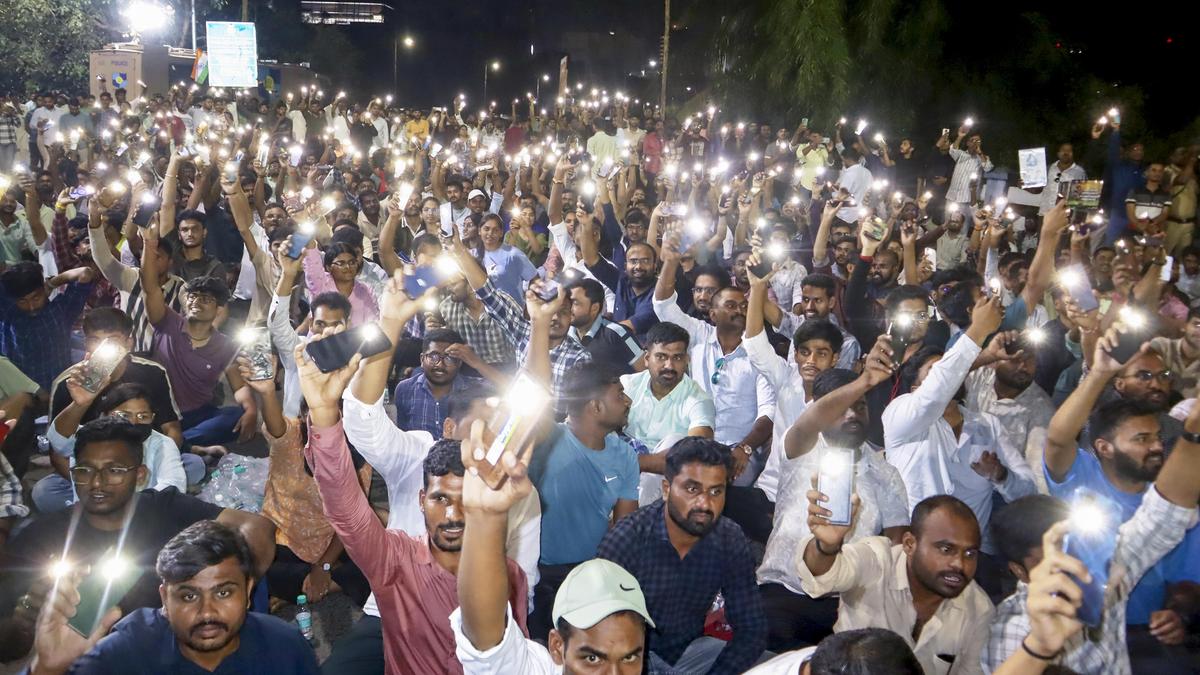
The conclusion of the Maharashtra Public Service Commission (MPSC) aspirants’ protest in Pune marks an important development in the continuing debate over recruitment transparency, examination security, and institutional accountability. After approximately 11 days of agitation, the Maharashtra government agreed to establish an inquiry committee to investigate alleged irregularities in MPSC examinations. The government also agreed to several demands concerning recruitment, examination reforms, and relief for protesters. MPSC Chairman Vivek Bhimanwar announced that he would proceed on forced leave until the inquiry was completed.The outcome represents a significant achievement for the protesting students. Their sustained collective action brought the concerns of aspirants into the centre of public and government attention and resulted in concrete administrative commitments. However, the long-term success of the movement will depend on whether these commitments are implemented transparently and within clearly defined timelines.The objective must now be to ensure that the inquiry establishes the facts, responsibility is determined through due process, and examination reforms restore confidence among candidates.Demands for fairness and accountabilityMPSC aspirants gathered in Pune to raise concerns about alleged examination irregularities, delays in recruitment and the credibility of the selection process. The drug inspector recruitment examination became a central issue after allegations emerged that its question paper had been leaked before the examination held on March 22, 2026.The recruitment process involved approximately 44,500 applicants competing for 154 drug inspector’s posts. After the examination and interview stages, the controversy surrounding the alleged leak placed the selection process under scrutiny. The MPSC initially stated that it had not found evidence that the original question paper had been leaked and referred the matter for investigation. Subsequent reporting in August 2026 stated that the commission had cancelled the recruitment process following the investigation into the alleged malpractice.These developments illustrate why examination-related allegations must be investigated promptly and impartially. A recruitment process cannot inspire confidence when candidates are uncertain about whether the examination was conducted on a level playing field.The students’ demands extended beyond the drug inspector examination. They sought accountability from the commission’s leadership, an impartial investigation into alleged irregularities, more transparent examination procedures, and a more predictable recruitment calendar.It is important to distinguish allegations from established findings. The purpose of an independent inquiry is to determine what occurred, identify any procedural or individual failures, and recommend corrective action on the basis of evidence.What the students achievedThe government’s response following the agitation represents a measurable step forward. The reported decisions include the following.Inquiry into alleged examination irregularities: The State government agreed to constitute a five-member inquiry committee chaired by retired judge Dilip Bhosale. The committee includes administrative and police officers, with IAS officer Tukaram Mundhe serving as secretary. It has been given a two-month period to investigate alleged irregularities, including paper leaks, and submit its report.An inquiry of this nature can help identify weaknesses in examination security, paper-setting procedures, information access, monitoring and accountability. Its effectiveness will depend on its independence, access to relevant evidence, and the publication and implementation of its findings.MPSC Chairman Vivek Bhimanwar placed on forced leave: One of the students’ principal demands concerned the commission’s Chairman. Following negotiations, it was announced that Mr. Bhimanwar would be placed on compulsory leave until the inquiry committee submitted its report. He publicly stated that he had decided to go on leave during the inquiry.This was an important administrative development because it addressed the immediate demand that the Chairman not continue in office during the inquiry period. However, compulsory leave should not be interpreted as proof of personal wrongdoing. Any determination of individual responsibility must follow the evidence and due process.The distinction matters: Institutional accountability requires both an impartial investigation and fairness to the individuals concerned.A commitment to fill 70,000 vacant posts: The government also committed to filling approximately 70,000 vacant government posts over the next three years. This commitment responds to a broader concern among young people seeking stable public-sector employment.However, the figure should not be interpreted as 70,000 confirmed MPSC vacancies alone. It refers to government recruitment across posts, and its practical significance will depend on department-wise vacancy announcements, recruitment schedules, examination dates and appointments actually completed.A public commitment must be translated into a verifiable recruitment calendar, with regular progress reports.Expansion of Group C recruitment: The government also agreed to double the number of posts to be filled through the 2027 Group C examination, according to reporting on the decisions communicated to the protesters. This could expand opportunities for candidates, provided the revised vacancies are formally notified and the selection process proceeds without unnecessary delays.Relief concerning cases against protesters: The government agreed to withdraw cases registered against protesters during the agitation, as reported in the announcements following negotiations. This was another significant outcome for participants who had mobilised to demand institutional reforms.The relevant authorities must now complete the necessary formal procedures and communicate the status of the withdrawal clearly.Taken together, these developments demonstrate that sustained student mobilisation can bring administrative issues to the forefront and secure commitments from the government. At the same time, announcements are the beginning of an implementation process, not its conclusion.Why transparent examinations are essentialCompetitive examinations are intended to provide a fair and merit-based route to public employment. Candidates invest years in preparation, coaching, accommodation, travel and examination fees. Many aspirants relocate from rural areas to cities such as Pune, where the financial burden of preparation can be considerable.When allegations of paper leaks, irregularities or unexplained delays arise, the consequences extend beyond an individual examination. Candidates may lose confidence in the recruitment system, postpone employment decisions, and face uncertainty about the value of their preparation.The drug inspector recruitment controversy illustrates these risks. The examination attracted approximately 44,500 applicants for 154 posts, while 488 candidates appeared on the provisional merit list reported in July 2026. The subsequent controversy and cancellation disrupted the expectations of candidates who had progressed through the selection process.The appropriate response is not to presume guilt before an investigation. It is to establish safeguards that make examination integrity demonstrable.The MPSC and the state government should consider the following measures:Secure examination papers: Introduce strict access controls, digital audit trails, secure printing and distribution procedures, and independent monitoring of examination materials.Investigate allegations promptly: Establish clear procedures for receiving complaints, preserving digital evidence and communicating investigation progress without compromising the inquiry.Publish recruitment schedules: Provide a consolidated annual calendar covering notifications, examinations, results, interviews and final recommendations.Improve result transparency: Publish clear selection criteria, category-wise information and explanations of procedural changes, subject to applicable privacy and legal requirements.Audit recruitment processes: Conduct independent security and procedural audits, particularly where credible allegations have emerged.Establish accountability mechanisms: Define responsibility for examination security and ensure that substantiated misconduct results in proportionate action under the law.Communicate consistently with candidates: Provide official updates when examinations are postponed, results are delayed or recruitment decisions are placed on hold.These reforms would help move the system from responding to controversies after they arise towards preventing irregularities before they occur.Recruitment delays and youth aspirationsThe pressure experienced by MPSC candidates must also be considered within the wider employment environment. Government employment is attractive to many aspirants because it can offer stability, a structured career progression, and an opportunity to serve the public. When the number of applicants substantially exceeds the available vacancies, the selection process becomes intensely competitive.India’s Periodic Labour Force Survey for July 2023 to June 2024 reported an unemployment rate of 3.2% among people aged 15 and above under the usual-status measure. The corresponding current-weekly-status measure was 4.9%. These figures use different statistical definitions and should not be treated as direct measures of unemployment among MPSC aspirants.Nevertheless, aggregate unemployment figures alone do not describe the full challenge faced by educated young people seeking specific occupations. The availability of suitable jobs, the time required to secure employment, the quality of work, and the predictability of recruitment all affect career decisions.The commitment to fill 70,000 government vacancies over three years, therefore, needs a transparent implementation plan. Departments should identify vacancies, publish recruitment schedules, and report progress against announced targets. Candidates should not have to rely on repeated assurances without knowing when a particular recruitment process will move forward.At the same time, public employment cannot be the only answer to youth employment. Skills development, private-sector job creation, apprenticeships and opportunities for entrepreneurship also have important roles. The immediate responsibility in the MPSC matter, however, is to ensure that government recruitment is fair, credible, and timely.Mental health of aspirantsThe effect of prolonged examination uncertainty on mental health deserves serious attention. Aspirants may face financial pressure, family expectations, social comparison, repeated attempts, and anxiety about an uncertain future. When examinations are delayed or their integrity is questioned, these existing pressures can become more difficult to manage.A descriptive study published in the Indian Journal of Health Social Work in 2024 examined 60 MPSC aspirants aged 24 to 32 in Pune. Using the Depression, Anxiety and Stress Scale-21 (DASS-21), the researchers reported anxiety indicators in 60% of respondents, depression indicators in 48.33% and stress indicators in 38.33%.These findings are important but must be interpreted carefully. The study was small, involved a specific group of aspirants and collected its data in 2021-22. It does not establish the prevalence of mental-health conditions among all MPSC candidates, nor does it measure the specific effects of the 2026 protest or examination controversy.It nevertheless provides a reason to take candidates’ psychological well-being seriously.Recruitment authorities and educational institutions can help by providing predictable schedules, timely information, accessible counselling, and clear explanations when an examination is postponed or cancelled. Candidate support systems should be accessible without stigma, and mental-health assistance should not be treated as a substitute for fixing administrative failures.A fair examination system protects more than candidates’ career prospects. It reduces avoidable uncertainty and helps candidates make informed decisions about their time, finances and future.The role of government and political leadershipThe MPSC agitation demonstrates the importance of dialogue between the government, recruitment authorities and students. Political representatives participated in the protest and negotiations, while government representatives communicated the decisions agreed upon during the agitation.Participation by political leaders can help bring public attention to unresolved issues. However, the credibility of the outcome should ultimately be judged by the quality of the inquiry and the implementation of reforms, rather than by political claims of victory or blame.The government should ensure that the inquiry committee functions independently and that its recommendations receive a formal response. The MPSC should cooperate fully with the investigation while continuing to protect the integrity of unrelated recruitment processes.Students, in turn, should receive regular updates on the inquiry, recruitment commitments and examination reforms. Constructive dialogue must continue beyond the withdrawal of the protest.The aim should be to resolve disputes through evidence, transparent decision-making and institutional reform, while respecting the right to peaceful protest.What must happen next?The end of the agitation should be treated as the beginning of a new phase of accountability. Several practical steps are now essential.First, the inquiry committee should complete its work within the announced two-month period, communicate its methodology and publish its findings to the extent permitted by law. Any recommendations should be accompanied by a clear implementation plan.Second, the government should publish a department-wise roadmap for filling the 70,000 vacant posts, including recruitment notifications, examination schedules and appointment targets. Progress should be measured by completed recruitment stages and actual appointments, not solely by announcements.Third, MPSC should publish a strengthened examination-integrity framework covering question-paper security, complaint handling, independent audits, and disclosure of relevant procedural information.Fourth, candidates affected by cancelled or delayed recruitment should receive timely, official information about the next steps. Where a fresh examination is required, the commission should communicate the schedule and applicable arrangements clearly.Finally, the government should establish a system for monitoring the implementation of reforms. Public reporting at regular intervals would allow candidates and citizens to assess whether the commitments made during the protest have been fulfilled.These measures would help ensure that the students’ efforts produce lasting institutional improvements rather than temporary administrative relief.Accountability still to comeThe approximately 11-day MPSC agitation in Pune resulted in important commitments: an inquiry into alleged examination irregularities, the MPSC Chairman’s compulsory leave pending the inquiry, a commitment to fill 70,000 government vacancies over three years, an increase in Group C recruitment and relief concerning cases registered against protesters.These developments represent a significant achievement for the aspirants who sustained their demands for accountability and examination transparency.However, the final measure of success will be the implementation of these commitments. The inquiry must establish the facts, the government must act on its findings, recruitment schedules must become more predictable, and examination safeguards must be strengthened.The issue is not simply whether one protest has ended. It is whether future candidates can approach MPSC examinations with confidence that the rules will be clear, the process will be secure, and selection will be based on merit.Students who prepare for public service deserve a recruitment system that respects their effort, time and aspirations. The government now has an opportunity to convert the commitments made during this agitation into meaningful and measurable reforms.Justice for aspirants requires more than assurances. It requires transparency, accountability and action.Dr. Vishwajeet Kadam is a Congress MLA in Maharashtra , educationist and social worker
A student movement in Maharashtra that brought institutional accountability into focus
Full Article
Original Source
Read the full article at Thehindu →KhanList aggregates and links to publicly available news content. We do not host full articles from third-party sources. Always verify important information with original sources.