
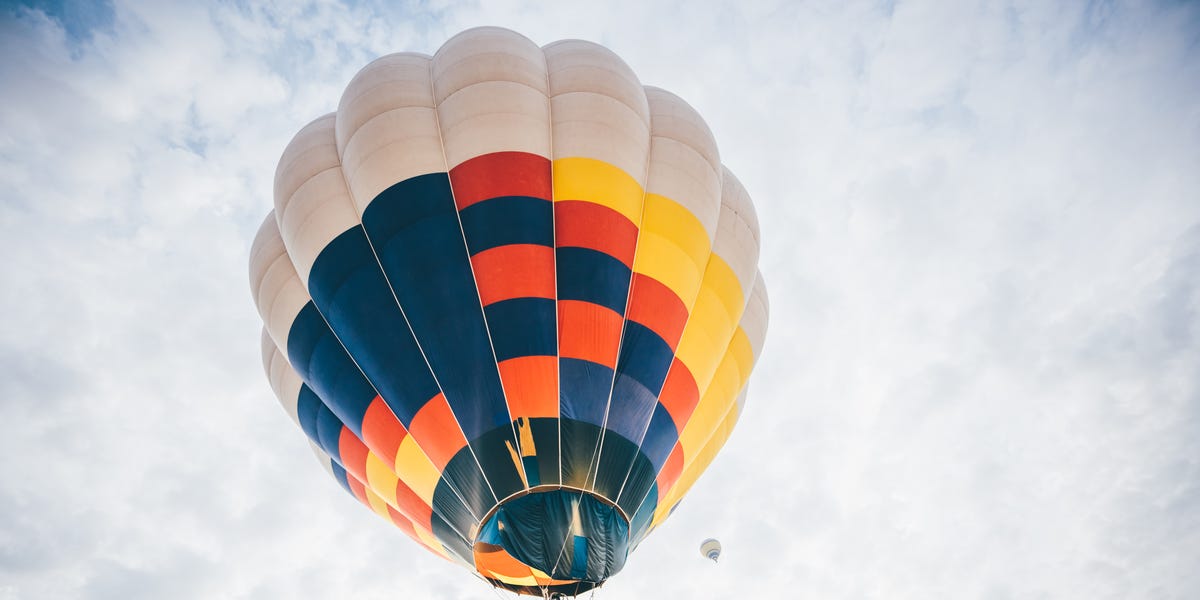
3 min readHere’s what you’ll learn when you read this story:The first aviators weren’t human, but rather a duck, a chicken, and a sheep named Montauciel. These three animals flew in the first Montgolfier hot-air balloon in 1783, during a demonstration of lighter-than-air flight at Versailles, France. Nearly 250 years later, the same underlying principles are fueling a new era of airships, as sustainability becomes a growing concern in the aviation industry.Animals are the unsung heroes of human flight. In recent history, fruit flies made the first trip into space on a V-2 rocket in February 1947 (and coincidentally, they were also the first animals to travel faster than the speed of sound). Ten years later, the first mammal—a dog named Laika—orbited around Earth in Sputnik 2 and tragically didn’t survive the trip. But if you turn back the pages in the history of human flight, a similar episode played out in the late 18th century at the palace of Versailles.For months, the Montgolfier brothers—Joseph and Étienne—had been testing hot air balloon designs. The brothers came from a large family in Annonay, France, that made its living manufacturing paper. When the brothers noticed how smoke rose when burning paper, they began building some of their earliest hot-air balloons indoors, using nothing but paper and linen.According to the American Physical Society, the Montgolfiers didn’t have an accurate understanding of the physics at play in balloon flight. They believed the smoke itself, and not the heat, is what caused the paper to rise, so they regularly burned straw, wool, or old shoes to produce dense smoke. Despite this misunderstanding, they still produced a working balloon and tethered their unmanned lighter-than-air craft outdoors on June 4, 1783, above the Annonay marketplace.That demonstration ignited the imagination of the country, and only a few months later, on September 19, 1783, the brothers planned a demonstration for King Louis XVI and the royal family at Versailles. After they placed a sheep named Montauciel (French for “climb to the sky”), a duck, and a chicken in the basket, the hot-air balloon took flight.This first lighter-than-air test wasn’t flawless. The balloon climbed to roughly 2,000 feet before a rip in the fabric sent it into a slow descent. Eight minutes after liftoff, the newly minted “heroes of the air” touched down about two miles from where they'd started. Fortunately, all three animals were alive and unharmed. Two months later, Jean-Francois Pilâtre de Rozier and the Marquis d’Arlandes braved the basket themselves and became the first humans ever to fly.Well into the 20th century, lighter-than-air blimps and zeppelins developed alongside airplanes until the latter’s improved speed and reliability made it the go-to choice for human air travel. Then, for decades, lighter-than-air flight remained relegated to special military operations, glorified advertisements, and major sporting events. However, in recent years, the technology that initially lifted the world’s first “heroes of the air” into aviation history is getting a second look.Aviation accounts for roughly 3 percent of global carbon emissions. While not the biggest emitter, planes are enormously difficult to electrify because the batteries required to so would be far too heavy. So in the 21st century, airships appear like a possible solution for this otherwise intractable problem.And that future took its first step in October last year when LTA Research’s Pathfinder 1 airship, the world’s largest aircraft, took to the skies over San Francisco’s Golden Gate Bridge.And this time, humans were at the helm.Darren lives in Portland, has a cat, and writes/edits about sci-fi and how our world works. You can find his previous stuff at Gizmodo and Paste if you look hard enough.
A Sheep, Duck, and Chicken Floated For 2 Miles in a Hot Air Balloon—And Became Pioneers of Unpowered Flight
Full Article
Original Source
Read the full article at Popularmechanics →KhanList aggregates and links to publicly available news content. We do not host full articles from third-party sources. Always verify important information with original sources.