
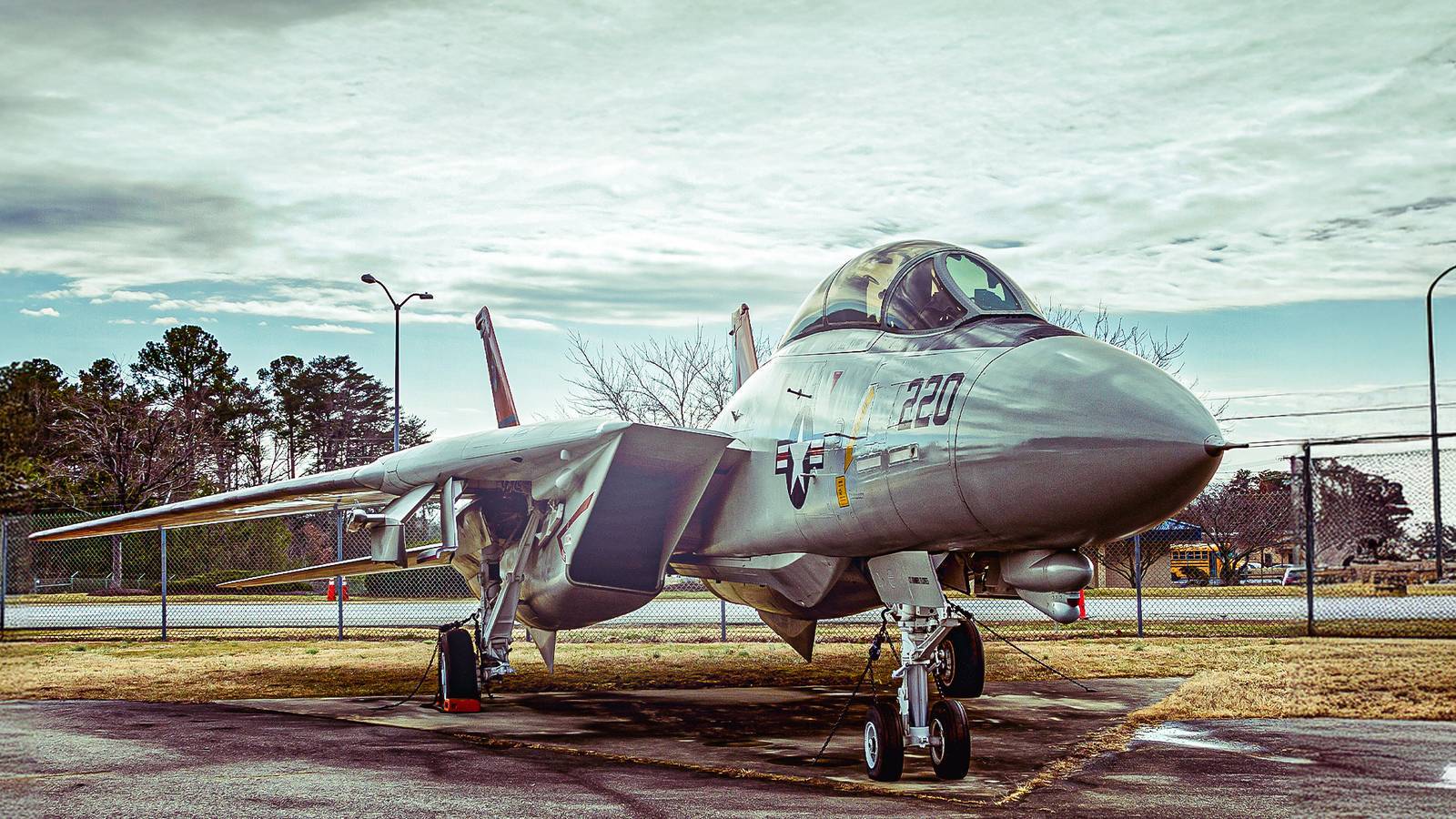
Published Sep 27, 2026, 7:00 AM EDT Luke Diaz is a freelance military writer with experience with active duty experience in the US Navy as well as defense and industrial engineering. He is a former Naval Flight Officer who performed tactical air control on the carrier-based E-2 Hawkeye. A classic Martin-Baker GRU-7A ejection seat, the exact escape system once used by Grumman F-14 Tomcat crews was recently listed for sale for $35,000 on PicClick. The former US Navy jet's seat has gone viral with claims that the retired ejection seat is now worth more than most civilian airplane engines. While that is a piece of naval aviation trivia at face value, it is not quite accurate when compared to the high cost of commercial airplane engines. However, that rumor alludes to a fascinating backstory behind the chair that can cost as much as a general aviation piston motor. Why does an empty, stripped-down emergency seat command a five-figure price tag from collectors who will never even fly a plane? Recent sales on eBay and 1stDibs show other deals closed on seats for $15,000 and $25,000 respectively, but for far less complete examples. The real story is what these high prices reveal about the unique history of one of the most iconic fighter jets in history. Decades after its decommissioning, the legendary tailhook fighter of 'Top Gun' is still one of the most famous planes of all time. It also reveals why so few are seen preserved in airworthy condition or found in museum static collections. Despite none taking to the skies in decades, the Tomcat's legacy still commands a premium. What An F-14 Tomcat Seat Actually Is Credit: The National Archives Catalog The GRU-7A is far from a generic piece of cockpit equipment. It is a specialized, late-model variant of the famous Martin-Baker Mk 7 family designed specifically for the unique cockpit of the F-14A Tomcat. According to technical archives from Ejectionsite.com, this model evolved from the earlier GRU-5 seat used in the A-6 Intruders. The redesign introduced a lowered fiberglass parachute container and a reshaped headrest, modifications deliberately made to give Tomcat pilots and radar intercept officers the clear rearward visibility they needed to scan for threats. Martin-Baker, the family-run firm, has pioneered these safety systems since the 1940s and is still the leading maker worldwide. Beneath the cushions would normally sit a powerful rocket motor triggered by a gas-initiated charge, an engineering feat designed to blast the crew safely away from the jet even during high-speed, low-altitude emergencies. The company says it has delivered over 90,000 seats to 93 different air forces, saving more than 7,700 lives. As recently as August 2026, a pilot safely ejected from a Hungarian JAS 39C Gripen using a modern Martin-Baker seat, proving the company's technology remains on the active front lines today. Yet, an ejection seat sitting in a private collection did not just happen to slide out of a hangar. It first had to go through a strict government program to demilitarize its hardware. Why So Few Of The Fleet's Parts Survive Today Credit: The National Archives Catalog When the US Navy retired the F-14 Tomcat in September 2006, the iconic fighter was denied a standard sunset in storage due to national security fears surrounding Iran. Iran was the only other country flying the F-14, having bought them before the 1979 revolution. Since that enemy fleet continued flying after the USN, Washington became deeply concerned that its own surplus parts would leak to Tehran. After a 2007 investigation found Tomcat components slipping into international black markets, the Pentagon halted all parts sales. Realizing that merely storing the aircraft was a national security liability, the Pentagon chose a definitive, scorched-earth strategy. The military paid a contractor to physically shred retired F-14 airframes into tiny, two-foot squares at the Davis-Monthan Air Force Base 'boneyard'. This purge followed a Government Accountability Office finding that hundreds of restricted parts had accidentally entered public surplus sales because of a database glitch. Federal agents even went so far as to seize four intact F-14s from museums and a TV production company in 2007, sparking pushback in Congress. Massive 100,000-pound mechanical shears and shredders reduced the iconic Cold War fighter jets into cubed chunks of unrecyclable scrap metal. The Mythical Engine Price Comparison Credit: The National Archives Catalog The price of the ejection seat is driven purely by artificial scarcity and nostalgia. When the government destroyed the fleet, they created a finite, dead-end market of historical artifacts. Furthermore, because that seat must be demilitarized to be legally sold to a civilian, it is stripped of its complex rockets and explosives. Buyers pay a premium for a hollowed-out piece of cockpit furniture with zero utility. Most civilian aircraft flying today are small general aviation airplanes powered by piston engines, not airliners. Thus, their engines are priced in roughly the territory that an F-14 seat fetches. A full piston engine overhaul from Lycoming or Continental, the two dominant manufacturers powering more than half the world's general aviation fleet, can cost between $30,000 and $60,000. Based on Trade-A-Plane data, a Lycoming engine goes for $25,000 to $45,000 on average. The broader range extends from $20,000 to $70,000, depending on exact specifications. However, commercial jet powerplants are far more costly with price tags in the millions. The Crusade To Erase The Tomcat Parts Supply Credit: The National Archives Catalog The wing-box construction was the primary focus. It was essential to the operation of the F-14's intricate variable-sweep wings, and Iran lacked the manufacturing capacity to produce new ones. The military classified at least 10,000 particular parts for obligatory destruction out of the approximately 76,000 unique parts in the Tomcat catalog. This meant that things like ejection seats were usually torn apart and destroyed piece by piece. The last US Tomcats in storage were mulched into scrap by 2009. Worldwide aviation enthusiasts were devastated by the decision. Iran maintained dozens of its F-14s in service despite these attempts, thanks to domestic self-sufficiency initiatives. However, surviving, complete F-14 components are now extremely rare due to the American destruction campaign. Most ejection seats that survived were completely gutted of their rocket motors, explosives, and functional mechanics under strict military demilitarization laws. Finding a seat that managed to keep its original survival kit, harness rigging, drogue gun, and catapult tube intact, rather than being broken down and melted for scrap, is an extraordinary exception to the rule. What Completeness Is Really Worth Credit: The National Archives Catalog The exceptional scarcity of unbroken pieces is precisely why the $35,000 listing commands such a high price. According to the auction description on the resale portal PicClick, this GRU-7A is a rare exhibition piece mounted on a custom rolling stand that accurately simulates the seat's cockpit position. Its packed drogue chute, upper and lower firing handles, survival kit container, catapult tube, leg restraint lines, and drogue gun are all still present. The seller calls it the 'holy grail' of ejection seats because it's missing only a few small parts. A second GRU-7A listed on eBay during the same period, by contrast, only asked $15,000. This significant price difference stems entirely from seat completeness and documentation. This trend holds true across the wider aviation collectibles market, where seats are often split into distinct commercial categories based on their completeness and history. On the antiques platform 1stDibs, a polished Martin-Baker seat from an unspecified British jet is listed for $25,000, marketed as mid-century industrial decor for wealthy buyers rather than an artifact for aviation purists. The Online Ejection Seat Market Credit: The National Archives Catalog Before the Pentagon ordered the complete destruction of the Tomcat fleet in 2007, thousands of non-flight-essential F-14 components were routinely sold to the public through military surplus auctions. Today, the market value of a retired F-14 ejection seat is directly driven by the extreme measures the US government took to block Iran from obtaining spare parts. Values are primarily estimated from asking prices, since final eBay sales are not always listed. Older and less famous Mk 5 seats from the 1950s can be found on 1stDibs for closer to $5,000. While a civilian buyer typically views an eBay ejection seat as the ultimate 'holy grail' of military room decor, federal investigators discovered that Iranian intelligence viewed this exact same surplus market as a vital logistical lifeline. In a series of high-profile crackdowns, US customs agents arrested international middlemen in California and London who used front companies to buy F-14 parts at public auctions and from private collectors. Federal court documents explicitly identified ejection seat components, alongside canopy sections and fuel system harnesses, as high-priority targets for these smugglers. Because Iran's aging F-14 fleet was still flying active combat and patrol missions, their onboard ejection seats were expiring; without fresh components, Iranian pilots could not safely punch out of a malfunctioning aircraft. To permanently plug this security loophole, the Pentagon completely banned the sale of all F-14 surplus components to the public in 2007. The Tomcat Is Freed Once Again Credit: The National Archives Catalog The Tomcat's fan base has only grown since the type's retirement, driven largely by its starring role in the original Top Gun and its 2022 sequel, and that cultural pull sustains demand for everything from die-cast models to genuine parts. The complete blockade on F-14 components is loosening due to a legislative effort known as the Maverick Act. This bill carves out a narrow exception to the strict destruction rules, authorizing the US Navy to release the final three surviving F-14D airframes and remaining stockpile parts to a museum. Recent intelligence and military strikes against Iranian airfields indicate that Iran's remaining operational Tomcat fleet has finally been destroyed or permanently grounded. With no active Iranian fleet left to supply, the primary national security rationale for shredding F-14 parts has vanished. This year, Congress has even voted to fund putting a single restored F-14D back into flying condition, a project complicated by the very demilitarization campaign that made ejection seats scarce in the first place.
A Retired F-14 Tomcat's Ejection Seat Is Worth More Than Most Civilian Aircraft Engines
Full Article
Original Source
Read the full article at Simpleflying →KhanList aggregates and links to publicly available news content. We do not host full articles from third-party sources. Always verify important information with original sources.