
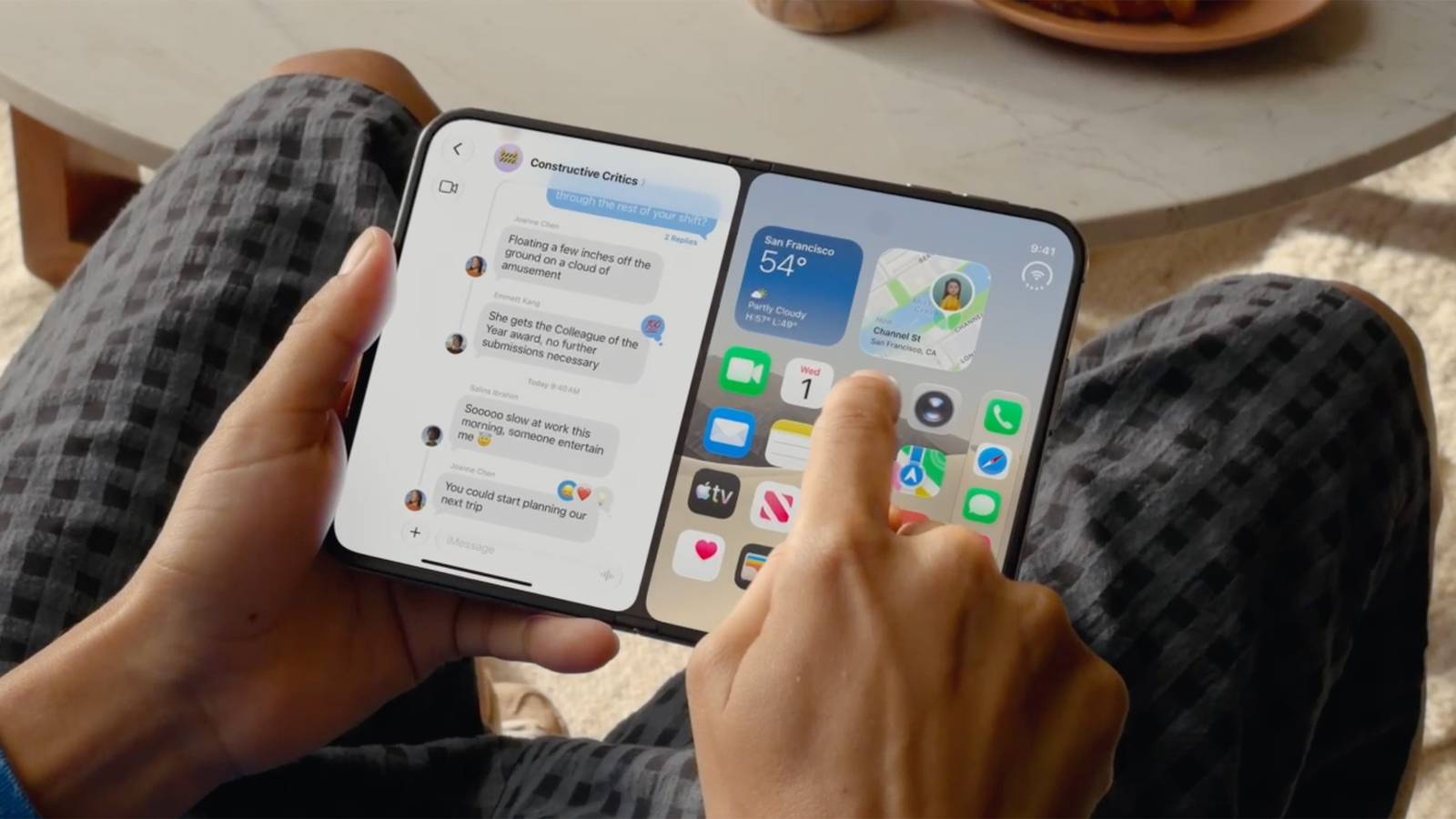
Published Sep 21, 2026, 7:30 PM EDT Jon is a seasoned journalist who has written definitive coverage of consumer tech at publications like Engadget, Android Authority, and BetaKit. He's an expert on making tech accessible ranging from mobile and PCs to emerging platforms like wearables. When he's not writing, he's going on adventures with ihis family and is an avid photographer. Android reigns supreme over foldable phones at the moment. It has a lead stretching several years, with a wide range of designs and prices. You can get everything from an affordable flip phone like the Motorola Razr through to three-panel beasts like the Huawei Mate XT2. Yet that reign is suddenly shaky. Apple is expected to have an immediate hit with the iPhone Duo, and it might succeed for reasons well beyond the usual spec sheet battles. Here's why Android stands to lose significant ground, even if it's likely to remain on top. Ecosystem and lock-in boost the iPhone's chances The Duo is the only option for some Android certainly has healthy ecosystems, particularly among giants like Samsung. And Google's platform has long had an advantage: even if you switch from one tightly integrated Android brand to another, you'll likely keep many apps and accessories without missing a beat. But Apple's ecosystem is the strongest. You get AirPods or an Apple Watch to go with your iPhone, as they have exclusive features that make a real difference, such as automatic device pairing with AirPods or unlocking a Mac with an Apple Watch. While it's not perfect, it works seamlessly enough that people who dip their toes into Apple's pool frequently buy more devices and become increasingly loyal. The downside is, of course, lock-in. Apple is the only option if you want iOS, and leaving means giving up exclusive apps and accessories. And while the company is working with Google to make it easier to switch to Android, Apple has historically limited cross-platform products that help with switching. The Apple Watch is a great smartwatch, but that's partly because third-party smartwatches have limited functionality with iPhones. Those factors give the iPhone Duo an inherent advantage over Android in foldable phones. If you're already an iPhone user, the Duo isn't just the most obvious choice — it's the only choice if you want to use the OS you already know. Samsung, Google, and Motorola just can't hold on to customers in the same way, and there's always the chance (if sometimes slight) that they'll lose people tempted by Apple's first folding device. Apple is a marketing juggernaut It has awareness like no other Credit: Tim Brookes / How-To Geek Yes, Apple is several years late to the foldable party. However, it also has an inescapable advantage: it's a marketing powerhouse with brand recognition even some larger Android rivals only wish they had. This isn't entirely fair. Apple has 50 years behind it, not to mention some of the most iconic technology in history — including the iPhone. Google and Samsung are household names, but they're not on the same level when it comes to phones. And in some countries (such as the U.S., Canada, and the U.K.), Apple represents the majority of phone sales. The iPhone Duo might cut deeply into Android's share of foldables simply because everyone knows who made it. There's precedent, too. Apple has a knack for dominating categories merely by entering them, in part thanks to its reputation. The iPod wasn't the first MP3 player, but Apple's success with the iMac boosted the iPod and helped it take over portable music within a few years. The iPhone got a lift from the iPod, and started the downfall of phone giants like BlackBerry and Nokia (yes, Android dealt the fatal blow). The iPhone Duo might triumph through sheer momentum. To be clear, Apple can't steamroll Android foldables like it has other devices. Android is firmly entrenched in large swaths of the world, particularly in China and South Korea, where homegrown brands like Oppo and Samsung flourish. Counterpoint Research forecasts that Apple will claim 25% of the foldable phone market in 2026. That's huge, but not enough to dethrone Samsung at a predicted 32%. There will probably always be people who prefer Android, whether it's familiarity, pricing, or simply national pride. Apple is bound to shift the foldable phone landscape, and Android manufacturers will suffer as attention moves elsewhere. The Android flip phone could be an endangered species iPhone Duo will shift the focus to book-style foldables Credit: Joe Fedewa / How-To Geek There was a time when flip phones were the best-selling foldables. Samsung's Galaxy Z Flip 3 was the most popular foldable phone of 2021, and the concept helped Motorola revive its signature Razr name. Price has played a major role, but so has novelty. Any foldable was an eye-catcher for those first few years. The landscape is quickly changing. Book-style foldables are quickly becoming the default, with reports of record pre-orders for the Galaxy Z Fold 8 and even a sales bump after the iPhone Duo unveiling. Motorola finally entered the segment with the Razr Fold, and Chinese brands are leaping at the opportunity. Prices haven't come down in a significant way — it's simply that buyers want the extra productivity, according to Counterpoint Research, with two-thirds of sales now going to the book-shaped models. The iPhone Duo is set to accelerate that shift. If the two largest phone makers concentrate on book-like foldables, they're going to overshadow flip phones. There will still be a home for flips among the cost-conscious, of course, but an already-small slice of Android's pie is about to shrink further. And that's terrible news if you prize variety in the frequently stale mobile arena.
A new smartphone format war has arrived, and Android could easily lose
Full Article
Original Source
Read the full article at Howtogeek →KhanList aggregates and links to publicly available news content. We do not host full articles from third-party sources. Always verify important information with original sources.