
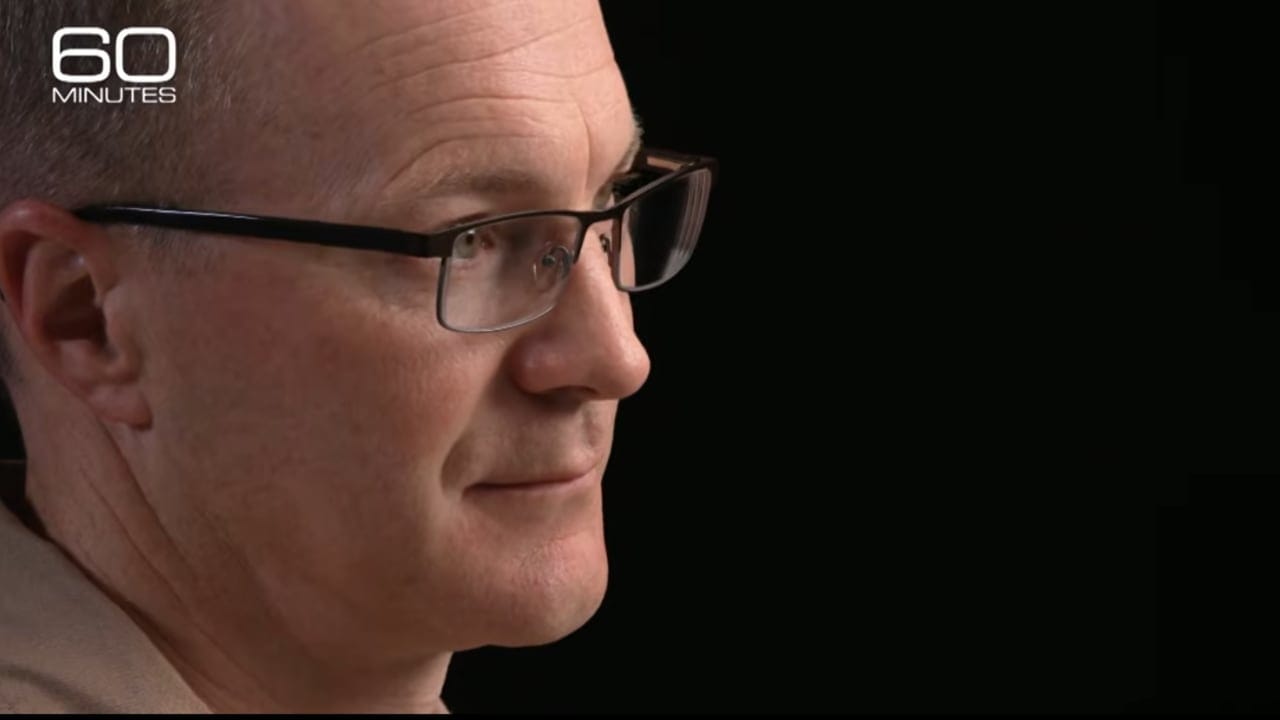
SEPTEMBER 14, 2026 09:15Updated: SEPTEMBER 14, 2026 09:35One of two US airmen rescued after their F-15 was shot down over Iran described on Sunday night how he survived a failed parachute, severe injuries, and an Iranian manhunt before being recovered in one of the largest search-and-rescue operations in US military history.The pilot, identified only by his mission callsign, 'Bravo,' shared the details of his rescue on CBS's 60 Minutes."That day [April 3] was just another day in the war for us - until the moment we got hit by an Iranian weapon," the F-15 crewman said. "It was perfectly clear to me that we'd been hit because of the violence of that impact... The best way I've been able to describe that moment was: getting hit by a freight train."Recalling the damage done to the aircraft and to his ejection seat, Bravo credited the diligent work and above-and-beyond professionalism of his fellow service members who maintain and prepare aircraft for missions."I am incredibly proud of the men and women I serve with, and I'm proud of the job that they do every day," he said.The US Airforce crewmember, callsign ''Bravo,'' in a '60 Minutes' interview. (credit: 60 Minutes, CBS NEWS screenshot)A rough ejection, a failed parachute, and a hard landingBravo, who hit the ground in what he and the interviewer, Norah O'Donnell, described as a "freefall" (at approximately 70-100 mph), detailed the moments after his parachute failed to properly deploy."My parachute was damaged in the initial attack. At one point, when I looked up and saw no parachute, that was the most terrifying thing I’ve ever seen. So I paused right then, and I prayed, 'Lord, you will be done. But if I’m getting through this, I need help.'"He described his survival of the landing as a "modern-day miracle," saying the he believes that "it's a testament to God's provision in my life to bring me through that moment, in a way that didn't prevent injuries, but prevented any catastrophic injuries that would have affected my ability to survive, and I'm grateful eternally for knowing that he was there with me."Bravo broke his back, arm, and shoulder, as well as suffering a sprained ankle and bleeding from lesions across his head and face caused by the incredibly hard landing, according to CBS."I had injuries, but we all trained to adapt and overcome the things that we’re faced with. I moved as quickly as I could, despite the injuries, away from the place that I landed."A bounty on their heads, and a historic rescue missionAlmost immediately following the crash, Iranian media announced a bounty for the capture. Iranian Forces, according to US military sources, came within a few hundred meters of Bravo in their attempt to search for and capture the crew."I knew that they were coming. I saw; I knew for a fact that they were looking for me," Bravo said.Bravo did not immediately establish communication with US Central Command (CENTCOM) because, despite having communication equipment available, he prioritized escaping the vicinity of his landing site out of fear of being captured."My objectives were to get away from my landing site and then find the best concealment I could in order to do the other things like communicate, consider my equipment, move up. But the specific elements of tradecraft or what I did, I’d rather not talk about given the security concerns of an ongoing conflict."Despite severe injury, he maneuvered through the jagged Iranian mountain range to reach high ground."As soon as I found a spot that I felt provided some concealment, I started working toward communication. At every opportunity, I worked to communicate with friendly forces. I did not allow that to be the priority over staying, over evading or dealing with the environmental factors that were around me," he said.He witnessed the rescue of his pilot, "Alpha," from a distance. He described his gratitude for that moment, saying, "It was a boon to my survival to know that America keeps its promise."When asked what his worst fear was, Bravo answered, "My worst fear was letting the team that was working so diligently to rescue me down. I knew that they were going to come. I knew that America, whether it was one day or one year, was going to uphold its promise and rescue me. I had to do my part to give them time to effect that rescue."O'Donnell asked, "As night fell on that first day in Iran, you sent messages saying, 'I’m hurt, I’m moving, God is good.' Why?"To which Bravo responded, "When I got to the moment where I could review and think about all that I’d gone through, I sent 'God is good' as a recognition of all that he had brought me through, surviving the impact of the Iranian weapon, surviving my impact to the ground, successfully evading people that were actively looking for me. I could only think of that as miraculous."He recounted, "The moment a [pararescue operator] showed up to me on that ridgeline was one of the greatest moments of my life, and I don’t know how to say it any more clearly than thank you for all that they did."Defense Secretary Pete Hegseth pressures crew into 60 Minutes interviewBefore the interview aired, CNN reported that US Defense Secretary Pete Hegseth and political officials in his office pressured the two F-15 crew members to appear on the episode.According to the report, the two crew members were initially reluctant to be interviewed, and one raised concerns that he could be ordered to take part in the program, while military officials worried the interview could expose classified details about the rescue operation while fighting with Iran was still ongoing.After the two expressed their reservations, Hegseth met with them privately and asked whether they wanted to participate rather than forcing them to appear on the program.Following the meeting, Bravo agreed to appear on camera and discuss his experience, while Alpha, the pilot, decided not to take part.A message to the American peopleNear the end of the interview, O'Donnell asked Bravo, "What do you want the American people to know about this rescue mission?""This is not a story about what I went through. Instead, it’s a story of the teamwork, the training, the faith, the decisions, and the leadership to do something that will live in history as an example of what America is willing to do in order to uphold our promise and leave no man behind," he responded."[I] never [had] a doubt. It’s what we do. I have great faith in my creator. Second only to that is my faith in the men and women of the United States military to do what we say we’re going to do."And now I sit here before you as evidence of real-life miracles and the incredible professionalism of the United States military."Idan Kweller contributed to this report.Follow us on Google
'A modern-day miracle': US airman shot down over Iran recounts survival, rescue on 60 Minutes
Full Article
Original Source
Read the full article at Jpost →KhanList aggregates and links to publicly available news content. We do not host full articles from third-party sources. Always verify important information with original sources.