
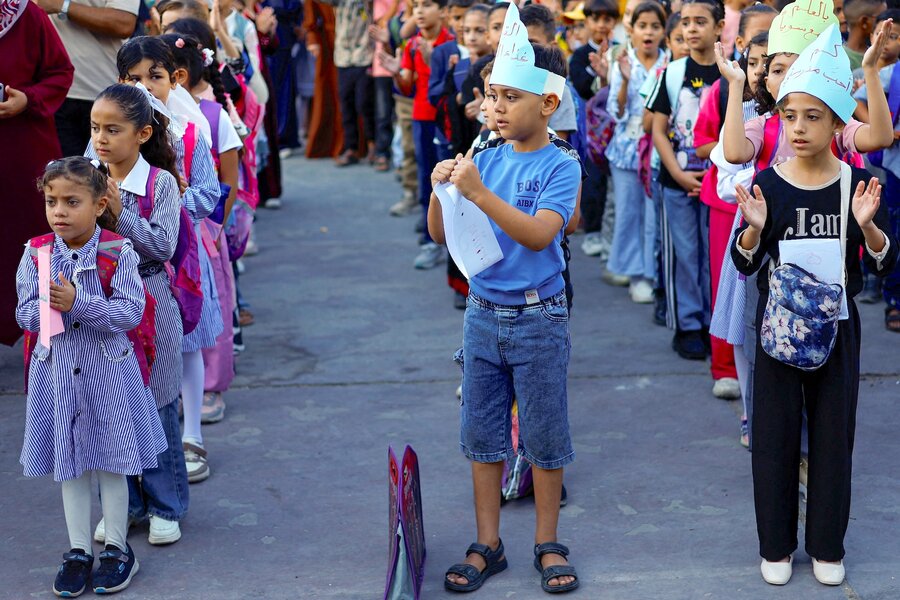
This week, thousands of excited children in Gaza took part in a ritual seen as normal in much of the world: going back to school. Instead of being in classrooms with whiteboards and desks, however, most sat on the floor in makeshift structures or tents. School supplies were scarce and costly. Teachers were few.Nearly three years of a war between Hamas and Israel have devastated most school buildings and staff.Nevertheless, to many in Gaza, the fact that the schools even opened was testament to every child’s desire to be inspired, curious, and skilled for a life of progress. An estimated 540,000 children – the most since the war began – returned to in-person schooling. Working together, Gaza's residents and international aid agencies upheld the ideal of maintaining a decent life for children, in part because they are the most innocent in any war. “Today was a beautiful day for me,” one mother told Al Jazeera, as she walked her two young sons to the first day of school Sept. 19. “My children ... were excited and they went to bed early,” she said. “I prepared them as if it were a normal school day.”Children in many war zones, from Ukraine to Sudan, seek joy in learning and friendship in schooling. And a structured educational experience enhances their stability and trust during uncertain times.In Gaza, a return to prewar life still seems distant and daunting: More than 1 million people have no permanent shelter, and 85% of buildings are damaged or destroyed. In late July, Hamas, the terrorist group that has controlled Gaza for 20 years, said it would begin disarming, dependent on Israel’s phased withdrawal of its troops. As that peace process drags on, Gaza’s school system struggles to shape a new normal. One essential reform, some observers say, is to reject parts of the official curriculum that glorify violence and ethnically or religiously based hatred.“For Gaza to have any chance of a different future,” according to Herb Keinon, an analyst with The Jerusalem Post, it needs to “free itself from an educational culture that demonizes Jews ... and presents violence and ‘martyrdom’ as heroic.”One Palestinian American strongly agrees. Dr. David Hasan, a researcher and professor at Duke University, has set up a network of free schools in Gaza. These “Academies of Hope” – currently serving 21,000 students – provide meals and healthcare to students as well as learning.More than that, they offer school lessons that do not demonize Jews or glorify “perpetrators of violence against Israel,” The New York Times reported earlier this year. For instance, a math problem counting “martyrs” killed in uprisings is replaced by one that compares the number of fans at soccer matches. Deepen your worldviewwith Monitor Highlights.Politics with respectGet political stories with respectful analysis.There‘s a world of new ideas in everyBooks newsletter.There‘s more to life, enrich yours withCulture & Learning weekly.Follow humanity‘s discoveries withScience & Nature stories in your inbox.Gain a spiritual perspectivefrom the stories in your inbox.Want to understand the deeper impact of critical events? Learn the Monitor‘s insight.Already a subscriber? Log in to hide ads. In addition, students are taught “peace building,” or the skills of tolerance, respect, and conflict resolution.As one of the academies’ science teachers told the Times: “We teach [students] ... how to come back to life from under the rubble. We teach them to love people.” ALREADY A SUBSCRIBER? LoginReal news can be honest, hopeful, credible, constructive.The Christian Science Monitor was founded in 1908 to lift the standard of journalism and uplift humanity. We aim to “speak the truth in love.” Our goal is not to tell you what to think, but to give you the essential knowledge and understanding to come to your own intelligent conclusions. Join us in this mission by subscribing.
A light of learning glows in Gaza
Full Article
Original Source
Read the full article at Csmonitor →KhanList aggregates and links to publicly available news content. We do not host full articles from third-party sources. Always verify important information with original sources.