
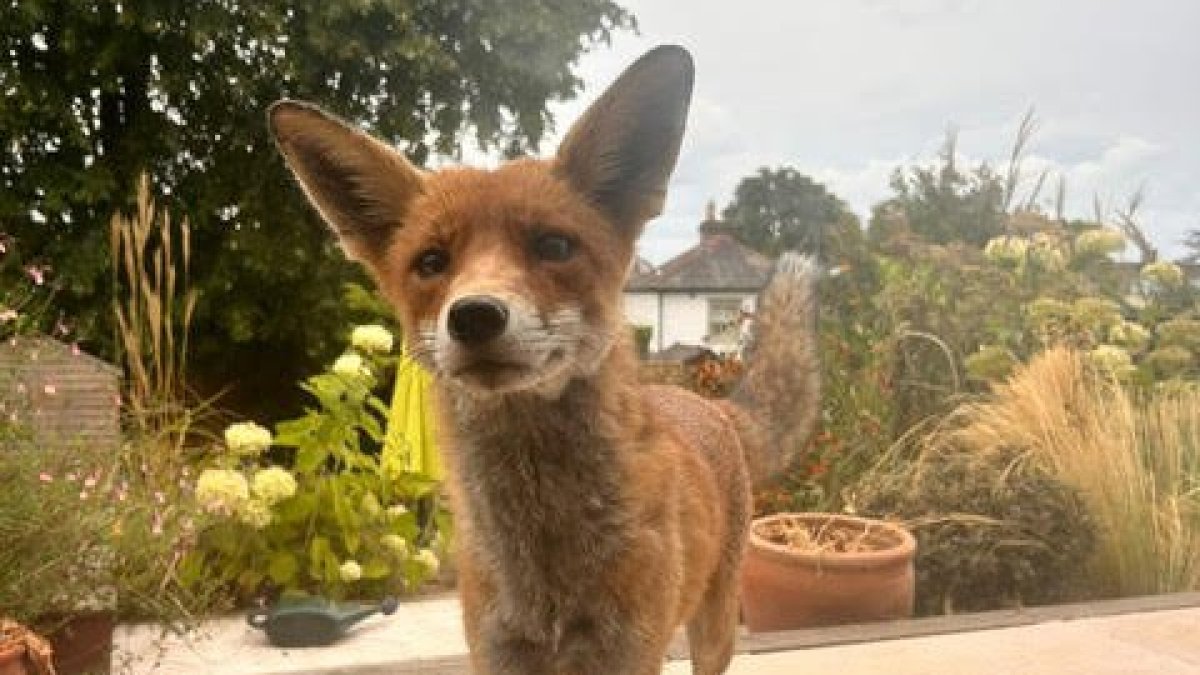
“Was your room this messy when you left?” Becky, 31, who lives in east London, was sunning herself on holiday when her cat sitter videocalled to ask about the chaos. Her bedroom “looked absolutely ransacked”, she recalls. She thought she must have been burgled, but after her friend found four pairs of (treasured) heels that were chewed off, and caught a whiff of a “really strong burny smell” they realised the likeliest culprit: a fox, who would have crept in through the back door. Shorts Foxes have always been wily creatures: scavenging for food, staring down your dog on evening walks, volleying haunting screeches at 2am. In the past 40 years, their numbers have been rising, mainly due to urban sprawl giving them more access to food. Their tendency to avoid humans means there is no precise science to measure the British fox population, but a study from scientists at Bournemouth University and the University of Reading in 2017 estimated that 280,000 foxes live in the countryside and around 150,000 are city-dwellers. And just like autumn heralds freshers’ week for young adults, at this time of year fox cubs, almost fully grown, begin to scope out new digs. So, if your neighbourhood is home to foxes, you can expect increased activity as they battle for territory. Meanwhile, there are strong signs that foxes are becoming braver and more confident around humans than ever before. Last month, a mother in Watford, Hertfordshire, recalled how her three-month-old’s head was bitten by a fox who’d come into their home while she slept. Residents in London, now home to 10,000 foxes, report that they are wandering into open front doors and back doors and even sitting on sofas and jumping on kitchen tables. Jen Elliott, 38, who also lives in Watford, says when foxes first started coming closer to her terraced house, she “found it novel and quite welcome”. However, over the past 18 months, “the screaming starts just as it gets dark. We thought it was people fighting at first, then realised [it was foxes] because they’ve been pooing in our yard. It absolutely stinks. They did it on our welcome mat and I thought I’d hose it off, but the smell was so rank I had to just put it in the bin.” Her kids’ garden toys have also been “destroyed” by foxes’ gnaws. “They’re wild animals, but they do really smell and there doesn’t seem to be a way of moving them on”, she says. Yet, part of her doesn’t want them to go. “I am a bit of a softie, especially when it comes to nature,” she says. She has neighbours who’ve had foxes come into their homes. “It’s either when people have left their back door open, or, in one case, through a skylight into a child’s bedroom.” Foxes, like all animals, adapt to their surroundings. A study from the University of Hull, published in 2023, found that urban foxes are becoming bolder as they increasingly adapt to the hustle and bustle of city life. Researchers gave the animals unfamiliar puzzle feeders to see how they would react. At the time, Dr Blake Morton said: “We found that urban foxes were more likely to behave bolder than rural populations in terms of their willingness to physically touch the puzzles, but they were not more motivated to try to gain access to the rewards inside.” This is where problems really arise. Rhiannon, 42, lives in Snaresbrook and has found foxes “treating the kids’ trampoline like a bed, and when it was very hot, I think they thought, ‘Eff it, I’m not moving’. They did move off if I approached, but then I’d have to wipe the whole thing down.” More frustratingly, she has had to bid a budding rosebush adieu after discovering that the fox was ruining her plants. “I don’t normally mind them, but they left soil everywhere.” Becky lives in Homerton, east London, and recalls the time she found a fox in her home. “[I was] in the lounge watching TV the other day, and I looked to the right, and I saw a fox there, just eating our cats’ food. It then weed onto the floor and their cat food bowl, then trotted off like nothing had happened!” That burning smell is lingering, so Becky and her partner have “ordered a UV light to try and locate the exact spot to clean with all these special enzymes”. “The smell reeks and literally haunts me every day. I just cannot get it out of my head, and it’s driving me insane.” Not everyone is so anti-fox, with plenty of Britons more than happy to feed their local foxes. On social media hundreds of thousands of vulpephiles use dedicated fox-lover pages to share images of cutesy foxes snuggling on benches, trotting around patios in search of food and curled up asleep. Chloe, 40, who lives in Loughton, has “befriended a fox called Jingles” and feeds him cracked eggs. Dr Rebecca Machin, a zoologist and scientific and policy officer in the RSPCA’s wildlife team, understands the temptation to feed and photograph foxes. “It’s great if people leave out a bit of wet dog or cat food to help them, to welcome them into their gardens. But there have been people on social media, posting about getting foxes really tame and leaving out inappropriate food like donuts and fast food.” The RSPCA strongly advises the public against feeding foxes inside their property or hand-feeding them. A 2025 study from the Game and Wildlife Conservation Trust and Bournemouth University found that 14 per cent of foxes’ diets consisted of human food sources. However, Machin says that foxes’ food should mainly be self-sourced and consist of “small vertebrates, like frogs, small birds and mammals, and also worms, fungi and fallen fruit”. She also warns that “if people are trying to be overfamiliar with them, then it might encourage them to go into neighbours’ houses who obviously aren’t wanting them inside”. “Foxes are really unlikely to become aggressive, but it is much more likely to happen when people are trying to hand-feed foxes. If foxes become familiar with people there’s more chance they will […] start to expect food from other people. That might result in them being more aggressive if they don’t receive food when they’re expecting it.” Dr Phillip Baker, a zoology lecturer at the University of Reading and member of the science advisory committee of the Mammal Society, echoes this warning. “In this selfie age, we are aware, increasingly, of people trying to have interactions with foxes which are not particularly constructive. Back in the day, people would not have thought about trying to feed foxes from the hand or getting them to come into their houses”. He continues: “But now, foxes just kind of get a bit inquisitive for their own good […] and there is this increasing tendency for people to see them as extended pets […] which is not in the fox’s best interests.” “If people feed foxes from the hand or allowing them indoors, then the fox might be tempted to approach another person who does not like foxes [or] go into a strange house. This then could create a scenario where they scare or antagonise someone who does not like them approaching too closely, and then that person gets someone in to kill the fox because they are fearful of it.” Baker says that in truth foxes rarely act aggressively. “The reason that [fox attacks] make headlines is it’s phenomenally rare if it does occur, and in this day of social media, people do make stories up without question. We’ve had maybe five reports of foxes attacking people in the way that this last one did […] in the past 25 years”. The RSPCA carries guidance on how to fox-proof your garden, including sealing bins and composters, blocking areas beneath decking, protecting fruit and vegetable crops and planting spiky plants at the edges of the garden. If a fox does show up in your home, Machin advises that people “leave the outside door open, but block access to elsewhere in the house. The fox will likely leave, but if not, approach gently with a long-handled broom to help usher it out. But don’t try to handle it directly.” In the course of Baker’s work, he has “been bitten by foxes several times. Every time, it’s my own fault. Obviously with smaller children, it’s a bit more concerning. But a big fox weighs about six kilos, and even a small baby is kind of that size or bigger.” He concludes: “I think it’s very much a British cultural thing, that wildlife, which is common and abundant, ultimately rubs people up the wrong way.” So, although foxes are perhaps responding to humans’ familiarity, there is nothing to suggest they are becoming more aggressive. The only big change of late is that foxes may find getting indoors that much easier, Machin explains. “The hot summer has led to plenty of people keeping more windows and doors open, in search of some [air] circulation”. Vulpine guests seem to be yet another inadvertent consequence of climate change on Britons, but for some it’s a joy. As Jen puts it: “Yes they are a pest, and when they get into our food waste bins, they cause a mess, but equally we’ve sort of invaded and taken away their spaces.” “I think it’s one of those things where you do have to try and live harmoniously if you can.”
‘A fox came into my bedroom’: The neighbours divided over feeding urban animals
Full Article
Original Source
Read the full article at Inews →KhanList aggregates and links to publicly available news content. We do not host full articles from third-party sources. Always verify important information with original sources.