
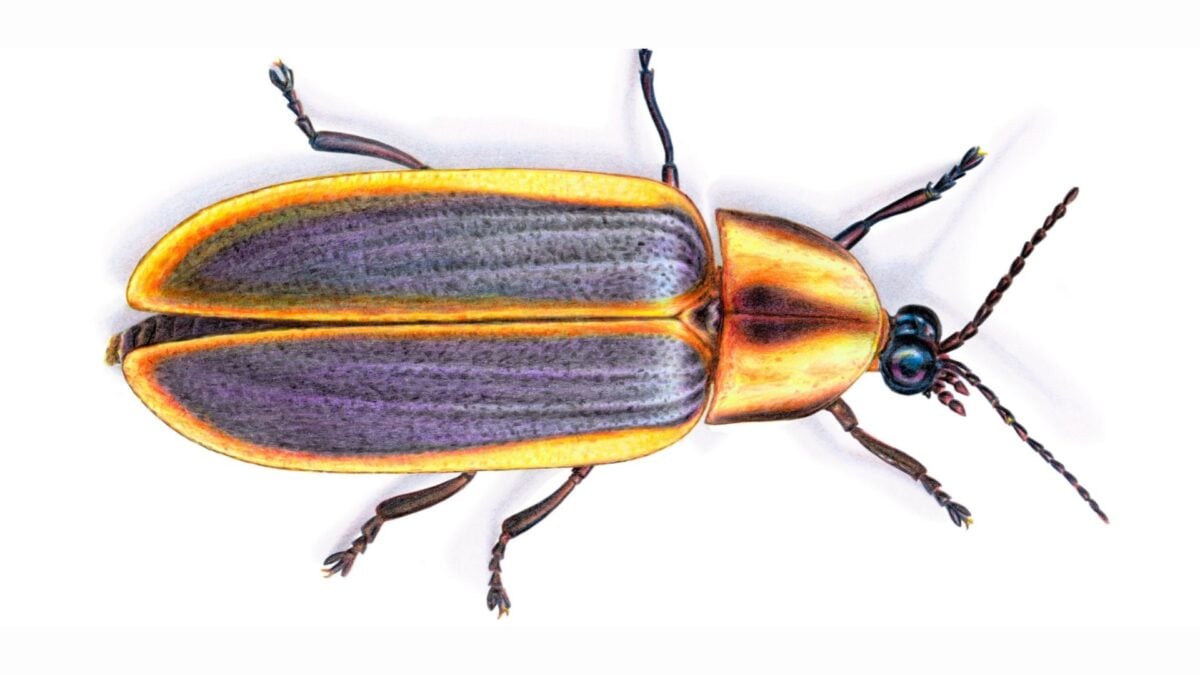
Nature is filled with all sorts of distinct living things, only some of which scientists have formally described and categorized. And sometimes, even previously discovered species can disappear completely from our notice. Such was the case with an insect known as Pyractomena similis, a.k.a. the similar firefly. The similar firefly was first named in 1957 by American entomologist John Wagener Green, and it’s thought to be native to parts of the eastern and southern United States. But scientists hadn’t documented any sightings of the firefly since 1983—more than 40 years earlier. The firefly’s disappearance eventually became so noteworthy that the conservation group Re:Wild added it to its Most Wanted list of lost species. Earlier this year, however, scientist Christopher “Kitt” Heckscher and his team rediscovered the similar firefly, minding its own business in a meadow at Brandywine Creek State Park in Delaware. The team detailed their find in a paper published this month in the Journal of Lost Species. The paper notes there are at least 28 other “lost” firefly species native to the U.S. and Canada—lost meaning there haven’t been any confirmed sightings for at least a decade—that we know nothing about currently. I reached out to Heckscher to discuss his team’s work and its implications for finding other lost species. The following has been lightly edited for grammar. Ed Cara, Gizmodo: Was this rediscovery something you were intentionally hoping to make or more of an example of being at the right place at the right time? Christopher Heckscher: This was a targeted survey. Pyractomena similis was classified as a Lost Species by Re:Wild. It was considered one of the 25 most wanted lost species. So, the survey work was a specific effort to locate this species. Gizmodo: How did you know that you had successfully found the firefly again? Heckscher: This species has a unique flash pattern. Once I saw the flash pattern, I was confident I had relocated the species. However, to be absolutely sure, the male genitalia needed to be examined to rule out all closely related species. The similar firefly has a unique flash that’s amber-colored and comes in a long, rhythmic pattern. © Mauricio Alvarez Gizmodo: Why have the similar firefly and other species gone “lost” for so long, even in places like the U.S.? Heckscher: Species go lost for various reasons. Reasons include the decline of the species in recent decades, the disappearance of the species altogether (i.e., extinction), or perhaps a lack of targeted searches or because no one is looking for the species. I suspect this species had become “lost” because its required habitat is not terribly common (and therefore it may be in decline) and because few folks had been targeting the species. Gizmodo: Is it likely other “lost” species could be found in the same way as the similar firefly? Heckscher: I think it does increase our hope that we can find other lost species. There are other uncommon or lost species associated with natural meadows like that in which the similar firefly was found. Some implications include the ability to target additional areas nearby to look for this species and the fact we now have a known area of occurrence that can potentially be managed with this species in mind. Gizmodo: What comes next? Are there any interesting questions about the similar firefly and other lost species that you would want yourself or others to explore? Heckscher: I think follow-up surveys in the region are an important priority. We need to get a better handle on how common this species is and where we can further protect it from things like light pollution and urban sprawl.
A Firefly Lost for 43 Years Is Back—and It’s Far From the Only One Missing
Full Article
Original Source
Read the full article at Gizmodo →KhanList aggregates and links to publicly available news content. We do not host full articles from third-party sources. Always verify important information with original sources.