
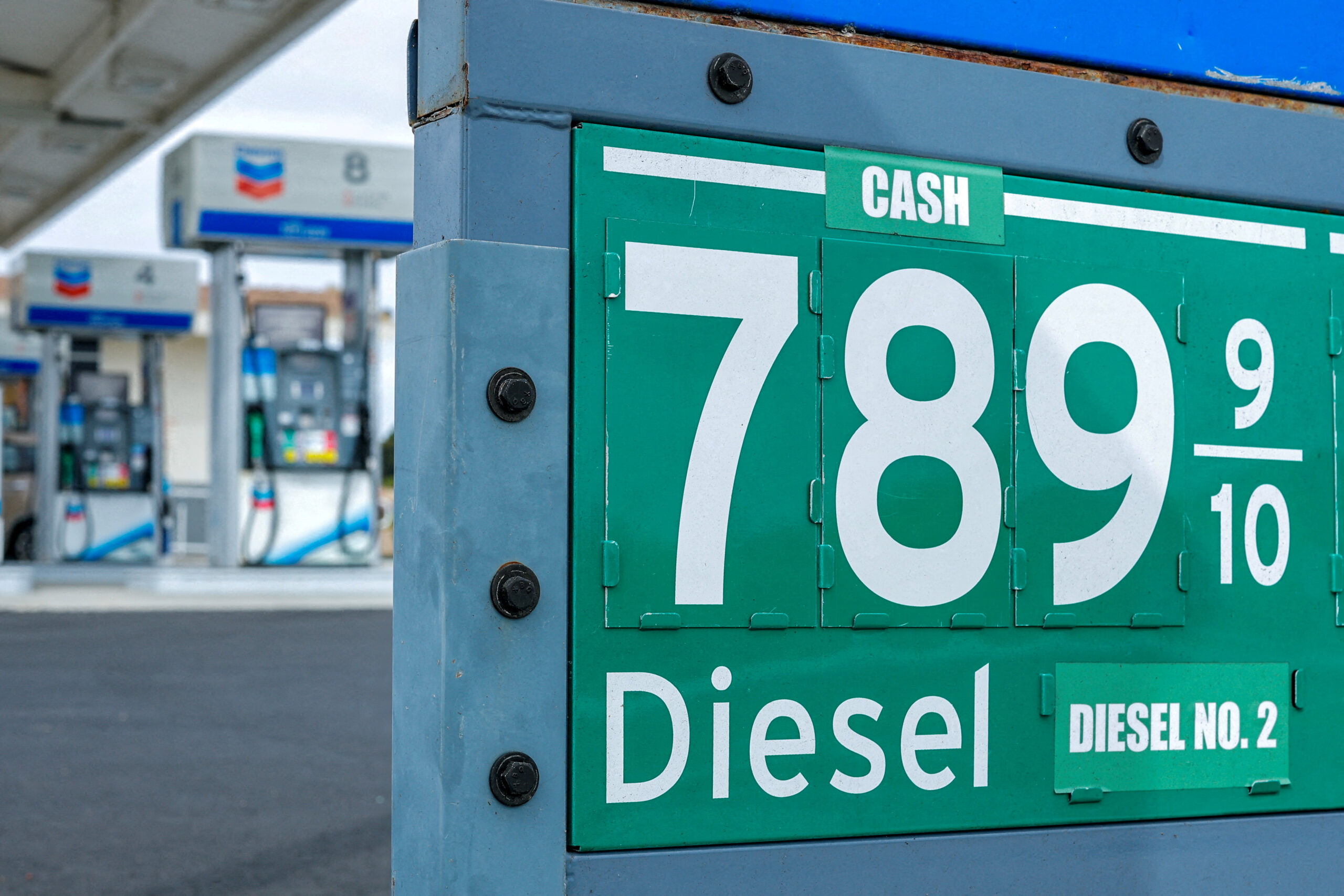
WASHINGTON—Momentum is building in Washington for a diesel export ban. With diesel prices at the pump reaching all-time highs, several US lawmakers have called on the Trump administration to place an embargo on US diesel exports. In the House, Rep. Tim Burchett (R-TN) has proposed legislation to prohibit exports, as well. President Donald Trump appears receptive, saying on Tuesday that “I’ve called for it, too. I said, ‘Let’s not send out the diesel.’” A diesel export ban would likely create more problems than it would solve. It would almost certainly temporarily lower prices for some US consumers along the Gulf Coast and in the Midwest, including many farmers. And it would potentially lower prices for some consumers on the East Coast. At the same time, it might mean higher prices for some Americans along the West Coast. There are also second- and third-order consequences of a ban to consider, including the potential for it to result in higher grocery prices. If Latin American countries are suddenly unable to import US diesel, and their farmers and truckers struggle to fuel their tractors, combines, and trucks, then US food supply chains could be disrupted. Disruptions to supply chains related to artificial intelligence (AI) development are possible, as well, which could reverberate in the stock market. Before the administration makes any decision on an export ban, therefore, the likely positive and negative consequences must first be weighed. The mechanics of a US diesel export ban Why are US diesel prices rising now? To begin with, global diesel markets are especially vulnerable to oil-supply disruptions caused by the Iran war. The Middle East’s medium-sour crude oil is a highly suitable feedstock for producing middle distillates such as diesel and jet fuel. When exports from the Middle East fall, so too does global diesel production. Another important factor is that refinery outages in the Middle East are limiting diesel production, while Russia and China have restrained their exports. With less crude available and with refinery capacity damaged, global and national diesel prices have marched higher. A US export ban would almost certainly lower domestic prices for diesel in the short term. But there would also be follow-on effects to any ban, such as likely pushing diesel prices outside of the United States higher. What such effects would mean for Americans would vary depending on how long a ban is in place. If a ban lasts only a few weeks, then the Midwest and Gulf regions would likely see a glut of diesel, sending some domestic prices sharply lower. The East Coast would likely pull some volumes from the Gulf Coast, either via the Colonial pipeline or vessels with Jones Act waivers. At the same time, import-reliant regions in the Western United States—including Alaska, Hawaii, and states along the Pacific coast—would likely need to continue importing diesel but would now be competing with global buyers for a smaller supply of non-US diesel. If the global price of diesel rises and supplies in the heartland cannot be routed to the coasts quickly enough, then these regions could see higher prices. US refineries are also likely to react to the expectations of a lower domestic price of diesel. Even under a ban that lasts only a few weeks, some US refineries might consider reducing crude throughput. Refiners have postponed maintenance due to high profit margins from elevated diesel prices and a favorable “3-2-1-crack spread.” If diesel prices are suppressed, however, these refiners may undertake long-delayed and sorely needed maintenance. If refiners expect a diesel export ban to persist for months or longer, then crude throughput at refineries could fall and shift, as refiners alter the crude slate in favor of other products, such as jet fuel and gasoline. If the ban lasts even longer, domestic refining demand could fall, and drilling new but more marginal oil wells in the United States could become less attractive. Crude oil production would decline, all else being equal, and exporting crude would become more attractive. In such a scenario, national and global crude oil prices could then rise. In the United States, the immediate outcome of a diesel export ban is at best a mixed picture. Diesel prices would temporarily decline for consumers in the Midwest and Gulf Coast and possibly the East Coast. Restricted from selling abroad, US diesel inventories, which are currently low, would begin to increase. However, US refiners would take a hit with narrowed margins, and some would potentially reduce the amount of crude they process. And West Coast consumers would likely see higher prices. The consequences of a higher international diesel price—and physical shortages—could also boomerang on the United States. The wider consequences of a ban A US export ban would likely have significant effects beyond the United States. A sudden export ban, for example, could lead to supply chain disruptions across Mexico and the rest of Latin America. Agricultural supply chains rely on diesel, and it is currently peak diesel demand season in many countries preparing to plant or harvest crops. Several Latin American countries are highly reliant on US diesel, as seen in the figure below. If Latin American countries lose access to US diesel imports, their agricultural production could face challenges. The United States imports a significant share of Latin American agriculture. Through August of this year, about 40 percent of US agricultural imports, by value, hailed from Mexico and other parts of Latin America. Mexico is significant for the US food supply chain as one of the top suppliers of fresh produce, including citrus fruits, tomatoes, avocados, and berries. US-Mexico agricultural trade involves harvesting equipment, refrigerated trucking, and cross-border transport, all of which rely on diesel. Nearly all of Mexico’s agricultural exports move by land to the United States and are heavily oriented toward diesel-reliant truck transport. In 2024, diesel accounted for 67 percent (57,000 barrels per day) of all energy consumed in Mexico’s agricultural sector, with an overwhelming majority used for powering machinery and equipment. A sudden diesel disruption would degrade Mexico’s ability to plant and harvest the crops the US imports. Making the matter worse, Mexico’s diesel inventories are already low, increasing the country’s vulnerability to a diesel ban. Mexico’s diesel days-of-supply on hand fell from approximately eleven days at the end of 2024 to under six days in April 2026, reflecting both lower inventories and stronger domestic diesel demand, based on our calculations using data from Mexico’s Hydrocarbons Statistics Portal and Statistical Annex of the National Energy Balance 2024. If Mexico lost access to US diesel imports, physical outages could emerge in a matter of days, disrupting agricultural production. That would likely translate into higher grocery prices and tighter supply for food staples that American consumers purchase. A diesel export ban might also disrupt US artificial intelligence supply chains. So far this year, about 120,000 barrels per day of diesel have flowed from the United States to Mexico via overland pipelines, especially via the Laredo district, according to US International Trade Commission data. The Mexican regions adjoining Laredo are highly reliant on US diesel and are critical for industrial supply chains. Laredo is the United States’ largest overland port by value, and it is crucial for importing computer-related machinery and parts (HS 84 and 85) used for the artificial intelligence buildout. Almost all of these goods, including servers, arriving in the Census districts of Laredo and El Paso are shipped via truck and would be at risk if Mexico experiences a sudden diesel crisis. Even a selective export ban could create significant supply-chain disruptions. In addition to Mexico, Peru and Ecuador would likely be affected if disruption occurs, owing to their limited storage inventories and reliance on US diesel supply. Brazil, too, could be impacted. Latin America’s largest economy has significant diesel refining capacity, domestically producing between 70-80 percent of its consumption of the distillate. However, due to lower global diesel supply, Brazil’s reliance on US diesel imports has grown sharply in recent months. Major Brazilian exports to the US include coffee, orange juice, and iron ore used to make steel. US consumers could see higher costs for these and other goods if production becomes more difficult. Finally, a diesel export ban would likely impact other key agricultural and industrial supply chains. Chile is the world’s largest producer of copper, which is embedded across supply chains. According to the Chilean Copper Commission, Chile’s copper mining industry consumed approximately 40 kb/d of diesel in 2024, much of it for haul trucks and other heavy machinery. Chile has significant diesel reserves, but neighboring countries may ask Santiago for fuel in the event of an emergency. Other unintended consequences This analysis has focused only on how an export ban might affect US supply chains via Latin America. In reality, an export ban affecting other regions, such as Europe, would also disrupt US supply chains, only in different ways not mapped out here. The combination of these effects would likely add to inflation. Instead of applying an ill-advised ban of diesel exports to any region, the Trump administration should consider other ways of tackling inflation, including helping to ensure that Middle East exports return toward pre–Iran war levels as quickly as possible.
A diesel export ban could disrupt US supply chains
Full Article
Original Source
Read the full article at Atlanticcouncil →KhanList aggregates and links to publicly available news content. We do not host full articles from third-party sources. Always verify important information with original sources.