
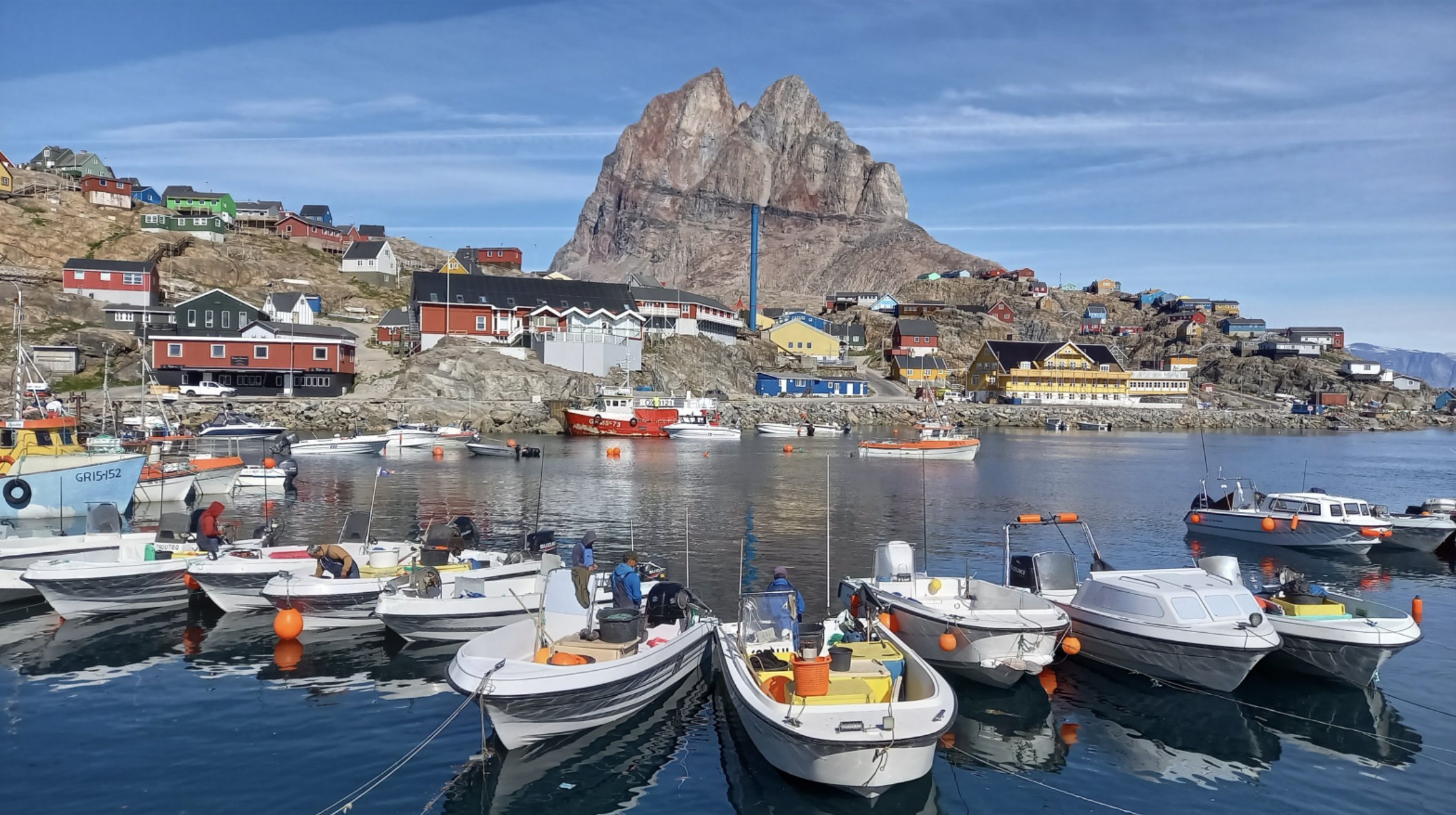
Greenland’s parliament has asked the government to pause licensing on seabed mining amid concerns about foreign interests in mining and potential environmental consequences for marine life. The Oct. 15 measure directed the government, called Naalakkersuisut, to present a law to the parliament, called Inatsisartut, in early 2027 to suspend seabed mining until at least 2029. “This is a decision to decide. An important one, and not the same thing as protection,” Jenseeraq Poulsen, executive director of Oceans North Kalaallit Nunaat, an environmental nonprofit, told Mongabay by email. Of the Greenlandic parliament’s 31 members, 17 were present, and all voted in favor of the proposal across party lines. On Oct. 14, a day before the vote, U.S. President Donald Trump said that “massive” oil, gas and mineral exploration was getting ready to begin in Greenland, a statement at odds with the recent decision from Greenland’s parliament. “On a question that has divided this parliament before, and in a month when there is considerable external interest in Greenland’s minerals, Inatsisartut spoke with one voice,” Poulsen said. “Every member present voted for it.” The resolution was first proposed in February 2026 by Pipaluk Lynge, a representative of the Inuit Ataqatigiit party. In the original proposal, she stated concerns over endangering Greenland’s marine environment due to other countries’ interest in deep-sea mining, and potential impacts on game animals and fishing. According to the 2026 report from Greenland’s national statistics organization, more than 90% of Greenland’s exports come from the fishing industry. According to a statement by centrist party parliament member Juno Berthelsen, the temporary halt to seabed mining would expire on Dec. 31, 2029, but can also be extended by two years at that time. The resolution, he wrote, strikes a balance between protecting Greenland’s seas and remaining open to future opportunities. “Economically, Greenland lives from the sea,” Poulsen said. “Any activity that puts the productivity of our waters at risk is not a diversification of the economy, it is a wager against the part of it that already works.” Banner image: Dinghies used for halibut fishing in Greenland. Image courtesy of Caroline Bouchard via Wikimedia Commons (free to use). Credits Topics
‘A decision to decide’: Greenland moves to suspend seabed mining until 2029
Full Article
Original Source
Read the full article at News →KhanList aggregates and links to publicly available news content. We do not host full articles from third-party sources. Always verify important information with original sources.