
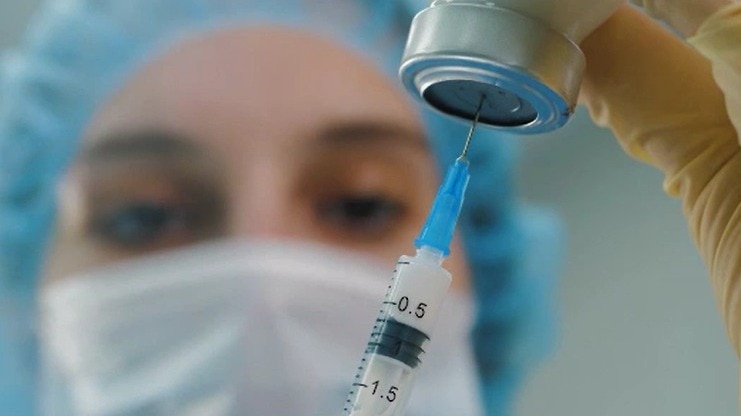
Imagine a cancer vaccine designed around the genetic mutations in one patient's tumour, rather than a treatment developed for a broad group of patients. A Hyderabad biotech start-up is attempting to make this possible, with projects costing around $300,000, or roughly Rs 2.5 crore.The company, PopVax founded by computer scientist and entrepreneur Soham Sankaran, operates a facility called the RNA Foundry, which offers contract design and manufacturing services for personalised mRNA cancer vaccines.The basic idea is to analyse the genetic changes in a patient's tumour, identify cancer-specific targets and design an mRNA vaccine that trains the immune system to recognise and attack cells carrying those targets.But this is not a ready-to-use cancer treatment that patients can simply purchase. The vaccines are experimental and have not been approved anywhere. More importantly, no patient has yet received a cancer vaccine manufactured by PopVax, either in India or abroad, the start-up incubated at the Atal Incubation Centre – Centre for Cellular and Molecular Biology (AIC-CCMB) in Hyderabad said in response to queries by India Today Digital.SO WHAT EXACTLY IS ON OFFER?PopVax's RNA Foundry works with patients, their treating physicians and external experts to design and manufacture a vaccine for an individual case. The service is intended for patients whose existing treatment options have proved insufficient and whose doctors believe an experimental approach is worth exploring. The facility manufactures the material and hands it over to the patient and medical team. Decisions about whether and how it should be used, as well as clinical care and follow-up, remain with the treating physician.The firm says $300,000 is the estimated cost of a design and manufacturing project, not the price of an established cancer treatment and the final amount depends on the patient's requirements and the number of doses.PopVax estimates that most projects would take eight to 10 weeks. It has also indicated manufacturing capacity for 100 or more such vaccines over the next 12 months.The company acknowledges that the current cost is prohibitive for most patients and says scaling up manufacturing could bring the price down.WHO CAN ACCESS THESE VACCINES?Having a vaccine manufactured is only one part of the process. A patient also needs a lawful route to receive an experimental medicine, along with medical supervision and the necessary regulatory and ethical permissions.This is particularly complicated in India.Compassionate use, also known as named-patient or expanded access in some countries, allows doctors to seek permission to administer an unapproved medicine to a patient with a serious illness who has limited treatment options. It is not the same as regulatory approval or unrestricted access.According to PopVax, India has a compassionate-use route for unapproved imported medicines, but no clearly established equivalent pathway for a domestically manufactured experimental therapy such as its personalised cancer vaccines.The United States, the United Kingdom and several European countries have mechanisms through which treating physicians can approach regulators, ethics committees and other relevant authorities to request access for individual patients.For this reason, PopVax's service is currently aimed mainly at patients receiving treatment in those countries. Indian patients face an additional regulatory question: how can a domestically manufactured experimental vaccine be administered when the pathway for doing so is not clearly established?The vaccines are manufactured at PopVax's facility in Hyderabad and the firm also lists Stochastic Sciences as a partner in its work on personalised medicines. The precise division of responsibilities between the two organisations is not publicly clear.HOW DOES THE SCIENCE WORK?Personalised cancer vaccines are based on a relatively straightforward idea: cancer cells carry genetic changes that can produce abnormal proteins, known as neoantigens. These can potentially be identified and used to train the immune system to recognise cancer cells.An mRNA vaccine carries instructions for producing selected targets, prompting the immune system to mount a response against cells displaying them.The approach has generated considerable interest following clinical results from pharmaceutical companies Merck and Moderna.In August this year, the companies announced positive Phase 3 results for their personalised mRNA cancer vaccine, intismeran autogene, in patients with high-risk melanoma. The vaccine was developed using genetic information from individual patients' tumours to identify cancer-specific neoantigens.Detailed results reported in October showed that patients receiving the vaccine alongside Keytruda had a two-year recurrence-free survival rate of 82.2%, compared with 70% among those receiving Keytruda, a widely used immunotherapy indicated for multiple cancers, alone.The findings offered important clinical evidence for the approach. But they need to be understood in context.The trial involved patients with melanoma whose tumours had already been surgically removed. It tested a specific vaccine developed by a large pharmaceutical partnership, in combination with an approved immunotherapy drug, under a formal clinical trial protocol.As such, these results cannot be extrapolated to every personalised cancer vaccine. Nor do they establish that an individually manufactured experimental vaccine will deliver the same benefit outside a clinical trial.The Merck-Moderna vaccine, too, is yet to receive regulatory approval anywhere globally.PopVax's cancer vaccine programme is at a much earlier stage. The company says it has no clinical efficacy data for these vaccines and makes no guarantee that they will benefit patients.It is preparing to conduct conventional clinical trials in India and internationally, with a focus on difficult-to-treat solid tumours, including liver and pancreatic cancers. These are cancers for which existing treatments can offer limited prospects in advanced disease.The company may also collect real-world evidence with the consent of patients and doctors. Such observations can provide information about how an experimental intervention is used, but cannot replace controlled clinical trials.Its first clinical programme is in a different field altogether: PopVax's COVID-19 vaccine entered a Phase 1 trial in Australia on August 31, 2026. Progress in that programme does not establish the safety or effectiveness of its cancer vaccines.WHAT SHOULD PATIENTS EXPECT?For oncologists, personalised cancer vaccines are a promising area of research, but they are not yet a substitute for established cancer treatments.Dr Tej Pratap Singh, surgical oncologist at HCG Cancer Centre, Jaipur, described the effort as “a clear sign that India is beginning to move beyond being just a manufacturer of pharmaceuticals."He welcomed the focus on liver and pancreatic cancers, given the challenges involved in treating them. However, he said personalised vaccines should be viewed as “a potential adjunct to existing therapies rather than a replacement for them”.Their role, he said, would depend on the type of cancer, the tumour's characteristics and the individual patient's clinical profile.Dr Nitish Ranjan Acharya, surgical oncologist at Manipal Hospital, Bhubaneswar, stressed that mRNA cancer vaccines remain experimental.They cannot currently replace surgery, chemotherapy, radiation or immunotherapy. Clinical trial data are needed to determine which patients might benefit, how well the vaccines work and whether their effects last, he said.In the case of a patient considering such a project, there are several distinctions to keep in mind. Paying for vaccine design and manufacturing does not guarantee that the vaccine will be administered, that it will produce an immune response capable of controlling the cancer, or that it will improve survival.- Ends
A cancer vaccine for Rs 2.5 crore? What Hyderabad's PopVax is offering
Full Article
Original Source
Read the full article at Indiatoday →KhanList aggregates and links to publicly available news content. We do not host full articles from third-party sources. Always verify important information with original sources.