
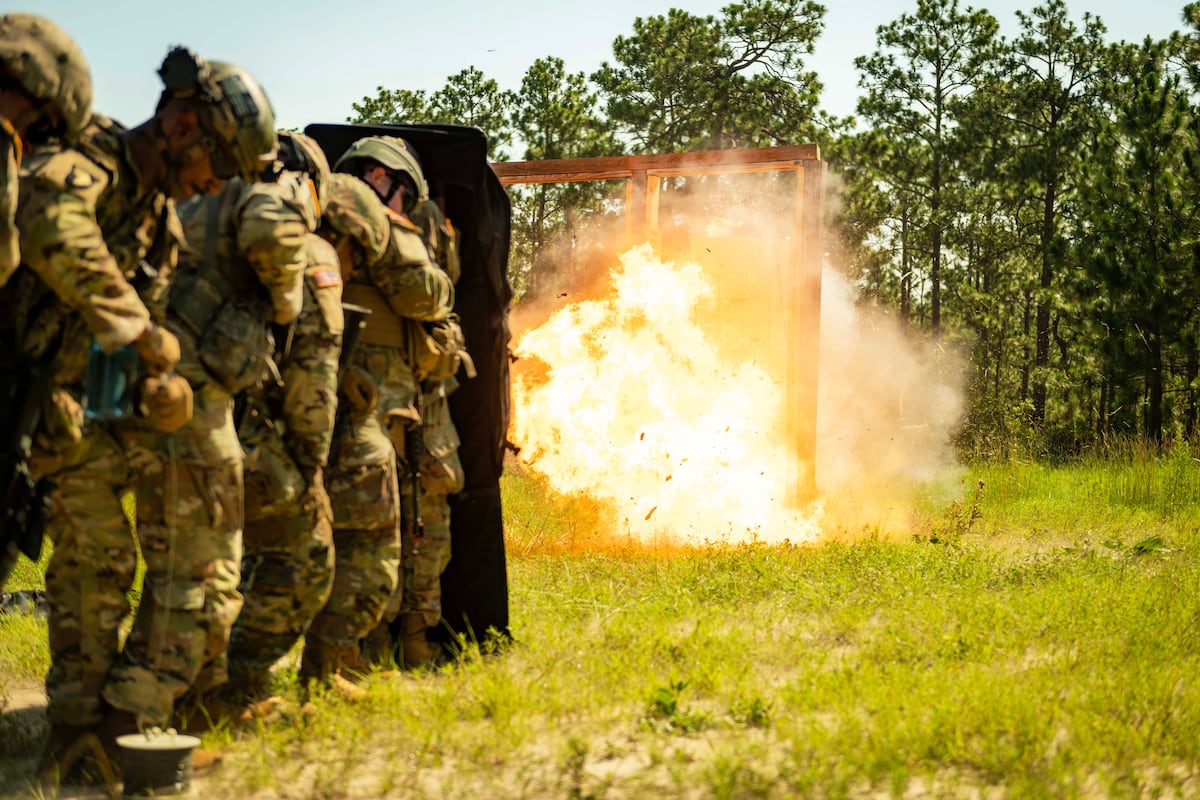
Nearly all U.S. soldiers completed a mandatory test meant to track the effects of blast exposure and monitor brain health across the Army, the service said in a release.The test, or Neurocognitive Assessment Tool, is computer-based and records neurological activity, such as attention, concentration, reaction time, memory, processing speed and decision-making. Testing started in 2024 in response to reports about the effects that routine weapons training can have on the brain, including traumatic brain injury.Active-duty, National Guard and Reserve soldiers in high-risk military occupational specialties, including combat engineers and explosive ordnance technicians, as well as troops operating heavy weapons systems, must take the assessment every year, starting soon after they enlist. All other soldiers are required to test every three years. Medical professionals use the data to monitor service members’ cognitive health throughout their military careers, allowing them to spot significant changes, including potential brain injuries.“[The NCAT] is an important part of taking care of soldiers, but what this does is, it sets a baseline for reaction times and for memory,” Jordan Gillis, assistant secretary of the Army for installations, energy and environment, said in a release. “By establishing a baseline for all soldiers, we’re able to monitor brain health, as well as … let medical providers help with treatment, if required.”According to the Sept. 30 release, the Army is expected to publish a directive about the Neurocognitive Assessment Tool and a broader overpressure program, which includes hazard assessment, exposure tracking, risk mitigation, cognitive monitoring, information management, illness and injury reporting and training and education.“The takeaway is we are trying to take care of soldiers and monitor their health,” Gillis said. “And if there is an impact, we’ll be able to treat them.”Reaching the milestone of 97% of soldiers being tested on the NCAT “demonstrates our commitment to cognitive safety, medical readiness and warfighting capability,” Gillis added.The announcement of the milestone came just one month after the Government Accountability Office released the findings of its investigation into the ability of military services to provide the baseline cognitive assessments. Across the services, the Defense Department is hampered by staff shortages and a lack of technology needed to conduct the assessments, the GAO found.The Pentagon announced in April that it will begin a one-year pilot program to test a new cognitive assessment tool, an app that service members can use to complete assessments. DoD officials said the app will be less resource-intensive than current assessments and will help improve the services’ ability to track exposures.Nikki Wentling is a senior editor at Military Times. She's reported on veterans and military communities for over a decade and has also covered technology, politics, health care and crime. Her work has earned multiple honors from the National Coalition for Homeless Veterans, the Arkansas Associated Press Managing Editors and others.
97% of US soldiers complete brain health assessment
Full Article
Original Source
Read the full article at Militarytimes →KhanList aggregates and links to publicly available news content. We do not host full articles from third-party sources. Always verify important information with original sources.