
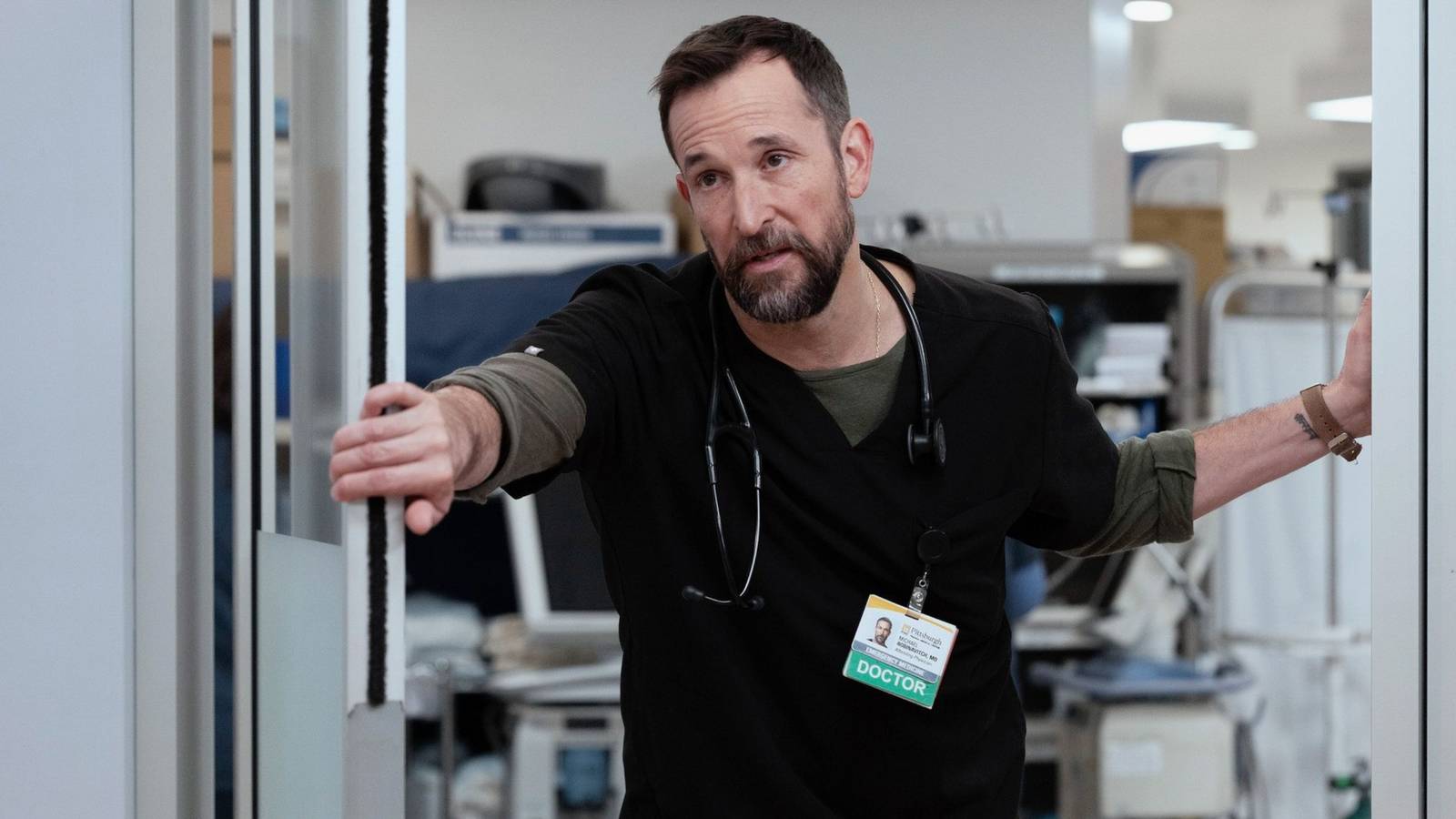
Image via Warrick Page / ©HBO MAX/ Courtesy Everett Collection Published Oct 20, 2026, 3:44 PM EDT Christine is a freelance writer for Collider with two decades of experience covering all types of TV shows and movies spanning every genre. With a particular affinity for dramas, true crime, sitcoms, and thrillers, if it's a top TV show, Christine has likely watched it and is eager to share her thoughts. When she's not furiously writing away, you can find her enjoying the next binge obsession with a glass of wine in front of the TV. Sign in to your Collider account Medical dramas are one of those genres you put on for the intensity. There's nothing quite like those fast-paced, urgent scenes when a patient comes in with a gunshot wound, an impalement, or some weird, unexplained symptoms. It's all fiction, of course, but the idea that this is what a real hospital sometimes looks like, maybe always looks like, raises the stakes. There are plenty of medical drama procedurals that are hugely popular, like Grey's Anatomy and Chicago Med. But the best medical dramas take great care with every episode. It isn't so much about interpersonal drama and bizarre patient cases, but about a sense of realness. OK, so a few of them are about featuring seemingly unsolvable medical issues, taking the plots to unbelievable heights. But the ones that do so flawlessly are few and far between. 9 'House' (2004–2012) Image via FOX Everyone loves a hero who is also an antagonist, and that's Dr. Gregory House (Hugh Laurie) in House. He's a doctor and medical genius who doesn't care much for rules while ironically working in a profession where following protocol is massively important. But his brilliant mind and ability to drill down to what's actually wrong with someone and solve seemingly unsolvable medical ailments mean the hospital has no choice but to put up with him. Adding a complication is that House himself is addicted to pain medications, and his theories are often rooted in nothing more than a feeling, which goes against everything that medical science would suggest. A medical drama with a dose of black comedy, House aired for eight successful seasons and remains one of the preeminent shows of the genre. 8 'Transplant' (2020–2024) Image via NBC Transplant is a medical drama that transcends the genre, focusing on the concept of the immigrant experience as well. Dr. Bashir "Bash" Hamed (Hamza Haq) is a trained doctor whose credentials don't matter once he arrives in the U.S. from the Middle East. That is, until he ends up being at the right place at the right time and shows his skills. With experience working in a war zone, he's not just a skilled doctor — he knows how to treat emergencies with few resources, making him invaluable. The series follows Bash's transition to working in the U.S. and navigating emergency medicine in a more regulated space. He has to both prove himself and teach those who believe they know better life-saving tactics they have never seen. 7 'Dr. Death' (2021–2023) Image via Peacock Both seasons of this medical drama hit even harder than they would otherwise, knowing they are both based on true stories. The first season of Dr. Death is about Christopher Duntsch, played by Joshua Jackson, a neurosurgeon who was convicted of mutilating his patients on purpose. The second is about Paolo Macchiarini, played by Édgar Ramírez, a surgeon and medical researcher who was convicted of conducting dangerous experiments on patients. The stories in the true crime anthology, one of the best series on Peacock, are horrifying — a lens into the dark side of medicine. Both seasons offer a tightly told story across eight episodes, each one of which builds the story and will give you chills since you already know what's coming. Both are unsettling, with fantastic performances from their leads that will leave you furiously Googling more about the real-life subjects. Collider Exclusive · TV Medicine Quiz Which Fictional Hospital Would You Work Best In? The Pitt · ER · Grey's Anatomy · House · Scrubs Five hospitals. Five completely different ways medicine goes sideways on television — brutal, chaotic, romantic, brilliant, and ridiculous. Only one of them is the ward your instincts were built for. Eight questions will figure out exactly where you belong. 🚨The Pitt 🏥ER 💉Grey's 🔬House 🩺Scrubs FIND YOUR HOSPITAL → 01 A critical patient comes through the door. What's your first instinct? Medicine under pressure reveals who you actually are. AStay completely present — block everything else out and work through it step by step, right now. BTriage fast and delegate — get the right people on the right problems immediately. CTrust my gut and move — I work best when I stop overthinking and just act. DAsk the question everyone else is ignoring — what's the thing that doesn't fit? ETake a breath, make a joke to cut the tension, and then get to work — panic helps no one. NEXT QUESTION → 02 Why did you go into medicine in the first place? The honest answer says more about you than the one you'd give in an interview. ABecause I wanted to be where it matters most — right at the edge, when someone's life is actually on the line. BBecause I wanted to help people — genuinely, one patient at a time, in a system that makes it hard. CBecause I was drawn to the intensity of it — the stakes, the drama, the feeling of being fully alive. DBecause medicine is the most interesting puzzle there is — and I needed a problem worth solving. EBecause I wanted to make a difference — and also, honestly, I didn't know what else to do with my life. NEXT QUESTION → 03 What do you actually want from the people you work with? Who you want beside you under pressure is who you are. ACompetence and calm — I need people who don't fall apart when things get bad. BTrust and reliability — I want to know that when I pass something off, it's handled. CConnection — I want colleagues who become family, even if that gets complicated. DIntelligence and the willingness to be challenged — I have no interest in people who just agree with me. EFriendship — people I actually like spending twelve hours a day with, because those hours are going to happen either way. NEXT QUESTION → 04 You lose a patient you fought hard to save. How do you carry it? Every doctor who's worked a long shift has had to answer this question. AI carry it. All of it. I don't look for ways to put it down — that weight is part of doing this work honestly. BI process it and move — you have to, or the next patient suffers for the one you just lost. CI feel it deeply and lean on the people around me — I don't think you're supposed to handle that alone. DI go back over every decision — not to punish myself, but because I need to understand what I missed. EI grieve it genuinely, find some way to laugh about something unrelated, and try to be kind to myself — imperfectly. NEXT QUESTION → 05 How would your colleagues describe the way you work? Your reputation on the floor is usually more accurate than your self-image. AIntense and completely present — no small talk during a shift, but exactly who you want there. BSteady and dependable — not the flashiest in the room but never the one who drops something. CPassionate and occasionally chaotic — brilliant on the hard cases, prone to drama everywhere else. DBrilliant and difficult — right more often than anyone else, and everyone knows it, including me. EWarm and self-deprecating — not the most intimidating presence, but genuinely good at this and easy to like. NEXT QUESTION → 06 How do you feel about hospital protocol and procedure? Every institution has rules. What you do with them is a choice. AProtocol is the floor, not the ceiling — I follow it until the patient needs something it can't provide. BI respect it — the system is broken in places, but the structure is there for a reason and I work within it. CI follow it until my instincts tell me not to — and my instincts are usually right, even when they cause problems. DRules are for people who haven't thought hard enough about when to break them. EI try to follow it and mostly do — with a few memorable exceptions that still come up in meetings. NEXT QUESTION → 07 What does this job cost you personally? Nobody works in medicine without paying a price. What's yours? AEverything outside these walls — I've given this job my full attention and the rest of my life has gone around it. BMy idealism, mostly — I came in believing the system could be fixed and I've made a complicated peace with that. CStability — my personal life has been as chaotic as the OR, and that's not entirely a coincidence. DMy relationships — I am not easy to know, and the people who've tried to would probably agree. EMy sense of gravity — I use humour as a coping mechanism, which not everyone appreciates in a hospital. NEXT QUESTION → 08 At the end of a long shift, what keeps you coming back? The answer to this question is the most honest thing about you. AThe fact that it's real — that nothing else I could be doing would matter this much, right now, today. BThe patients — individual human beings who needed something and got it because I was there. CThe people I work with — I have walked through impossible things with these people and I'd do it again. DThe next unsolved case — there's always another puzzle, and I'm not done yet. EBecause despite everything — the exhaustion, the loss, the absurdity — I actually love this job. REVEAL MY HOSPITAL → Your Assignment Has Been Made You Belong In…Your answers have pointed to one fictional hospital above all others. This is the ward your instincts, your temperament, and your particular brand of dysfunction were built for. The PittYou are built for the most unsparing version of emergency medicine television has ever shown — one that puts you inside a single fifteen-hour shift and doesn't let you look away. You need your work to be real, not romanticised — meaning over drama, honesty over aesthetics. You find purpose inside the work itself, not in the chaos surrounding it. You've made peace with the fact that this job takes from you constantly, and gives back in ways that are harder to name. Pittsburgh Trauma Medical Center demands exactly that kind of person — and you would not want to be anywhere else. ERYou are the person who keeps the whole floor running — not the most brilliant in the room, but possibly the most essential. You show up, do the work, absorb the losses, and come back the next day without needing the job to be anything other than what it is. You care about patients as individual human beings, not as cases to solve or dramas to live through. You believe in the system even when it fails you — and you understand that emergency medicine is about holding the line just long enough. ER is television about endurance. You have it. Grey's AnatomyYou came to medicine with your whole self — your ambition, your emotions, your relationships, your history — and you have never quite managed to leave any of it at the door. You feel things fully and form deep attachments to the people you work with. Your personal and professional lives are permanently, chaotically entangled — and that entanglement drives both your greatest disasters and your most remarkable saves. You understand that extraordinary medicine often happens at the intersection of clinical skill and profound human connection. It's messy at Grey Sloan. You would not have it any other way. HouseYou are drawn to the problem above everything else — the symptom that doesn't fit, the diagnosis hiding underneath the obvious one. You're not primarily motivated by the patient as a person — though you are capable of caring, even if you'd deny it. You work best when the stakes are highest and the standard answer is wrong. Princeton-Plainsboro exists to house one extraordinary, impossible mind — and everyone around that mind is there because they're smart enough to keep up. The only way forward here is to think harder than everyone else in the room. That is exactly what you do. ScrubsYou understand that medicine is tragic and absurd in almost equal measure — and that the only sane response is to hold both of those things at the same time. You are warm, self-aware, and funnier than most people in your field. You use humour to get through terrible moments — and at Sacred Heart, that's not a flaw, it's a survival strategy. You lean on the people around you and let them lean back. The laughter and the grief are genuinely inseparable here. Scrubs is a show about learning to become someone worthy of the job. You are still very much in the middle of that process — which is exactly right. ↻ RETAKE THE QUIZ 6 'New Amsterdam' (2018–2023) Image via NBC "How can I help" became four important words from this show that asks the question: What if a hospital had a medical director who no longer cared about following rules and helping the board make money, but actually cared for patients above all else? That's Dr. Maximus "Max" Goodwin (Ryan Eggold) in New Amsterdam, a hero-like character who constantly battles with the hospital board's chairwoman Karen (Debra Monk) over the hospital's financial interests versus his altruistic ones. Yes, it's glaringly unbelievable, but the "what if" scenario the show presents beneath the surface of some soapy storylines is one that will make you think. What makes New Amsterdam especially a masterpiece is not just its subtle social commentary that reminds us what a hospital is supposed to be about, but the heavy focus on mental health, too. Most past medical dramas don't feature that area in any significant way, though that has begun to change. On this show, Dr. Ignatius "Iggy" Frome (Tyler Labine) and his psychiatric patients are as big a part of the narrative as others. It was refreshing to see. 5 'St. Elsewhere' (1982–1988) Image via NBC Going back to the '80s, St. Elsewhere was among the first medical dramas to focus on interns in an underfunded hospital trying to do their best while dealing with one of the most high-pressure professions. Often described as Hill Street Blues in a hospital because of the similar ensemble cast format and overlapping storylines, St. Elsewhere is one of the first gritty and real medical dramas. It opened the door for all the best shows of the genre today. Starring known names like Ed Begley Jr., Howie Mandel, David Morse, and William Daniels, St. Elsewhere was an '80s show ahead of its time. It's widely considered to be not only one of the best-ever medical dramas, but one of the best TV shows of all time. 4 'Nurse Jackie' (2009–2015) Image via Showtime Unlike the other shows, Nurse Jackie focuses on the private and professional life of Jackie Peyton (Edie Falco), head nurse in the emergency department of a busy New York City hospital. She has a secret, however: she's a high-functioning drug addict who is addicted to pills. There's nothing Jackie won't do to get them, even risk her job. But most of those around her don't have a clue because when it comes to her work, Jackie is one of the best. Nurse Jackie explores the pressures Jackie feels, the way she slowly causes her personal life to implode to fuel her addiction, and the fallout on every side. It's brilliant writing through seven seasons, a wake-up call that someone who is an addict may not always look like what you might think. There have been talks of a sequel for many years, but as of now, there's no concrete evidence that it could move forward. With the changing landscape over the last decade and growing attention on mental health and addiction, it's the perfect time for a show like Nurse Jackie to be revived. 3 'ER' (1994–2009) Image via NBC Widely considered to be one of the best medical dramas of all time, ER was raw, real, and intense. Many of its stars went on to have fantastic careers in movies and on television, notably George Clooney, Julianna Margulies, and John Stamos. The series, created by Michael Crichton, takes place in the emergency room of a fictional hospital in Chicago and follows the personal and professional lives of its staff. ER is a gripping medical drama that's perfect from start to finish. The show did not shy away from tackling ethical and moral dilemmas the doctors, nurses, and other staff members face when it comes to treating patients and making difficult decisions. As the second-longest-running primetime medical drama on American television, it has 15 seasons and is surpassed only by Grey's Anatomy. ER inspired many of the medical dramas you see on TV today. 2 'The Pitt' (2025–Present) Image via HBO Starring Noah Wyle, who most famously starred in ER through its entire run, The Pitt has been praised for its realistic look at what it's like to work in the emergency room of a teaching hospital. Wyle is attending physician Dr. Michael "Robby" Robinavitch, who is navigating managing the department and tending to both patients and trainees while dealing with his own personal drama. As revealed deeper in Season 2, he is also facing a mental health crisis. Told in real time in a similar fashion to 24, every episode of the series, one of the best shows released since 2020, represents one hour of a 15-hour shift per season. It's intense and emotional, as you see everything from how doctors and nurses rush to help patients in dire need, struggle to balance handling overflowing waiting rooms, and deal with their own personal troubles. It's not just one of the best medical dramas —The Pitt is one of the best new shows on television right now. 1 'M*A*S*H' (1972–1983) Image via 20th Century Fox Television. All Rights reserved. /Courtesy Everett Collection It's tough to imagine any show ever surpassing M*A*S*H as the best medical drama. It doesn't have a single weak episode and is a masterpiece throughout. The show has unique framing, taking place in the Mobile Army Surgical Hospital during the Korean War. The ensemble cast of characters tends to injuries, each case bearing emotional weight and depth since they involve people fighting for their country. M*A*S*H tackled topics of mental health before it was so common on television, combining tragic themes with doses of comedy to lighten the mood. It focused on the interpersonal relationships of the cast as well, a lens into the time and the tensions during war. More than 40 years later, this show's finale still holds the title of being the most-watched of any series in history. If you were around in 1983, chances are you were glued to the television to see how it ended. "Goodbye, Farewell and Amen" delivered as well, being one of the best TV show finales of all time. M*A*S*H Release Date 1972 - 1983-00-00 Network CBS Cast Loretta Swit Margaret Houlihan
9 Medical Dramas Where Every Episode Is a Masterpiece, Ranked
Full Article
Original Source
Read the full article at Collider →KhanList aggregates and links to publicly available news content. We do not host full articles from third-party sources. Always verify important information with original sources.