
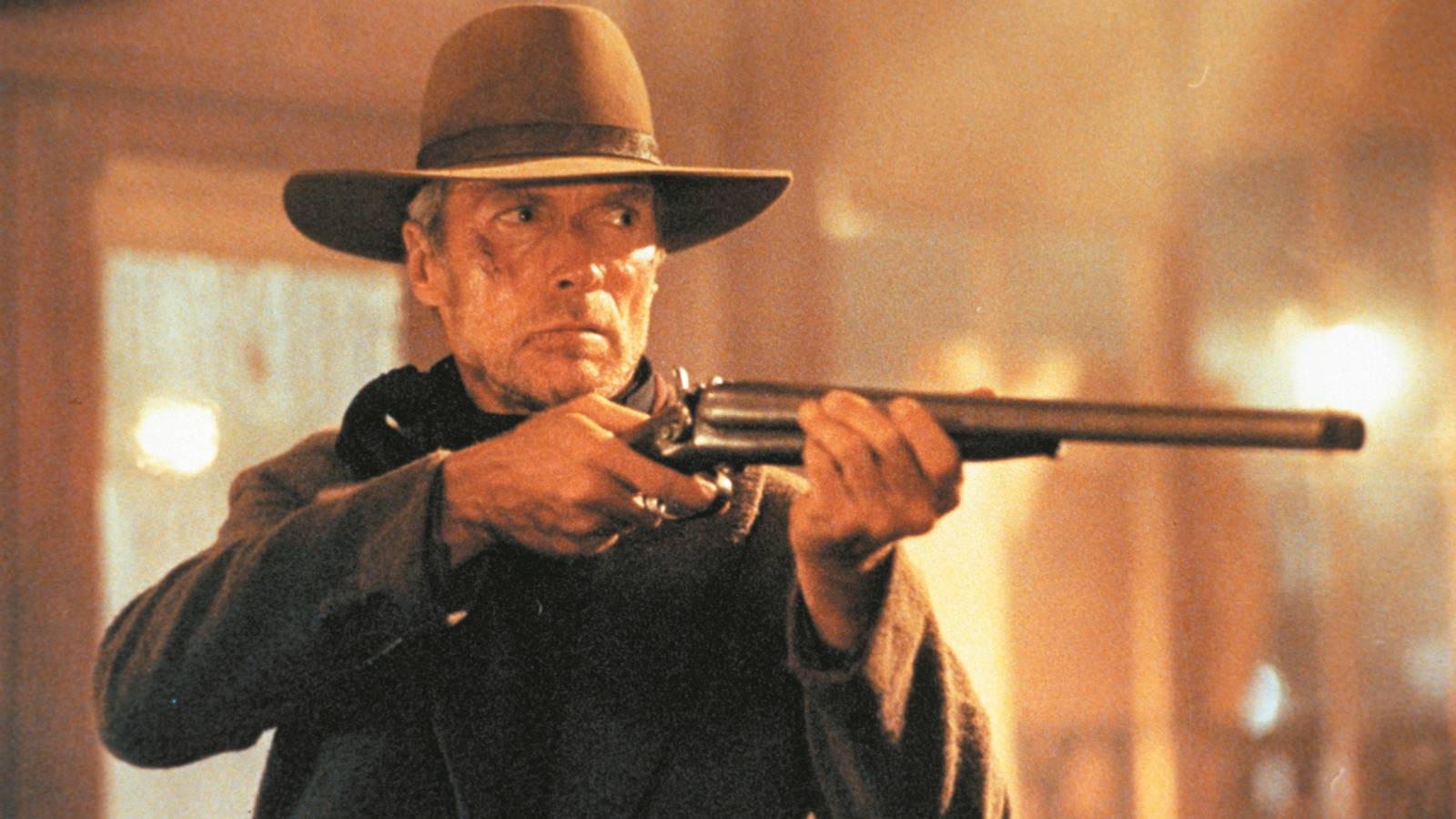
Published Oct 17, 2026, 6:23 AM EDT Senior Music Editor at Screen Rant, Sarah's love of sound and story drive the beat. A globetrotting brand whisperer and award-winning journalist, she’s built cross-cultural narratives around the world—but music has always been her true north. She launched DJ Mag North America, successfully introducing the iconic UK brand to the U.S. market. Previously, she carved a space for EDM inside the pages of VIBE, blending electronic and hip-hop culture long before it was trendy. Clint Eastwood's William Munny looks nothing like a legendary gunslinger when audiences first meet him in Unforgiven. He's older, out of practice, and can barely mount his horse. Yet by the time he walks into a Wyoming saloon with a shotgun, the film has made his reputation feel horribly real. Released in 1992, Unforgiven earned four Academy Awards, including Best Picture and Best Director for Eastwood. Its examination of violence, revenge, and the stories people tell about the Old West helped establish it as one of the most influential revisionist Westerns ever made. More than three decades later, its reputation remains formidable. However, the Western genre had been challenging its own conventions long before Eastwood introduced audiences to Munny. John Ford explored the darkness beneath the traditional cowboy hero, while Sergio Leone made ruthless opportunists the stars of his lavish Italian Westerns. Sam Peckinpah subsequently pushed the genre's violence to previously unimaginable extremes. Some of those earlier films were even more ambitious than Unforgiven. Others delivered unforgettable characters, extraordinary cinematography, or stories whose influence extended far beyond Western cinema. Filmmakers continued finding new ways to explore the genre after Eastwood's Oscar-winning achievement, proving that its greatest possibilities weren't confined to the American frontier. Calling any Western better than Unforgiven is bound to provoke disagreement, but these eight films have compelling arguments in their favor. From John Wayne's most psychologically complex performance to one of Clint Eastwood's own greatest starring roles, each demonstrates why the Western has produced so many enduring masterpieces. The Good, The Bad And The Ugly Clint Eastwood had already helped redefine the Western decades before directing Unforgiven. In Sergio Leone's The Good, the Bad and the Ugly (1966), he plays Blondie, the mysterious gunslinger whose uneasy partnership with Tuco (Eli Wallach) leads them into a dangerous search for buried Confederate gold. Their pursuit eventually brings them into conflict with Angel Eyes (Lee Van Cleef), a ruthless killer determined to claim the treasure himself. Leone's extraordinary command of widescreen imagery and Ennio Morricone's unforgettable score turn the sprawling adventure into an almost operatic experience. The film's legendary three-way cemetery showdown remains one of cinema's greatest climaxes, with every glance and movement contributing to its mounting tension. Unforgiven offers a more mature examination of violence, but The Good, the Bad and the Ugly arguably surpasses it in cinematic invention, entertainment value, and sheer visual spectacle. The Searchers John Ford's The Searchers (1956) features one of John Wayne's darkest performances as Ethan Edwards, a Confederate veteran who embarks on a yearslong search for his niece Debbie (Natalie Wood), abducted during a Comanche attack. Accompanied by his adopted nephew Martin Pawley (Jeffrey Hunter), Ethan becomes increasingly consumed by hatred, raising disturbing questions about what he intends to do when he finally finds Debbie. Wayne's portrayal of the deeply troubled Ethan Edwards challenges the heroic image that made him a Hollywood legend. Ford's sweeping Monument Valley cinematography is breathtaking, but the movie's most memorable moments concern Ethan's inability to escape his own prejudices. Although its treatment of Native Americans remains problematic, The Searchers examines the destructive psychology of the Western hero with an intensity that arguably surpasses Unforgiven. Its famous final doorway shot remains one of cinema's most haunting images. No Country For Old Men via MovieStillsDB Joel and Ethan Coen demonstrated that Western filmmaking still had extraordinary possibilities with No Country for Old Men (2007). Adapted from Cormac McCarthy's novel, the neo-Western follows Llewelyn Moss (Josh Brolin), who discovers a suitcase containing $2 million after stumbling upon a drug deal gone wrong. His decision to take the money attracts the attention of Anton Chigurh (Javier Bardem), a terrifying killer whose pursuit leaves destruction across the Texas landscape. Where Unforgiven examines the consequences of violence through a traditional Western setting, the Coens relocate those anxieties to a modern world in which conventional ideas of justice seem increasingly irrelevant. Tommy Lee Jones delivers an extraordinary performance as aging Sheriff Ed Tom Bell, whose haunting final reflections offer little comfort. The movie's refusal to provide a conventional confrontation between hero and villain makes it particularly unsettling. Winner of four Academy Awards, including Best Picture, No Country for Old Men has a formidable claim to being the finest Western of the 21st century. High Noon Fred Zinnemann's High Noon (1952) follows Marshal Will Kane (Gary Cooper), who learns that a dangerous outlaw he previously arrested is returning to town seeking revenge. Rather than flee with his new wife, Amy (Grace Kelly), Kane decides to confront the threat. Unfortunately, the townspeople he once protected refuse to stand beside him, leaving the aging lawman increasingly isolated as the confrontation approaches. While Unforgiven gradually builds toward its explosive conclusion, High Noon generates extraordinary suspense through its near-real-time storytelling. Every passing minute brings Kane closer to a confrontation he may not survive, and the film's ticking clocks become almost unbearable. Cooper's Oscar-winning performance is especially effective because his character is visibly frightened. At approximately 85 minutes, High Noon accomplishes with remarkable economy what considerably longer Westerns sometimes struggle to achieve. Its influence remains so substantial that the film continues to appear in discussions of the genre's greatest enduring classics. Butch Cassidy And The Sundance Kid via MovieStillsDB George Roy Hill's Butch Cassidy and the Sundance Kid (1969) takes a considerably more entertaining approach to the declining American frontier. Paul Newman stars as charismatic outlaw Butch Cassidy, while Robert Redford plays his sharpshooting partner, the Sundance Kid. After a series of robberies attracts the attention of an unusually determined posse, the two men flee to Bolivia with Sundance's girlfriend, Etta Place (Katharine Ross), hoping to continue their criminal careers. Newman and Redford's exceptional chemistry makes the film one of the genre's most enjoyable character studies. Their banter gives the story an infectious energy, even as their chances of escaping the consequences of their crimes steadily diminish. The movie's famous freeze-frame ending is devastating precisely because the filmmakers have made its doomed protagonists so appealing. Unforgiven may offer a harsher assessment of outlaw violence, but Butch Cassidy and the Sundance Kid achieves an equally affecting conclusion through humor and genuine affection for its characters. The Man Who Shot Liberty Valance John Ford returned to the question of Western heroism in The Man Who Shot Liberty Valance (1962), starring James Stewart as idealistic lawyer Ransom Stoddard and John Wayne as experienced gunfighter Tom Doniphon. When Stoddard arrives in the frontier town of Shinbone, he discovers that the ruthless Liberty Valance (Lee Marvin) maintains control through intimidation. His belief in the rule of law clashes with Doniphon's understanding that violence may be the only effective response. The film's brilliant narrative structure gradually reveals that the celebrated story surrounding Stoddard's political rise conceals a considerably more complicated truth. Ford examines how heroic reputations are manufactured and why society sometimes prefers a comforting legend to reality. Like Unforgiven, the film questions whether violence can ever create genuine heroes, but its examination of American mythmaking is arguably even more sophisticated. It's among the classic Western movies that remain nearly perfect from beginning to end. The Wild Bunch Sam Peckinpah's The Wild Bunch (1969) follows an aging gang of outlaws led by Pike Bishop (William Holden), whose increasingly desperate attempts to survive bring them into conflict with soldiers, bounty hunters, and Mexican revolutionaries. Set in 1913, the film depicts a frontier rapidly disappearing beneath the pressures of modernization. Its central characters have spent their lives relying on violence, only to discover that the world has little use for them anymore. Peckinpah's groundbreaking action sequences transformed how violence was depicted in Western cinema, using slow motion and rapid editing to create an almost overwhelming sense of brutality. However, the film's lasting impact extends beyond its gunfights. The gang's complicated loyalties and eventual decision to confront overwhelming odds give their final stand surprising emotional weight. More than two decades before Unforgiven, The Wild Bunch was already exposing the ugliness beneath the romanticized outlaw lifestyle, arguably with even greater ferocity. Once Upon A Time In The West MoviestillsDB Sergio Leone followed his Dollars Trilogy with an even more ambitious Western. Once Upon a Time in the West (1968) brings together a mysterious harmonica-playing gunslinger (Charles Bronson), a newly widowed woman named Jill McBain (Claudia Cardinale), and a ruthless killer called Frank (Henry Fonda). Their stories converge around a valuable piece of land threatened by the expansion of the railroad, with personal revenge and economic ambition driving the escalating conflict. Leone's decision to cast Henry Fonda against his heroic screen image remains one of the film's most audacious choices. Its deliberately measured pacing allows every confrontation to acquire enormous significance, while Morricone's magnificent score gives the story an almost tragic grandeur. Once Upon a Time in the West also places Jill's struggle for independence at the center of its narrative, offering a broader perspective on the changing frontier. Few Westerns have matched its combination of visual beauty, ambition, and emotional power.
8 Western Movies That Are Even Better Than Clint Eastwood's Unforgiven
Full Article
Original Source
Read the full article at Screenrant →KhanList aggregates and links to publicly available news content. We do not host full articles from third-party sources. Always verify important information with original sources.