
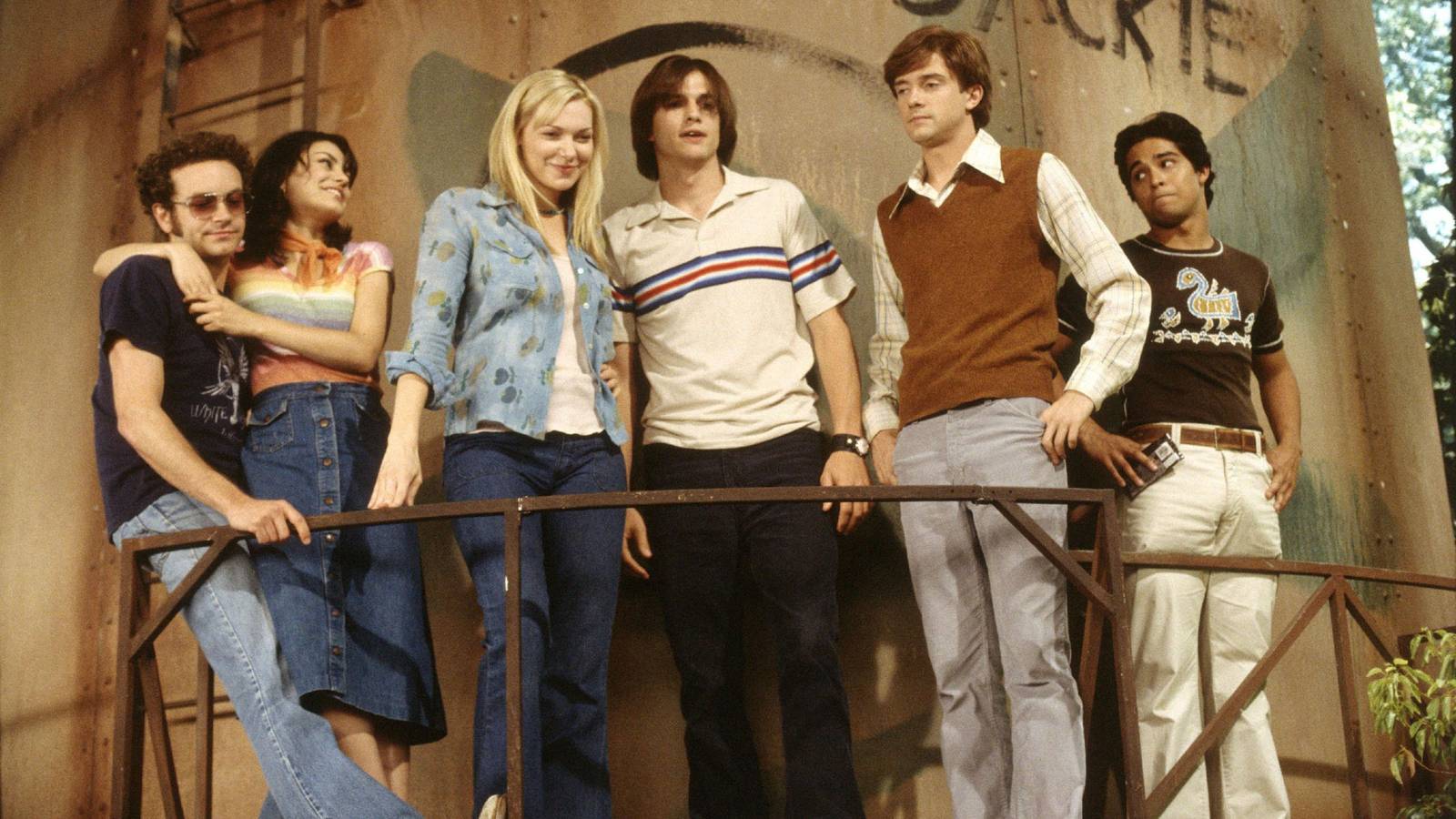
Published Sep 13, 2026, 6:30 PM EDT Mads Misasi is a part-time entertainment journalist and full-time marketing content creator. Before joining the ScreenRant team they wrote for TellTaleTV for 9 years working their way up from contributor to Associate Editor. TV has been a passion of theirs since a very young age. Mads typically watches all of the things, especially dramas and sitcoms. This article contains mentions of sexual assault and harassment. That '70s Show remains one of the defining sitcoms of the late 1990s and early 2000s. It's still an entertaining rewatch decades later, largely because of the chemistry of its central cast, memorable running jokes, and surprisingly relatable coming-of-age storylines. Of course, revisiting a comedy this many years later also means encountering jokes that don't land quite the way they once did. That '70s Show was hardly alone in relying on humor surrounding sexuality, body image, gender, and race that was far more commonplace on television at the time. The fact that the series takes place in the 1970s can complicate that conversation even further. Some outdated attitudes are deliberately part of the show's setting. Yet, there is a difference between depicting characters with outdated beliefs and asking viewers to laugh along with jokes built around those beliefs. Several That '70s Show episodes fall firmly into the latter category. From invasive behavior being treated as harmless teenage antics to an astonishing late-series joke about sexual consent, these episodes haven't survived the passage of time nearly as well as the sitcom as a whole. "Eric's Buddy" (Season 1, Episode 11) "Eric's Buddy" is complicated because many elements of the episode deserve some credit. Buddy, played by Joseph Gordon-Levitt, isn't portrayed as villainous simply because he is gay. He and Eric develop a genuine friendship after becoming chemistry partners, and Eric enjoys spending time with someone outside his normal group. Then Buddy kisses Eric. The kiss reveals Buddy is gay, and Eric's resulting panic becomes the episode's biggest source of comedy. Eric immediately makes it clear he isn't gay and becomes deeply uncomfortable around Buddy, while their friendship never develops into the recurring relationship the episode initially seemed to be establishing. For an episode airing in 1998, including a gay teenager at all was noteworthy. That context is worth acknowledging. Nevertheless, "Eric's Buddy" still treats the possibility that another boy might be attracted to Eric as its shocking punchline, making the episode feel remarkably different more than two decades later. "It's A Wonderful Life" (Season 4, Episode 1) Season 4's "It's a Wonderful Life" imagines how Eric's life might have unfolded if Eric and Donna had never started dating. Part of that alternate future involves Eric eventually marrying Rhonda before their relationship falls apart, something initially presented as another indication that his life didn't turn out the way he hoped. Years later, Eric encounters Rhonda again and discovers she has lost weight, become conventionally attractive, and built a successful career running an aerobics studio. Her transformation supposedly began after Eric dumped her, tying her newfound confidence and success directly to the dramatic change in her appearance. It is hard to ignore what the episode is suggesting. Rhonda's improved life and newfound desirability arrive alongside her thinner body, while her earlier appearance is treated as part of Eric's disappointing alternate future. The storyline makes her weight the problem she apparently needed to overcome before getting to thrive. "Red and Stacey" (Season 4, Episode 10) That '70s Show's season 4 episode "Red and Stacey" technically tries to deliver a positive message about Rhonda. Ahead of her first date with Fez, Jackie and Donna give her a dramatic makeover, changing everything from her clothes to how she behaves because they don't consider her feminine enough. Fez ultimately rejects their handiwork because he liked Rhonda exactly as she was. Unfortunately, getting to that surprisingly sweet conclusion requires sitting through numerous jokes about her weight, appetite, appearance, and physical size. Even Donna participates, as the episode reveals she had previously called Rhonda "Sasquatch." The sentiment behind Fez's reaction actually holds up rather well. Almost everything surrounding it does not. Rhonda's body remains something the other characters openly ridicule, making the episode a perfect example of how an otherwise decent message can become buried beneath poorly aged comedy. "Eric's Hot Cousin" (Season 4, Episode 14) Some sitcom premises are intentionally uncomfortable, and "Eric's Hot Cousin" certainly qualifies. Eric's cousin Penny arrives for a visit, and virtually every boy immediately becomes infatuated with her. The problem is that Eric eventually realizes he is attracted to her too. Penny then tells Eric she was adopted, apparently removing the one obstacle preventing him from acting on that attraction. Rather than questioning the fact that they were still raised knowing one another as cousins, Kelso, Hyde, and Fez encourage Eric to pursue her. The episode eventually reveals Penny invented the entire story to get revenge on Eric for tormenting her when they were children. That makes Eric the butt of the joke, but it doesn't erase how much of the episode expects viewers to laugh at his seriously considering sleeping with someone he has always known as family. "Class Picture" (Season 4, Episode 20) "Class Picture" is one of That '70s Show's more nostalgic episodes, using the gang's upcoming yearbook photo to flash back to different moments throughout their friendship. However, one recurring gag involves Kelso repeatedly attempting to see Donna topless over the years. Things get considerably worse during the episode's final joke. Kelso walks in while Donna is changing, leading her to remind him they had already discussed his behavior. Kelso responds that if Donna let him see her breasts, he would finally stop trying. Donna ultimately flashes him. The scene is supposed to give Kelso the ridiculous victory he has been chasing. Watching it now, though, Donna essentially gives in after years of someone repeatedly violating her boundaries. Turning persistent harassment into a cute comedic payoff makes the episode considerably harder to enjoy without noticing how poorly that joke has aged. "Squeeze Box" (Season 6, Episode 20) Fez's obsession with women is one of That '70s Show's longest-running jokes. While his romantic desperation occasionally produces genuinely funny moments, "Squeeze Box" highlights how easily that characterization can cross the line from awkwardness into genuinely invasive behavior. When Pam Burkhart moves in with Bob, Kelso and Fez eagerly help move her belongings. During the process, Fez casually informs Pam that he has taken several pairs of her underwear as "souvenirs," treating a blatant invasion of her privacy as though it were merely another quirky expression of attraction. The episode gives the admission little weight because everyone is far more interested in Pam's body, particularly after Red and Hyde accidentally see her topless. Stealing someone's underwear would be treated as an enormous violation of privacy. Here, it is simply another excuse for the audience to laugh at Fez being horny. "Let's Spend The Night Together" (Season 7, Episode 2) Season 7 gives Hyde one of his biggest personal revelations when he finally meets his biological father, William Barnett, in "Let's Spend the Night Together." The biggest surprise for Hyde and everyone surrounding him is discovering that William is Black, meaning Hyde himself is biracial. That storyline isn't inherently problematic. In fact, introducing William allows Hyde to explore a part of his family and identity he never knew existed. The problem comes from the jokes the episode immediately uses to process the revelation. Hyde quickly decides his father being Black explains his hair, his "coolness," and his distrust of authority. William's own dislike of the police and interest in conspiracy theories only continues the gag. What could have been an interesting expansion of Hyde's identity instead reduces Blackness to a collection of stereotypical personality traits. "2000 Lightyears From Home" (Season 7, Episode 22) Season 7's "2000 Light Years From Home" includes a joke that, when considering its actual implications, becomes significantly more disturbing. While Kelso struggles with his relationship with Angie, Fez comes up with what he believes is a perfect solution. Fez proposes that Kelso begin having sex with Angie in a dark room before secretly leaving and allowing Fez to replace him. Angie would have no idea that she was suddenly having sex with a completely different person, which Fez somehow presents as a clever plan rather than an obvious violation of consent. As if the initial suggestion weren't disturbing enough, Fez later attempts to explain the plan directly to Angie while suggesting she consume enough alcohol that she won't question what is happening. The entire scenario is played as another example of Fez being ridiculously desperate for sex. There is no ambiguity about why this plot in That '70s Show has aged so terribly. Angie cannot consent to sex with Fez if she believes he is someone else, and intentionally getting her drunk only makes the scenario worse. What was written as an outrageous sitcom gag now reads as a disturbingly casual joke about sexual assault. Release Date 1998 - 2006-00-00 Network FOX Showrunner Gregg Mettler Directors David Trainer, Terry Hughes Writers Mark Brazill, Bonnie Turner, Terry Turner
8 That '70s Show Episodes That Have Aged Like Milk
Full Article
Original Source
Read the full article at Screenrant →KhanList aggregates and links to publicly available news content. We do not host full articles from third-party sources. Always verify important information with original sources.