
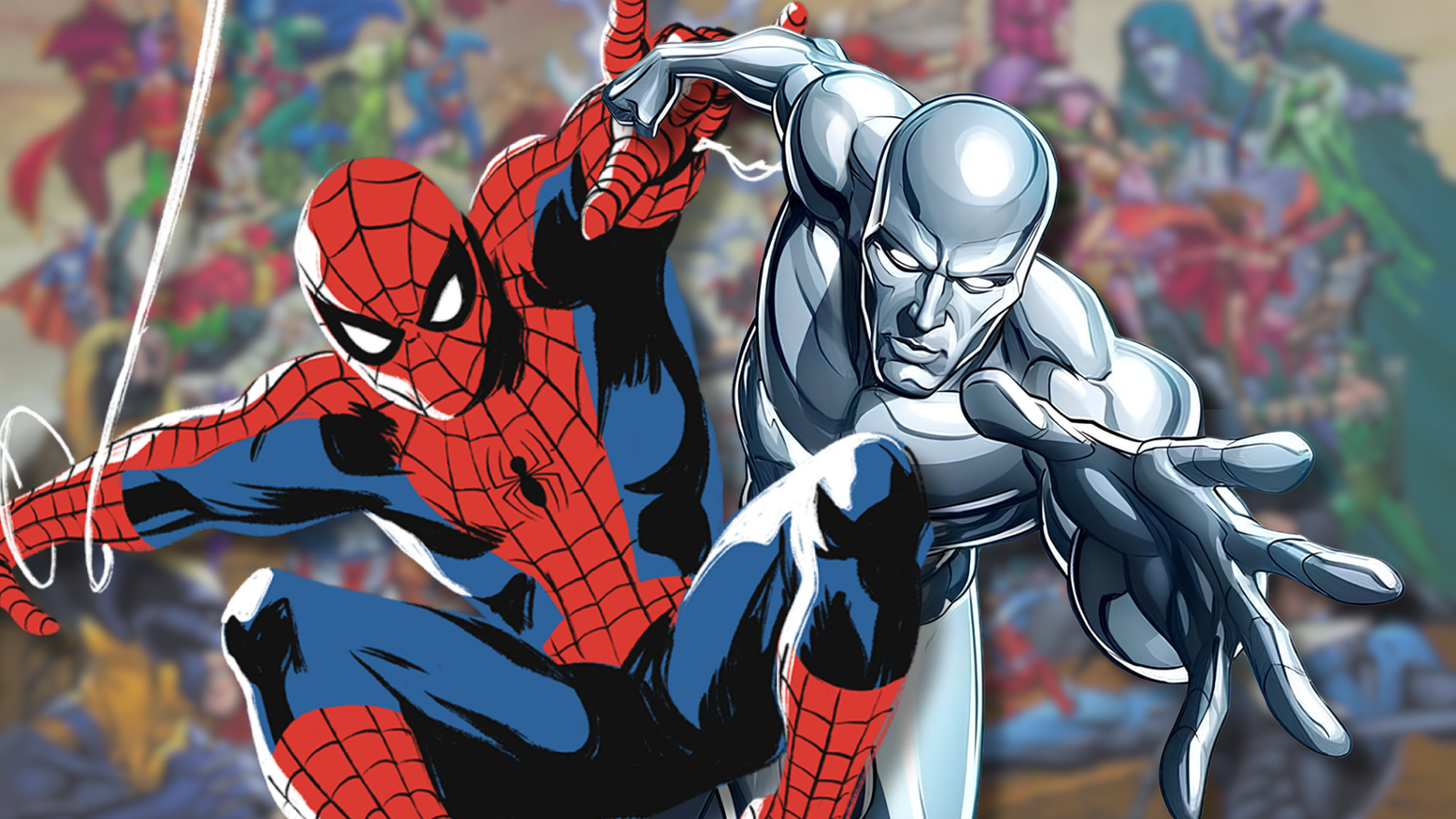
Custom Image by Casandra Ronning Published Sep 6, 2026, 12:26 AM EDT Casandra Ronning is a staff writer for Screen Rant's anime section. Since mid-2024, she has dedicated herself to expanding her knowledge and experience in the entertainment industry. She is most proud of conducting an exclusive interview with popular voice actor Stephanie Nadolny. Sign in to your ScreenRant account Stan Lee was one of the most influential creators who helped redefine the superhero genre by introducing characters who had their fair share of flaws and weaknesses. While his heroes could save cities or battle against cosmic threats, they still struggled with everyday problems, from finances to relationship trouble or other personal hardships. Whereas older heroes were presented as idealistic, Lee delivered characters who were grounded and relatable. Those types of heroes stood out to him as exceptional creations that he favored. On many occasions, he would share his admiration and appreciation for heroes with realistic struggles and flaws. He enjoyed superheroes who subverted classic tropes and pushed boundaries of what traditional heroes could look like. Lobo DC’s Lobo is far from a traditional hero, instead standing out as a chaotic antihero and intergalactic bounty hunter. He first debuted in Omega Men #3 in 1983 and quickly became known for his immense strength, regenerative abilities, near-immortality, and potential to stand against Superman. He’s arrogant, selfish, and relentlessly violent with a gleeful disregard for consequences. Stan Lee has shared that Lobo is one of his favorite DC characters and that he genuinely wished that the Main Man belonged to Marvel. Lee praised Lobo’s unapologetic, vile nature and has poked fun at DC by stating that they never knew what to do with his character. Given that Lobo is a heavily flawed and unpredictable character, it’s no wonder that Lee loved the antihero and openly expressed his admiration for him. Silver Surfer Silver Surfer, or Norrin Radd, first debuted in Fantastic Four #48 in 1966. He was once an astronomer from Zenn-La, a peaceful world untouched by conflict, unlike many other parts of the universe. However, when Galactus threatened to consume his planet, Radd sacrificed his freedom to become the cosmic entity’s herald. With the Power Cosmic he was granted, he traveled the universe seeking worlds for his master until an encounter with the Fantastic Four awakened his conscience and inspired him to defy Galactus. The Silver Surfer is one of Lee’s favorite Marvel creations. He loved that Silver Surfer could do what few other characters could as a cosmic hero, which is the ability to explore humanity from an outside perspective. Lee liked his philosophical nature and bewilderment at humanity’s tendency toward hatred when the world had everything it needed to thrive and provide for everyone. With his power and outlook on life and the universe, Silver Surfer became among Lee’s all-time favorite heroes. Black Panther Introduced in Fantastic Four #52 in 1966, T’Challa is the king and protector of Wakanda, a technologically advanced African nation that remained hidden from the outside world for thousands of years. Since his introduction, he quickly established himself as far more than a formidable warrior, as he stands out for his intelligence, authority, and refusal to bow to outside powers. Black Panther represented an especially significant achievement for Stan Lee because T’Challa completely defied the racial stereotypes that were common at the time, and Lee viewed him as a necessary and meaningful step forward. Lee envisioned him as someone who was not defined by limitations, but by extraordinary power and dignity. Before his passing in 2018, Lee even shared that he looked forward to the live-action release, and it was one of his most anticipated films. Iron Man Tony Stark first appeared in 1962 in the Tales of Suspense #39, introducing himself as a brilliant industrialist and inventor who transformed his technological expertise into a weapon against the threats he once helped create. After he suffered a devastating injury that left shrapnel near his heart, Tony Stark developed an armored life-support system that eventually evolved into the Iron Man suit. While he was initially known as a wealthy weapons manufacturer and playboy, he gradually became one of Marvel’s greatest heroes. Iron Man stood out as one of Lee’s boldest experiments in character creation as he deliberately made the hero difficult to admire. Given that Tony Stark was a weapons manufacturer during the Cold War, Lee really challenged his readers to care about someone who seemingly embodied everything they opposed. However, that arguably became his character’s greatest strength, as his capacity for change and redemption. Lee even famously shared that he created Iron Man as a dare to himself and often joked that Iron Man is the character he relates to most. The Hulk Bruce Banner is a brilliant but reserved physicist whose life completely changes after he’s exposed to massive amounts of gamma radiation. The accident leaves him with a monstrous alter ego whose strength grows alongside his anger and emotional distress, making it extremely unpredictable. First introduced in The Incredible Hulk #1 in 1962, the Hulk is one of Marvel’s most iconic and complex heroes ever created. For Stan Lee, the Hulk succeeded mainly because of the fact that his power never overshadowed his vulnerability and humanity. Inspired by Frankenstein and Dr. Jekyll and Mr. Hyde, Lee wanted to introduce a character whose circumstances made him more sympathetic than threatening, and the Hulk was often among the first heroes the creator mentioned when speaking about his favorites. Fantastic Four The Fantastic Four are not a conventional superhero team but rather a family that finds themselves in extraordinary situations, making it difficult to include one member of the team without the rest. Introduced in Fantastic Four #1 in 1961, the team consists of Reed Richards (Mister Fantastic), Sue Storm-Richards (Invisible Woman), Johnny Storm (Human Torch), and Ben Grimm (The Thing), after they gain powers from being exposed to cosmic radiation during a space mission. Their family dynamic was central to what made their stories so thrilling and relatable as they bickered, squabbled, and argued just like anybody else. Their imperfections made them feel less like idealized, untouchable superheroes and more like regular people who just so happened to possess superpowers. For Lee, that made the Fantastic Four among his favorite creations and the superhero team that saved his career. Superman DC Comics Superman made his debut in 1938 in Action Comics #1 and went on to lay the foundation for other Golden Age heroes as well as modern superheroes. He was born on the doomed planet Krypton as Kal-El before being sent to Earth, where he was raised as Clark Kent in Smallville. He’s known for his extraordinary strength, speed, flight, and near-invulnerability, standing out as an ideal hero who uses his power in the service of humanity. Stan Lee held immense admiration for Superman and his creators, acknowledging that the entire superhero industry was built on its bones. While Lee typically preferred flawed heroes, he shared time and again that he respected the character and his unbreakable morals. Stan Lee may have also had some criticisms of Superman, especially his being “too perfect,” but that never undermined his admiration and respect. Spider-Man Peter Parker made his first debut in Amazing Fantasy #15 in 1962 before launching his own iconic series, The Amazing Spider-Man. He starts out as an awkward yet intelligent teenager who unexpectedly gets bitten by a radioactive spider, granting him extraordinary abilities including climbing walls, sensing danger, and possessing superhuman abilities. Unlike many other superheroes, Peter deals with many everyday struggles, making him one of Marvel’s most relatable characters. Friendly Neighborhood Assessment · MCU Era Tom Holland'sSpider-Man Trivia 🏠Homecoming2017 ✈️Far From Home2019 🌌No Way Home2021 😈VillainsSinister… 🤖MCUAvengers THWIP! LET'S GO → 01 Before getting his own solo film, Tom Holland’s Peter Parker made his Marvel Cinematic Universe debut by being recruited by Tony Stark to help in a massive superhero conflict. In which MCU film did Holland first appear as Spider-Man? AAvengers: Age of Ultron BCaptain America: Civil War CSpider-Man: Homecoming DAvengers: Infinity War ✓ Correct! Tom Holland first appeared as Spider-Man in Captain America: Civil War (2016), where Tony Stark visits Peter in Queens and recruits him for the airport battle against Team Cap. His quippy, starstruck portrayal instantly won over audiences. ✗ Web miss! The answer is Captain America: Civil War. Holland debuted in the 2016 film before Homecoming (2017). He was recruited by Tony Stark for the iconic airport fight scene, stealing Captain America’s shield with his webs in one of the film’s most memorable moments. NEXT → 02 In Spider-Man: Homecoming, Peter faces a blue-collar salvage contractor who turned to arms dealing after being shut out of the Chitauri cleanup by Damage Control. Using an alien-tech wingsuit, he becomes one of Spider-Man’s most grounded villains. Who is he? AThe Vulture (Adrian Toomes) BThe Shocker (Herman Schultz) CThe Scorpion (Mac Gargan) DThe Tinkerer (Phineas Mason) ✓ Correct! Adrian Toomes, played brilliantly by Michael Keaton, is the Vulture — a working-class father who builds a criminal empire selling alien-derived weapons. The twist that he’s the father of Peter’s date Liz is one of the MCU’s best surprises. ✗ Web miss! The answer is The Vulture (Adrian Toomes). The Shocker and Tinkerer are his henchmen in the film, and Scorpion (Mac Gargan) only briefly appears. Toomes is the main antagonist who personally confronts Peter in the unforgettable car ride scene. NEXT → 03 Tony Stark built Peter a high-tech suit loaded with features Peter didn’t even know about, including an AI assistant that helps him in combat, provides tactical analysis, and even gives dating advice. What name does Peter give this AI? AFriday BEdith CKaren DJocasta ✓ Correct! Peter names his suit’s AI “Karen,” voiced by Jennifer Connelly. She assists him with web shooter modes, reconnaissance, and even his love life. Friday is Tony Stark’s AI, and E.D.I.T.H. is the Stark satellite system that appears in Far From Home. ✗ Web miss! The answer is Karen. Friday is Tony Stark’s personal AI, E.D.I.T.H. is the Stark defense satellite Peter inherits in Far From Home, and Jocasta is an AI from the comics. Karen, voiced by Jennifer Connelly, is Peter’s suit assistant throughout Homecoming. NEXT → 04 In Spider-Man: Far From Home, Peter encounters a seemingly heroic figure who claims to be from an alternate Earth, battling elemental creatures across Europe. In reality, he’s a disgruntled former Stark Industries employee using advanced holographic drones. What is his real name? AWilliam Ginter Riva BAldrich Killian CJustin Hammer DQuentin Beck ✓ Correct! Quentin Beck, played by Jake Gyllenhaal, is Mysterio — a master of illusion who uses Stark Industries’ B.A.R.F. holographic technology and weaponized drones to fabricate the Elementals and pose as a hero. His final act of revenge shapes the entire third film. ✗ Web miss! The answer is Quentin Beck. William Ginter Riva is one of Beck’s team members, Aldrich Killian is the villain of Iron Man 3, and Justin Hammer is from Iron Man 2. Beck is Mysterio, the illusionist who manipulated Peter’s trust across Europe. NEXT → 05 In one of the MCU’s most shocking mid-credits scenes, J. Jonah Jameson broadcasts doctored footage from Mysterio’s final moments that completely upends Peter Parker’s life. What does this broadcast reveal to the entire world? AThat Spider-Man killed Mysterio in cold blood BThat Spider-Man is Peter Parker CThat Spider-Man is a Skrull impersonator DThat Spider-Man commanded the drone attack on London ✓ Correct! Mysterio’s doctored footage, broadcast by J. Jonah Jameson (J.K. Simmons reprising his iconic role), exposes Spider-Man’s identity as Peter Parker to the entire world. This revelation drives the entire plot of No Way Home as Peter desperately seeks to undo the damage. ✗ Web miss! The answer is that Spider-Man is Peter Parker. While the footage also frames Spider-Man for the London drone attack, the earth-shattering reveal is Peter’s unmasked identity being broadcast globally by The Daily Bugle’s J. Jonah Jameson. NEXT → 06 With his identity exposed and his loved ones under threat, Peter seeks help from a powerful sorcerer to cast a spell that would make the world forget he is Spider-Man. Peter’s constant modifications to the spell cause it to fracture the multiverse. Which sorcerer casts this spell? AWong BWanda Maximoff CDoctor Strange DKarl Mordo ✓ Correct! Doctor Strange (Benedict Cumberbatch) casts the memory-wiping spell at Peter’s request, but Peter keeps asking for exceptions — for MJ, Ned, May, and Happy to still remember him. These constant changes corrupt the spell and tear open the multiverse, pulling in villains from other Spider-Man universes. ✗ Web miss! The answer is Doctor Strange. While Wong is the Sorcerer Supreme and actually warns Strange against it, it is Stephen Strange who agrees to cast the spell. Wanda’s multiverse interference occurs in Multiverse of Madness, not here. NEXT → 07 Throughout all three films, Peter’s loyal best friend serves as his “guy in the chair,” helping with tech support and keeping his secret. In No Way Home, this character even discovers he can open magical portals using a Sling Ring. Who is Peter’s best friend? ANed Leeds BFlash Thompson CHarry Osborn DMiles Morales ✓ Correct! Ned Leeds, played by Jacob Batalon, is Peter’s best friend and self-proclaimed “guy in the chair.” He discovers Peter’s secret identity in Homecoming, supports him across all three films, and in No Way Home he accidentally uses Doctor Strange’s Sling Ring to open portals to other Spider-Men. ✗ Web miss! The answer is Ned Leeds. Flash Thompson is Peter’s rival and bully who ironically idolizes Spider-Man. Harry Osborn is Peter’s friend in the Raimi and Webb films but doesn’t appear in Holland’s trilogy. Miles Morales is only hinted at. Ned is the irreplaceable “guy in the chair.” NEXT → 08 At the emotional climax of No Way Home, Peter makes an enormous personal sacrifice to save the multiverse. Doctor Strange completes the spell, and when it takes effect, Peter is left completely alone. What does the final spell do? AIt sends Peter to an alternate universe where no one knows him BIt erases Spider-Man from existence entirely CIt removes Peter’s spider powers permanently DIt makes everyone in every universe forget who Peter Parker is ✓ Correct! The final spell makes every person in every universe forget that Peter Parker exists. MJ, Ned, Happy, the Avengers — everyone. Peter visits MJ at the coffee shop afterward but decides not to re-introduce himself, choosing to protect them. He starts over completely alone, sewing his own suit in a small apartment. ✗ Web miss! The answer is that everyone forgets who Peter Parker is. The spell doesn’t erase Spider-Man — people still know the hero exists — but nobody remembers Peter Parker the person. This devastating sacrifice means MJ, Ned, and even Happy Hogan have no memory of him at all. REVEAL MY SCORE → Assessment Complete Your Spider-Sense Rating / 8 Are you an Avenger — or just a friendly neighborhood bystander? ↻ SWING AGAIN For Stan Lee, Spider-Man was the creation that broke the mold of perfect, god-like heroes that dominated the industry at the time. He allowed Peter to make mistakes, worry about money, suffer losses, deal with grief, and, overall, rarely have life simply fall into place, but that’s precisely what made him special. Stan Lee often shared that Spider-Man was his favorite Marvel hero because he personally related to him the most and loved how he always continued trying no matter what life threw at him.
8 Superheroes Stan Lee Considered Absolutely Perfect
Full Article
Original Source
Read the full article at Screenrant →KhanList aggregates and links to publicly available news content. We do not host full articles from third-party sources. Always verify important information with original sources.