
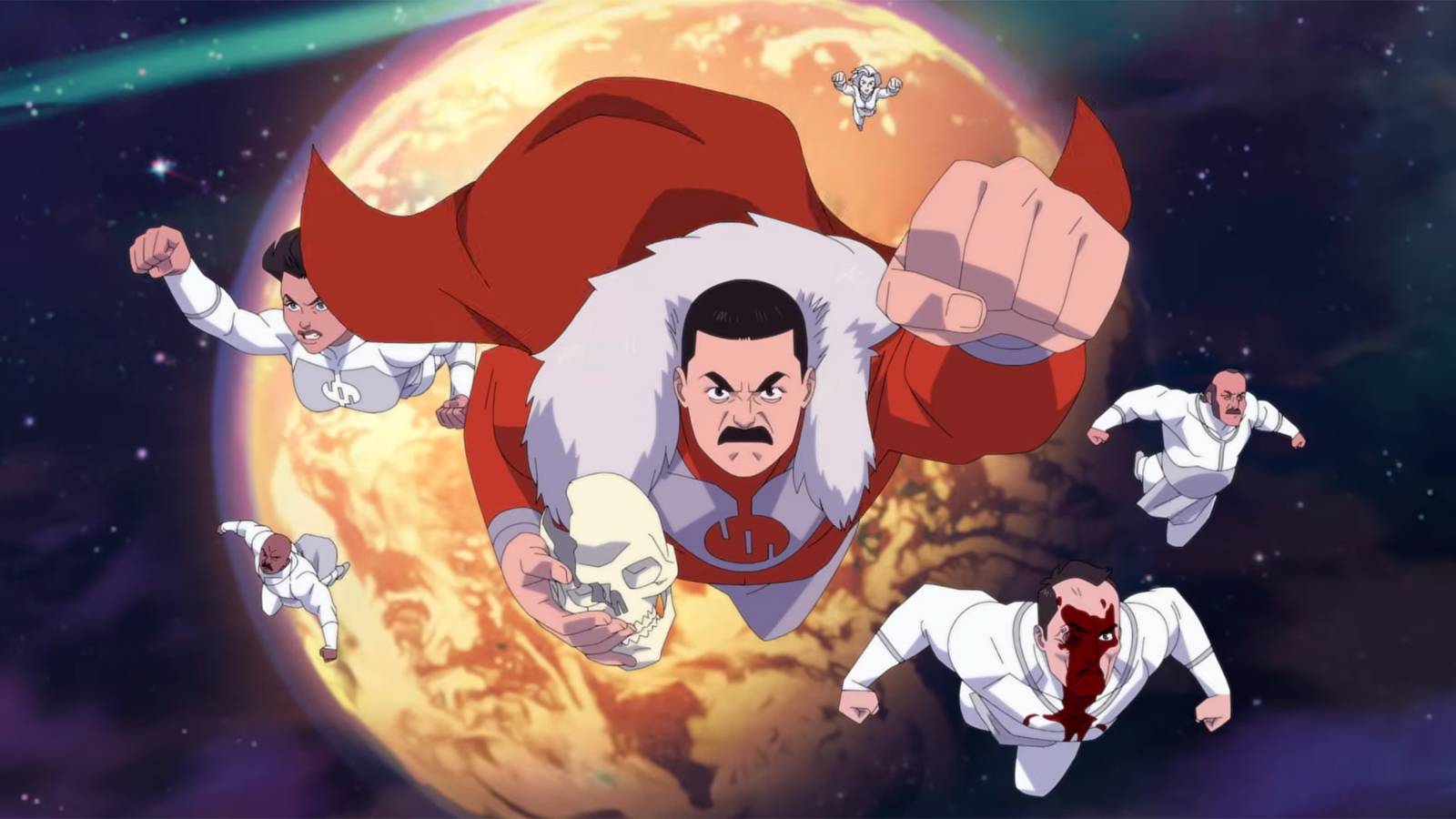
Most of the comic book genre’s iconic villains are decades old. The Joker, Doc Ock, Thanos, Darkseid, and Lex Luthor were all created between the 1940s and 1970s. Because of this, they tend to overshadow fresher fiends given life in the 2010s. Some of these are alternate versions of everyone’s beloved heroes, while others are original creations of acclaimed teams like Scott Snyder and Greg Capullo. Together, they redefined modern superhero storytelling and prove that the 2010s didn't just recycle nostalgia; they birthed a terrifying new generation of icons. Unsurprisingly, Batman's extensive rogues' gallery commands a fair share of the greatest comic book villains since the 2010s, largely because Gotham’s grounded, psychological horror allows writers like Scott Snyder to craft deeply personal threats that test Bruce Wayne’s intellect, morality, and sanity. The Batman Who Laughs “The Darkest Knight,” or "DC's most controversial Batman" as some call him, Scott Snyder and Greg Capullo’s creation originally debuted in Dark Days: The Casting. But fans would remember his actual appearance to be in September 2017’s Dark Nights: Metal #2. The Batman Who Laughs is essentially a fusion of Bruce Wayne and the Joker. This dark version of Bruce Wayne from Earth-22 pairs Bruce’s intellect with the Joker’s malice. He came about after Batman kills the Joker, and a toxin from the dying latter’s heart disrupts the former’s psyche. Wielding Dark Metal batarangs that corrupt whoever they hit, this version has no restrictions against killing. In fact, he slaughters the entire Bat-Family and the Justice League. The DC faithful have yet to see this story brought to the silver screen, despite it quickly becoming DC’s biggest breakout villain since the 2010s and headlining major crossovers like Death Metal. The Batman Who Laughs would be a bold attempt should the management at Warner Bros. and DC Studios greenlight a live-action film. DC could surely use a Bat-Universe horror film. The Court of Owls Still within the Batman lore, the Court of Owls is another brainchild of Scott Snyder and Greg Capullo. Mention of this secretive society of Gotham’s wealthiest elite first surfaced in Batman (Vol. 2) in 2011. After appearing only in old photographs in issue #3, the masked members finally stepped out in the flesh in issue #6 in February 2012. The Court of Owls are an urban legend in Gotham City. The masked members manipulate the city from the shadows through corruption and powerful assassins known as Talons. Many cases can be made for The Court of Owls being amongst the greatest comic book villains of the 2010s. Rather than relying on brute force, the Court shatters Batman’s egoistic belief that he knows Gotham. Gorr the God Butcher Gorr the God Butcher was gifted to the Marvel Comics audience by Jason Aaron and Esad Ribić in November 2012’s Thor: God of Thunder #2. As his name suggests, Gorr is on a mission to exterminate the gods wherever and whenever he finds them, achieving his goal with the powerful symbiote All-Black the Necrosword. Gorr’s grudge is more than justified: he watched his family starve on a barren world while his prayers went unanswered. That drives his haunting question: are gods worthy of worship if they abandon the suffering? Christian Bale brought that dilemma to the big screen as Thor’s nemesis in Gorr’s live-action debut, Thor: Love and Thunder. Knull Knull properly debuted in 2018’s Venom #3 courtesy of Donny Cates and Ryan Stegman. Nihilistic, sadistic, authoritarian, and relentless describe Knull. He is to Celestials what Gorr is to gods. In other words, Knull also wields All-Black the Necrosword and is devoted to killing Celestials. He is feared across the entire Marvel Universe because he commands an endless legion of symbiote dragons, possesses the primordial power to snuff out stars, and effortlessly corrupts cosmic deities. Knull’s lore marries cosmic horror with street-level ethos in a way never seen before. Pre-Knull, symbiotes were mostly confined to Spider-Man and Venom’s grounded, earthly struggles. Cates and Stegman retroactively elevated that entire mythology into a shard of an ancient god of the abyss. Mr. Bloom Mr. Bloom is the nightmare Gotham gets when Batman abandons the cowl, and Scott Snyder and Greg Capullo get bored. Debuting in Batman (vol. 2) #43 in August 2015, his writers affectionately dub him “anti-Joker” because of his anonymity. Bloom’s twisted “justice” is as unsettling as his gaunt, weed-like look. He sends power-granting seeds throughout Gotham’s underworld, laced with radiation potent enough to unalive on remote activation; every such activation feeds his own shapeshifting strength and extreme cellular regeneration. Of course, Bruce Wayne is forced out of his quiet life and returns to reclaim the mantle from Commissioner Jim Gordon, who couldn’t beat Bloom alone. Together, with Bruce in a giant robotic suit, they bring the villain down. A Mr.Bloom live-action Clayface-esque horror offering would be music to many DC fans' ears. Injustice Superman “Superman turned rogue” may be an already tiring concept in DC lore. It still doesn’t make Injustice Superman less of one of the genre's most terrifying powerhouses: he is largely responsible for popularizing the modern "evil Superman" trope across mainstream media. Injustice Superman debuted in January 2013 in the prequel comic Injustice: Gods Among Us #1, shortly before the hit video game released in April. His beginning is one of the saddest of any alternate character, and it unsurprisingly starts with the Joker. The Clown Prince of Crime tricks Superman into killing a pregnant Lois Lane, whose heartbeat was linked to a nuclear bomb that subsequently destroys Metropolis. Shattered by grief, Superman executes the Joker and establishes the One Earth Regime, enforcing global peace through brutal authoritarianism. Thragg Injustice Superman aside, no comic book villain of the 2010s can out-muscle Thragg. This Image Comics character debuted in Invincible Returns #1 in April 2010 and was created by writer Robert Kirkman and artist Ryan Ottley. As a product of the Viltrumite Empire, he was selectively bred as a war project, a mandate he delivered on throughout the decade. With his superior combat mastery, he survived a brutal multi-day duel against Battle Beast and also bred an army of half-Viltrumite children to use as disposable weapons. His final deathmatch with Mark Grayson inside a star cemented his legacy as a terrifying force. It’s a title few villains of the 2010s can match. Sadly, Thragg is unlikely to see Invincible Season 5. The Black Order The Black Order consists of Corvus Glaive, Proxima Midnight, Supergiant, Black Dwarf, and Ebony Maw, generals that ruthlessly sack civilizations to collect tribute for their master, Thanos. Crafted by Jonathan Hickman and Jerome Opeña, they debuted in 2013’s New Avengers #8 2013 and go by other names: the Cull Obsidian or the Children of Thanos, as in Avengers: Infinity War. For the Avengers, they present an omega-level threat with distinct specialties. Proxima Midnight is a superhuman duelist, Ebony Maw is a manipulative mind controller, and Black Dwarf is an unstoppable brute. Rounding out the elite squad are Supergiant, a psychic parasite, and Corvus Glaive, Thanos’s cunning military tactician. What many fans do not realize is that Hickman designed each lieutenant to embody a specific primal fear. Corvus represents death, and Ebony Maw personifies psychological manipulation, while Supergiant reflects the terror of losing one's mind. Meanwhile, Black Dwarf embodies sheer physical overwhelm, and Proxima Midnight represents inescapable, lethal pursuit.
8 Of The Greatest Comic Villains Created In The 2010s
Full Article
Original Source
Read the full article at Screenrant →KhanList aggregates and links to publicly available news content. We do not host full articles from third-party sources. Always verify important information with original sources.