
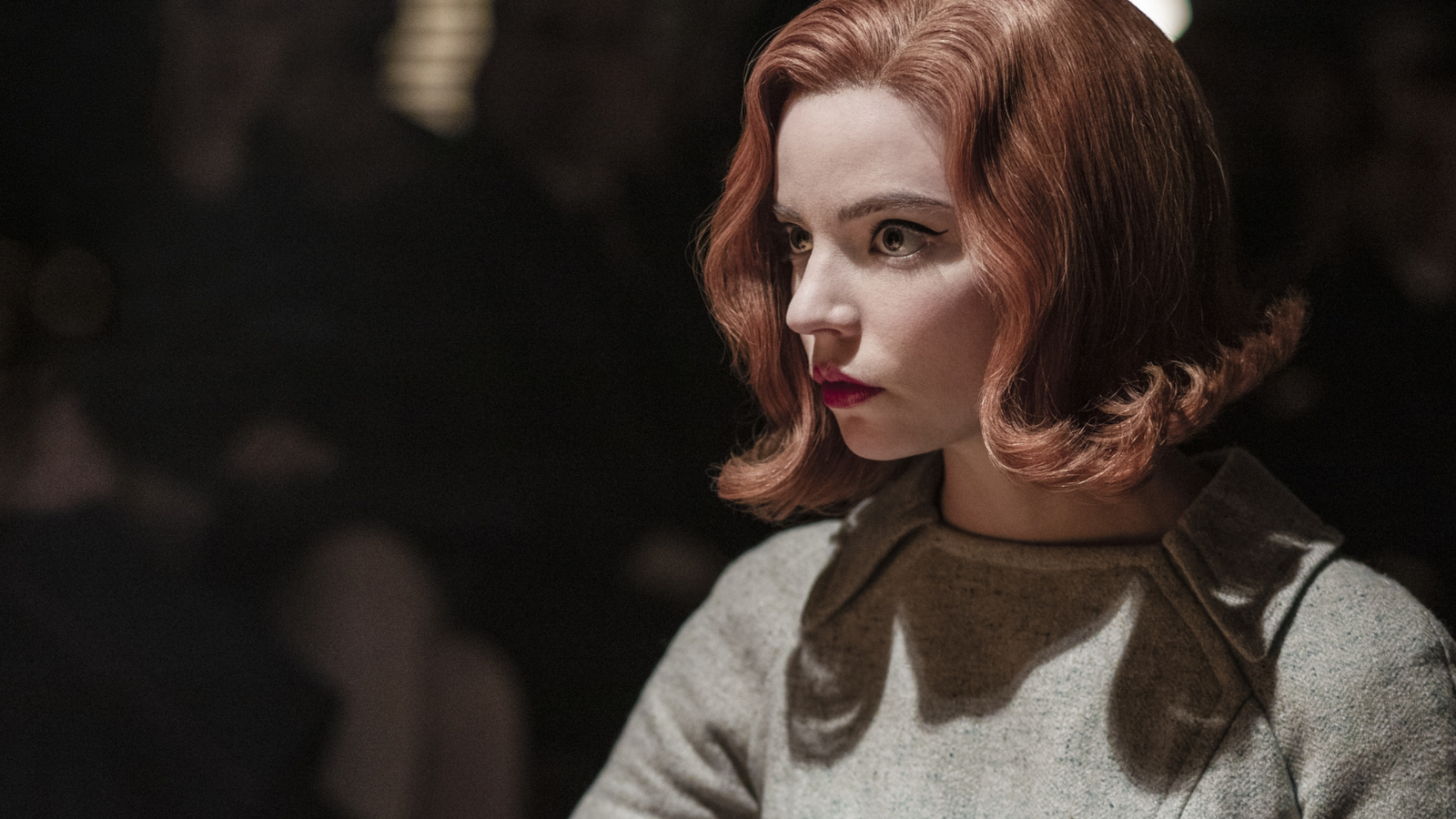
Image via Netflix Published Sep 25, 2026, 12:07 AM EDT Daniel is a 27-year-old List Writer for Collider living in the south suburbs of Chicago, Illinois. As an avid film buff, he watches and analyzes many films and TV shows, especially in the horror genre, and regularly attends movie screenings. Sign in to your Collider account Spoiler Alert: This list contains spoilers for multiple shows.What is it about miniseries that just fascinates us so? Is it their sharp, smartly contained plots, their fast-paced storytelling, or memorable characters? A lot goes into making a limited-run show, as they have mostly around two to eight episodes to hook audiences into why it's worth the investment and what is so special about the story. Because of that, most compelling miniseries have been praised for having a perfect beginning, middle, and especially an end, perfectly wrapping these short-lived compelling tales in a tight package. The endings, particularly, are the most important parts to nail, not just in any miniseries, but in all of entertainment. The finales are vital as they wrap up the story in a satisfying way and give a payoff to the audience's investment. Without these two crucial points, it could turn any good show into a near-unwatchable disaster. Thankfully, we'll be looking at eight notable mini-shows that excelled because of their endings. These were more than satisfying and enhanced these shows to extreme heights of acclaim. 'The Queen's Gambit' (2020) Image via Netflix Proving to be one of Netflix's most riveting miniseries of this decade, Scott Frank's gripping sports drama The Queen's Gambit coupled a complex character study with flawless writing and acting across seven incredible hour-long episodes. Starring Anya Taylor-Joy, it's an emotional tale following one woman, Beth Harmon, and her journey towards self-respect and redemption as she struggles to overcome her substance and alcohol abuse to become a master chess player. It's quite a touching drama, full of heartbreak, determination, and inspiration, that isn't heavy-handed or fumbles its messages about the dangers of addition. Its final episode is perhaps its greatest achievement, finishing with Beth overcoming her own trauma and maintaining her addition, winning the world chess champion without the need for her bad habits, and is last seen playing chess in a Moscow park, showing she's finally in a clear state. It's hopeful, optimistic, and feels perfectly warranted. We followed Beth through her struggles and finally got to feel a sense of relief and acceptance alongside her. 'Station Eleven' (2021–2022) Image via HBO Max A nearly forgotten, underrated HBO gem, Patrick Somerville's thrilling sci-fi miniseries Station Eleven is a compelling watch that deserves more appreciation. Based on a novel by author Emily St. John Mandel, this brilliant page-to-screen adaptation takes ten episodes to draw you in, and it does this remarkably well. Mackenzie Davis leads this post-apocalyptic tale, following a small group of survivors in a world devastated 20 years after a deadly flu pandemic. It's a unique tale of survival with touching character drama and a few emotionally charged moments. Its conclusion notably wraps up every intertwining character and storyline nicely without any loose ends, finishing on a somewhat happy note as the two main characters survive and reunite years after believing the other to be dead. Station Eleven delivers its story effectively and finishes decisively with a finale that's simple, emotional, and well worth the time spent watching the rest of the series. 'Unbelievable' (2019) Image via Netflix A shocking true-story miniseries, Netflix's Unbelievable is a devastating and powerful crime drama about the pursuit of real justice and moving on from past trauma. It's a well-paced, strikingly realistic, and expertly acted show that instantly hooks you in with its heartbreaking premise. Toni Collette and Merritt Wever star as detectives fighting against systemic failure and saving a young woman (Kaitlyn Dever) accused of lying about being sexually assaulted. It's not an easy miniseries to watch, especially as it depicts the dark and worrying truths about the justice system and its flaws, as well as the disturbing way it handles the details of the assault. Yet, despite the darkness of this incredibly bleak series, it ends on at least a brighter note, showing the detectives finally finding the assailant and seeing him put to justice, while the girl's reputation is cleared. In its eight episodes, we follow a poor woman put through unspeakable turmoil, but it's perfect to see her finally get her justice after fighting so hard to get it. 'Sharp Objects' (2018) Image via HBO Truly, one of the most shocking mysteries of modern television, HBO's limited series Sharp Objects has been one of the channel's shining bright spots recently thanks to its rug-pulling reveals and brilliant tension. Based on a Gillian Flynn novel, this miniseries is a mystery crime-lover's delight, a suspenseful and dramatic modern masterpiece that can't be ignored. Starring Amy Adams in a career highlight, it sees her as a recovering alcoholic journalist obsessed with finding a local killer who murdered two girls. With a slow but effective pace, flawless writing, sharp direction, and genuine performances, Sharp Objects is HBO's most award-worthy recent hit, and one that fans can't seem to get enough of, especially when talking about its finale. In one of the most shocking TV plot twists of the 2010s, it's revealed that Adams' protagonist, Camille Preaker, discovers the horrible truth that her young sister Amma (Eliza Scanlen) was the culprit, killing the girls out of a fit of jealousy. It's a startling gut-punch that comes straight out of left field, and then fades to black and the credits roll without giving the audience enough time to take in the horror. It's a perfect send-off to an already unpredictable and bleak story. Collider Exclusive · Universe Personality Quiz Which Iconic Universe Do You Belong in the Most? Star Wars · Lord of the Rings · Harry Potter · Game of Thrones · Star Trek Five legendary universes. Five completely different visions of what the world could be — or already was. One of them is the world your instincts, your values, and your particular way of existing were built for. Eight questions will tell you which one. 🚀Star Wars 💍Lord of the Rings 🧙Harry Potter 👑Game of Thrones 🖖Star Trek FIND YOUR UNIVERSE → 01 What gives your life its deepest sense of meaning? Every universe is built around a different answer to this question. ABeing part of something larger than myself — a cause, a rebellion, a fight for freedom that outlasts me. BThe journey itself — the places I'll go, the companions beside me, the world I'll discover on the way. CLearning — unlocking what I'm capable of, understanding the world's hidden mechanics, growing into something more. DLegacy — the name I leave behind, the power I build, the mark I make before the world moves on without me. EUnderstanding — exploring what exists beyond the horizon and asking what it means to be alive in a universe this vast. NEXT QUESTION → 02 Which kind of world do you most want to inhabit? The environment shapes who you become. Choose carefully. AA galaxy of planets, each with its own culture — connected by conflict, trade, and the Force. BAncient lands of breathtaking beauty, deep history, and a creeping darkness at the edges. CA world hidden inside our own — full of wonder, community, and magic waiting to be learned. DA brutal, beautiful continent where power is everything and every alliance is a calculation. EA future where humanity has reached the stars — and must decide what kind of species it wants to be. NEXT QUESTION → 03 How do you prefer your conflicts resolved? The shape of a world's conflicts tells you everything about its soul. AThrough sacrifice and courage — someone has to make the impossible choice so others don't have to. BThrough fellowship — the impossible becomes possible when the right people walk the same road. CThrough growth — confronting what you fear, understanding what you lack, and becoming equal to the challenge. DThrough strategy — outthinking, outmaneuvering, positioning yourself so the outcome was never in doubt. EThrough dialogue — finding the third option, the peaceful resolution, the answer that doesn't require a body count. NEXT QUESTION → 04 Who do you want beside you when things get difficult? Your ideal companions reveal the world you were made for. AA small crew — a pilot, a rogue, a warrior — each broken in their own way, unbeatable together. BA fellowship of different kinds of people, bound by purpose and deepened by the long road. CFriends who grew up alongside me — who knew me before I knew myself, and stayed anyway. DAllies whose loyalty I've earned — and tested — and whose ambitions align with mine, for now. EA crew of brilliant, curious, principled people from every corner of known space. NEXT QUESTION → 05 What is your relationship with power? How you seek, wield, or resist power is the map of who you are. AI want to use it to protect — and I'm terrified of what I might become if I'm not careful. BI distrust it. The most important power in this story is the courage to give it up. CI want to earn it — through knowledge, through effort, through becoming someone worthy of it. DI want to wield it. Preferably before someone else decides to wield it against me. EI want to understand it — its structures, its limits, its ethical dimensions. Power without accountability is the real threat. NEXT QUESTION → 06 How does your universe treat good and evil? A world's moral architecture tells you more about it than any map. AThere is a dark side and a light side — and the choice between them is always present, always personal. BEvil is real and ancient and patient — and goodness, however small, is the only thing that can undo it. CGood and evil are real, but they live inside people — and people are complicated, always capable of both. DGood and evil are mostly a matter of perspective and proximity. Power is the only honest currency. EEvil is usually the result of ignorance, fear, or broken systems — and understanding it is the first step to solving it. NEXT QUESTION → 07 What role would you naturally fall into? Every universe has archetypes. Which one fits you without trying? AThe reluctant hero — ordinary origins, extraordinary moment, changed forever by the choice to act. BThe unlikely carrier — the one nobody expected to matter most, quietly bearing the weight of everything. CThe student — not yet who I'll become, learning through every mistake, growing into something the world needs. DThe player — sharp enough to see the game for what it is, ambitious enough to try to win it. EThe explorer — drawn to the unknown, driven by curiosity, most alive when standing somewhere no one has stood before. NEXT QUESTION → 08 What do you ultimately believe about the future? The answer to this is the clearest window into which universe already lives inside you. AThat hope is real — that even in the darkest galaxy, a new hope is always possible. CThat even the smallest person can change the course of the future, if they have the courage to try. CThat love and friendship and doing what's right will matter in the end, even when everything says otherwise. DThat the wheel keeps turning — that power shifts, winters end, and what endures is those willing to fight for it. EThat humanity — or whatever we become — is capable of extraordinary things, if we choose to be. REVEAL MY UNIVERSE → Your Universe Has Been Chosen You Belong In…Your answers point to the iconic universe your values, your instincts, and your particular way of seeing the world were built for. This is where you would find your people — and your purpose. Star WarsYou believe in the cause — in the idea that freedom is worth fighting for even when the odds are impossible and the empire is vast. You are drawn to the moral clarity of a universe where hope itself is a form of resistance. You'd find your people in the Rebellion — a ragtag coalition of true believers held together by conviction more than resources. Star Wars is fundamentally a story about ordinary people choosing to matter in an extraordinary conflict — and that is exactly your kind of story. The Force may or may not be with you. But the will to use it for something larger than yourself certainly is. Lord of the RingsYou understand, in the deepest part of yourself, that the journey matters as much as the destination — and that the world's beauty is worth protecting even at great cost. Middle-earth is a world of ancient wonder, deep friendship, and a darkness that only retreats when enough small acts of courage accumulate. You would thrive here because you value the fellowship more than the glory — the road more than the arrival. Tolkien's universe rewards patience, loyalty, and the willingness to carry something heavy across a very long distance. Those are not burdens to you. They are simply how you move through the world. Harry PotterYou believe that love, loyalty, and doing what's right are not naive sentiments — they are the most powerful forces in any world, magical or otherwise. The Wizarding World is a place of wonder hidden in plain sight, where learning is transformative and the bonds you form at school follow you into every battle. You would flourish here because you take both the magic and the friendships seriously — and you understand that one without the other is incomplete. Harry Potter's universe ultimately rewards those who choose to stand for something even when standing is terrifying. That choice — made quietly, without guarantee — is something you understand completely. Game of ThronesYou see the world clearly — its power structures, its hypocrisies, its brutal arithmetic — and you are not paralysed by that clarity. You use it. Westeros is a world that rewards intelligence, adaptability, and the willingness to understand that every alliance is also a negotiation. You would survive here — possibly thrive here — because you don't confuse the world as it is with the world as you'd like it to be. Game of Thrones is a story about what happens when the idealists and the realists collide. You are sharp enough to know which one lasts longer. Winter always comes. You are already prepared. Star TrekYou believe the future is worth building — that curiosity, cooperation, and the expansion of understanding are not just ideals but the most practical path forward for any civilisation. Star Trek is a universe where the questions matter as much as the answers, and where encountering something utterly alien is cause for wonder rather than fear. You would belong here because you are fundamentally optimistic about what intelligence and decency can achieve — while being honest about how hard that achievement is. The Federation is the universe's most ambitious thought experiment: what if we actually got better? You don't just hope that's possible. You think it's the only thing worth working toward. ↻ RETAKE THE QUIZ 'Chernobyl' (2019) Image via HBO A tense, eerie, and utterly unbelievable retelling of a horrible human-made disaster, HBO's Chernobyl is without a doubt one of the most disturbing and raw miniseries of the 21st century. It's a show packed with perfection, featuring top-notch direction, writing, and performances from seasoned A-listers at the top of their game. Based on the real-life Chernobyl nuclear power plant explosion in the 1980s Soviet Union, it follows several bureaucrats and scientists desperately racing to clean up the mess and then struggling to preserve the truth of what really caused it to happen. It's at first a series about tragedy that explores the many lives ruined by this costly and unnecessary disaster, showing who was affected the worst. And then it explores how the government tried to cover up the calamity, and how those who fought for the truth strove to never let this happen again. Though the ending is very loose to history, as is much of the show, for that matter, it still gives a basic understanding that exposes how political involvement and negligence ultimately doomed Chernobyl from the start. 'Adolescence' (2025) Stephen Graham and Jack Thorne's heartbreaking limited crime drama Adolescence has been hailed as Netflix's most acclaimed, unforgettable miniseries of this decade so far. It's an absolute gut-puncher and a remarkable exploration into psychology and family toxicity, starring Graham as a struggling father shocked and devastated when he learns his thirteen-year-old son, Jaime (Owen Cooper), commits a horrible murder, leading his family down a hard road as they deal with the fallout. It's a solid, heavily dramatic, and character-driven miniseries, anchored by a nuanced performance by newcomer Owen Cooper, and elevated by a somber, utterly devastating finale. Its conclusion is arguably its crowning achievement, following the protagonist, Eddie Miller (Graham), as he looks around his son's room, crying after learning the news that Jamie is changing his plea to guilty after professing his fake innocence for so long. It's a long and drawn-out moment, highlighted by Graham's remarkable talents, as he perfectly acts as a father utterly ruined by who he's unintentionally turned his son into. Truly, hardly any miniseries ends with a bigger downer than this. 'Midnight Mass' (2021) Image via Netflix Actually, there's just one more heart-wrenching ending to discuss, and that's in the breakout Netflix horror series Midnight Mass. Created by filmmaker Mike Flanagan, this monster horror drama became one of the early 2020s biggest standouts for its well-crafted slow-burn approach and compelling character drama. Starring Flanagan's wife and frequent collaborator Kate Siegel, the series explores the meaning of life, the cruelty of human behavior, and what awaits us in the afterlife as it follows the residents of an isolated small island community sinisterly changing when a mysterious new priest (Hamish Linklater) arrives with a dark key for longevity. It's a slow-paced, excellent escalation of terror that has affirmed Netflix as the home for horror lovers in the 2020s. Midnight Mass delivers great performances and exceptional scares that will never leave our minds, and the ending is definitely the biggest strength. After it's revealed that the priest has introduced a centuries-old angel, later revealed to be a vampire, into the community, the creature corrupts the town, turning most of the residents into the undead. Yet, after massacring most of the living residents, the newly turned vampires surrender themselves to being burned in the morning sunlight rather than spread this evil to the world. It's a tear-jerking moment, coupled with equally depressing music, as almost every character we've followed in this show perishes painfully in the sun. 'Band of Brothers' (2001) Image via HBO Now, at the end of it all, we have to talk about the compelling ending of what many fans and critics agree is the greatest miniseries of all time: Band of Brothers. The most captivating and intense war drama ever brought to the small screen, this ten-part HBO miniseries catapulted the channel into becoming the leading pioneer of creating cinematic limited shows. Based on a true story, it follows the brave men of Easy Company, a paratrooper regiment of the 101st US Airborne, as they fight in some of the most iconic European battles during WWII. Featuring the greatest visuals, the most riveting acting, and the most graphic violence in television history, it is no surprise Band of Brothers would also have a perfect conclusion. Its final chapter, Points, shows the survivors of Easy Company during their stay in the picturesque Austrian countryside as the war finally comes to an end. As the main protagonist, Major Winters (Damien Lewis), narrates how the rest of his men lived their best lives after the war, he ends up wondering what life would have been like for the men he'd lost in battle. It's a poignant, epic finale with a strong message to never forget the fallen men who gave their lives fighting tyranny in WWII. It's emotional, unforgettable, and without a doubt, deservingly takes the final spot on this list. Band of Brothers Release Date 2001 - 2001 Network HBO Showrunner Steven Spielberg, Tom Hanks Directors David Frankel, David Nutter, Mikael Salomon, Phil Alden Robinson, Richard Loncraine, Tom Hanks Writers Bruce C. McKenna, Graham Yost, John Orloff Main Genre War Seasons 1 Producers Erik Bork, Erik Jendresen, Gary Goetzman, Mary Richards, Stephen Ambrose, Tony To Streaming Service(s) MAX Executive Producer(s) Steven Spielberg
8 Miniseries Endings That Are Genuine Masterpieces
Full Article
Original Source
Read the full article at Collider →KhanList aggregates and links to publicly available news content. We do not host full articles from third-party sources. Always verify important information with original sources.