
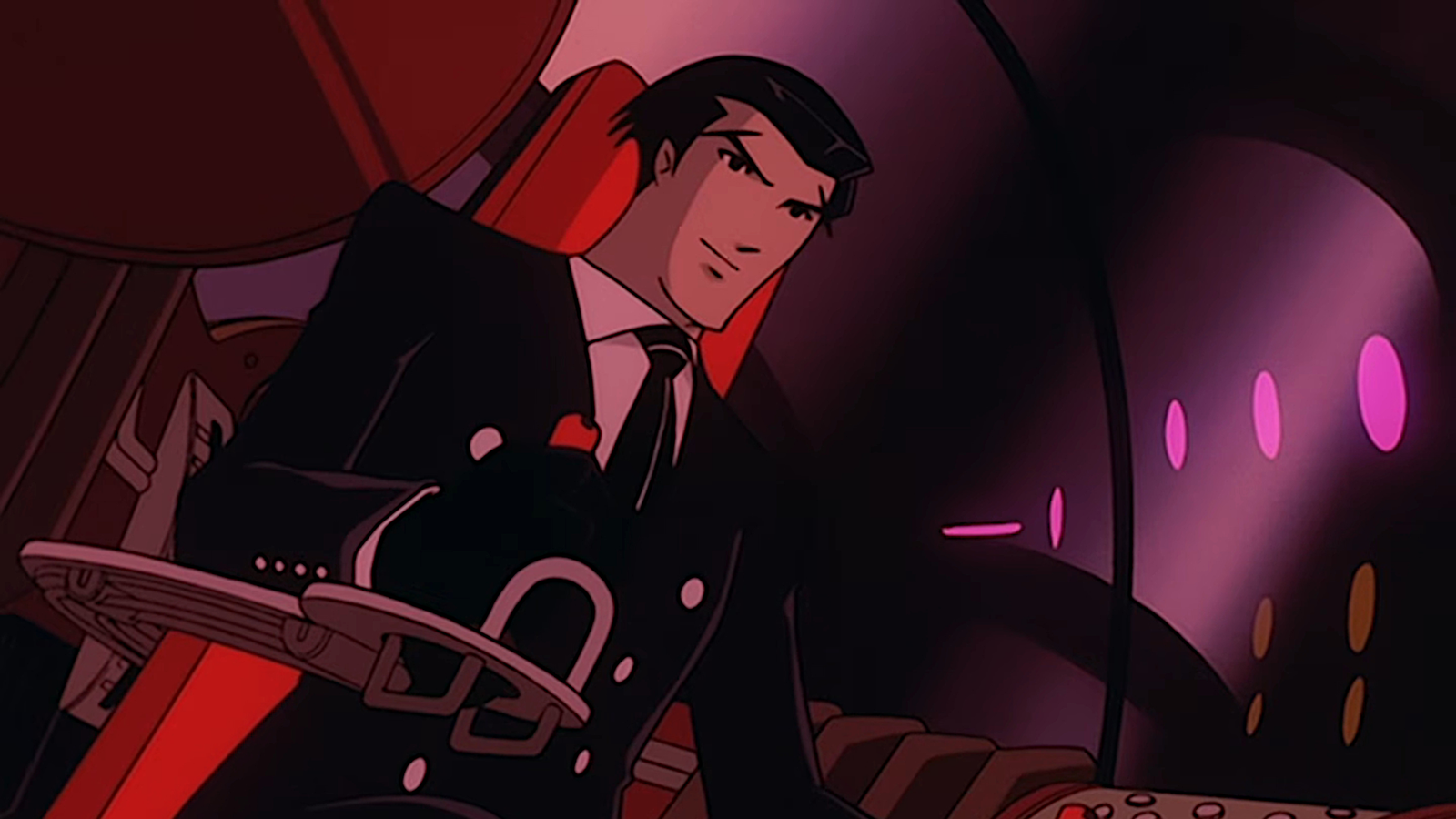
Toonami has played a major role in introducing anime to Western audiences, especially action-heavy series packed with larger-than-life robots. While some mecha anime became household names through their runs on the block, others never received the same attention. These overlooked shows still delivered on several fronts and deserved to be remembered much more than they are now. Their relative obscurity partly stems from the mecha genre being highly oversaturated, as more prominent franchises often dominate the conversation. Even certain spinoffs from legendary franchises suffered as a result, emphasizing the severe scale of the issue. Several series have faded from the spotlight despite offering ideas that set them apart from the competition. Their Toonami appearances may have given them access to a massive audience, but exposure did not always translate into lasting recognition. Many embraced traditional robot battles, while others approached the genre from an entirely different direction. Most also boast ambitious worldbuilding, unique machines, and unconventional storytelling that make them well worth revisiting. 8 FLCL FLCL is one of the strangest anime to ever hit Toonami, blending coming-of-age drama with bizarre science fiction and explosive robot battles. The six-episode OVA was directed by Kazuya Tsurumaki and produced by Gainax and Production I.G., with the protagonist Naota Nandaba caught at the center of its increasingly chaotic events. The story depicts how Naota’s ordinary life shatters when Haruko Haruhara arrives on a Vespa and strikes him with a bass guitar. Soon afterward, a mysterious robot emerges from his head, drawing him into a conflict involving the alien Haruko, the organization Medical Mechanica, and the enigmatic but powerful entity Atomsk. What makes FLCL particularly unusual as a Toonami mecha anime is how little it resembles the usual robot show. Its machines are tied directly to Naota’s emotional and physical development, while rapid editing, absurd comedy, rock music, and dreamlike imagery constantly reshape the narrative. Although it premiered in Japan in 2000, Toonami aired the series beginning in October 2013. 7 Dai-Guard Dai-Guard is another of the more unconventional mecha anime to air on Toonami, largely because its heroes are not trained soldiers or gifted teenagers. The series follows three employees of the 21st Century Defense Security Corporation, thrust into battle when mysterious creatures called Heterodynes return after years without an attack. The titular robot was built in response to an earlier Heterodyne assault, but its purpose gradually became irrelevant when the creatures stopped appearing. Dai-Guard was eventually relegated to the company’s public relations division, where it served little practical purpose. When the Heterodynes resurfaced, however, office workers Shunsuke Akagi, Ibuki Momoi, and Keiichiro Aoyama took control of it. The series’ uniqueness largely comes from treating giant robot warfare as a generic job rather than a grand calling. Dai-Guard is heavy, cumbersome, and difficult to operate, while the pilots must contend with military interference, corporate bureaucracy, and the destruction their battles cause. Unfortunately, Toonami only aired two episodes during its 2003 Giant Robot Week, making it easy to overlook. 6 Zoids: Chaotic Century Zoids: Chaotic Century brought a very different kind of giant robot adventure to the block, focusing on animal-themed mechs with devastating capabilities. Set on the planet Zi, the series revolves around mechanical life-forms called Zoids, which have long been used as weapons by rival nations. At its center is teenage pilot Van Flyheight. Van discovers a small Zoid named Zeke inside ancient ruins, along with a mysterious girl he calls Fiona. Zeke can merge with Zoids and enhance their abilities, while Fiona has lost her memories and wants to uncover her past. Their journey eventually draws them into the growing conflict between the Helic Republic and the Guylos Empire. Rather than fixating solely on individual battles, Chaotic Century builds a sprawling adventure around war, political intrigue, ancient technology, and Van’s development as a Zoid pilot. Its story also gives the machines considerable identity through their animal-inspired forms and abilities. Although the series aired on Toonami beginning in July 2002, it has gradually received less attention than other mecha classics. 5 Mobile Suit Gundam SEED Mobile Suit Gundam SEED is set in the Cosmic Era, when humanity is divided between genetically enhanced humans called Coordinators and ordinary humans known as Naturals. Many Coordinators live in orbital space colonies called PLANTs, whose military force, ZAFT, is locked in a brutal war with the Earth Alliance, a coalition of Earth-based nations. A young Coordinator named Kira Yamato finds himself caught in the crossfire when his neutral colony Heliopolis is attacked. Since he possesses the technical knowledge needed to pilot the Strike Gundam, he becomes an unwilling participant in the conflict. He soon finds himself fighting alongside friends aboard the Archangel, an Earth Alliance warship. Athrun Zala, meanwhile, has joined ZAFT, creating a painful rivalry between two boys whose close friendship existed long before they became soldiers and found themselves on opposite sides. The series’ mobile suits are visually distinctive, and exciting developments come at every turn, especially as Kira and Athrun repeatedly confront one another. 4 Voltron Voltron: Defender of the Universe centers on five space explorers who pilot robotic lions capable of combining into one enormous warrior. The story follows their efforts to protect the planet Arus from the forces of King Zarkon, turning the team’s unusual machines into the centerpiece of a massive science-fiction adventure. Keith, Lance, Pidge, Hunk, and Sven start out as the core pilots, while Princess Allura joins after Sven is badly injured. Their missions take them across the galaxy as they defend Arus from increasingly dangerous threats. The series gradually expands beyond simple battles, introducing rival forces, distant planets, and dangers that require them to use their lions in creative ways. Voltron’s simple premise let it deliver the kind of colorful robot spectacle Toonami audiences loved, as the show developed a larger mythology around its characters, enemies, and world. Its original 1984 run produced 124 episodes and became a major international success, but its legacy has steadily been overshadowed by later adaptations of the franchise. 3 Mobile Fighter G Gundam Mobile Fighter G Gundam turns the Gundam franchise into a martial arts tournament set in the Future Century. In this story, most humans have abandoned a damaged Earth for space colonies, and every four years, each nation sends a Gundam Fighter to compete. The victorious country controls the Earth sphere until the next tournament. Domon Kasshu serves as Neo Japan’s representative in the 13th Gundam Fight, piloting the Shining Gundam alongside his mechanic and childhood friend, Rain Mikamura. Domon has another objective beyond winning the competition, which is finding his fugitive brother Kyoji, who escaped to Earth with the sinister Devil Gundam under strange circumstances. The tournament structure sends Domon across the planet, where battles against representatives from rival nations gradually lead to friendships and rivalries. At the same time, the Devil Gundam mystery grows more and more dangerous, pushing the story beyond its sporting premise. Toonami began airing G Gundam in August 2002, and its 49 episodes found a relatively brief television run. 2 Eureka Seven Marcel Green Eureka Seven follows Renton Thurston, a fourteen-year-old boy living in Bellforest who dreams of becoming a lifter, someone who rides waves of Trapar, a special energy filling the atmosphere. His routine changes when Eureka, a quiet young pilot, crashes into his life aboard the Nirvash, a powerful humanoid machine known as an LFO. Renton soon joins Gekkostate, a renegade group led by his idol Holland Novak, and discovers that their adventurous reputation hides a much harsher reality. He also becomes Eureka’s partner in the Nirvash, as their travels expose him to military forces and the mysterious Coralians, strange beings connected to the planet and its history. The anime combines giant robot battles with romance, coming-of-age drama, and increasingly ambitious science fiction. Its LFOs can surf Trapar waves, giving aerial combat a distinctive rhythm, while Renton’s growth remains central to the story. Toonami aired the 50-episode series from August 2012 to August 2013, giving it another television run years after its original broadcast. 1 The Big O The Big O presents a world unlike the usual futuristic settings of the average mecha anime. It is set in Paradigm City, a strange metropolis where humanity has lost its memories of everything that happened more than 40 years earlier. Roger Smith serves as the main character, who is a sophisticated professional known as a Negotiator. He notably lives a double life in which he pilots the titular Big O, a gigantic machine known as a Megadeus that he calls upon when negotiations inevitably escalate into violent confrontations. Over the course of the series, he becomes heavily involved in strange cases that reveal pieces of Paradigm City’s forgotten history bit by bit. The series blends detective fiction, film noir, and giant robot action, creating a distinctly eerie atmosphere. The central mystery of Paradigm City’s lost past grows more complicated as Roger encounters other Megadeuses and people pursuing their own hidden agendas. Its unusual blend of genres and compelling plot makes for a thoroughly entertaining watch that is still highly underappreciated.
8 Mecha Anime From Toonami That Are Criminally Underrated
Full Article
Original Source
Read the full article at Screenrant →KhanList aggregates and links to publicly available news content. We do not host full articles from third-party sources. Always verify important information with original sources.